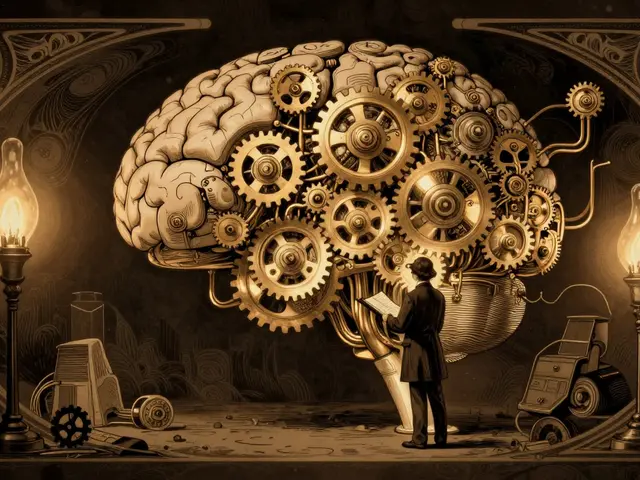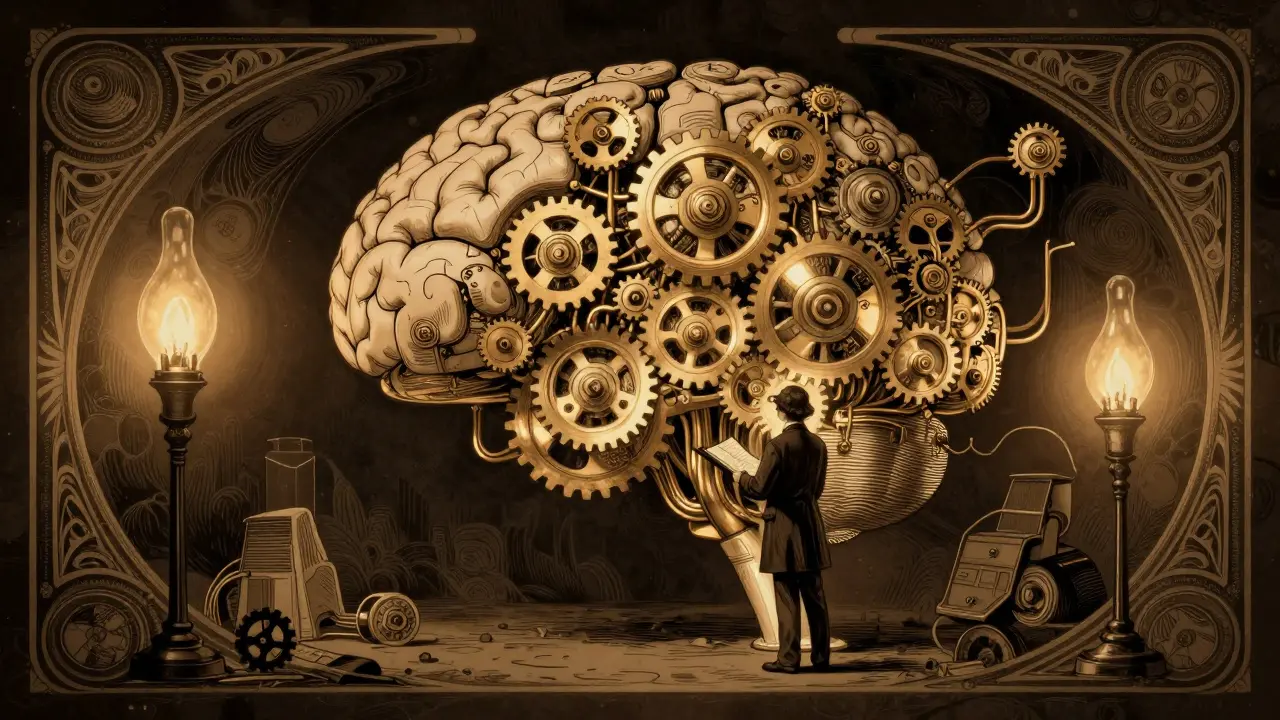
You have a powerful large language model. It writes code, drafts emails, and answers questions with impressive fluency. But it doesn't know your company's specific tone, your proprietary data, or the exact format you need for your reports. This is where LLM customization comes in. You don't need to build a new model from scratch-which would cost millions and take years. Instead, you adapt an existing one. The question isn't whether to customize, but how. Do you retrain the whole brain? Do you add small, smart plugins? Or do you just talk to it differently?
The landscape of adapting models has evolved rapidly. We moved from full fine-tuning, which was expensive and heavy, to lighter, smarter methods like adapters and prompt engineering. Each path offers different trade-offs between cost, control, and performance. Understanding these paths helps you choose the right tool for your specific job without wasting compute resources.
The Heavy Hitter: Full Fine-Tuning
Full fine-tuning is the most straightforward approach. You take a pre-trained model, feed it your specific dataset, and update every single weight in the network. Imagine hiring a brilliant generalist consultant and then paying them to memorize your entire employee handbook, product catalog, and style guide until it’s part of their instinct.
Full Fine-Tuning is a process where all parameters of a pre-trained large language model are updated during training on a specific dataset. It requires significant computational resources because the model's architecture remains intact, but its internal knowledge shifts entirely based on the new data.This method gives you maximum flexibility. If you need the model to fundamentally change its reasoning style or learn a completely new domain that differs vastly from its original training, this is often the only way to get deep, structural changes. However, the cost is steep. For a model with billions of parameters, you need massive GPU memory (VRAM). A standard consumer GPU won't cut it; you’re looking at enterprise-grade clusters.
There’s also a risk called "catastrophic forgetting." When you force the model to learn new things so aggressively, it might forget the general knowledge it already had. It becomes a specialist who can’t hold a basic conversation anymore. Because of these costs and risks, full fine-tuning is usually reserved for cases where no other method works, or when you have unlimited budget and infrastructure.
The Smart Plugin: Adapters and LoRA
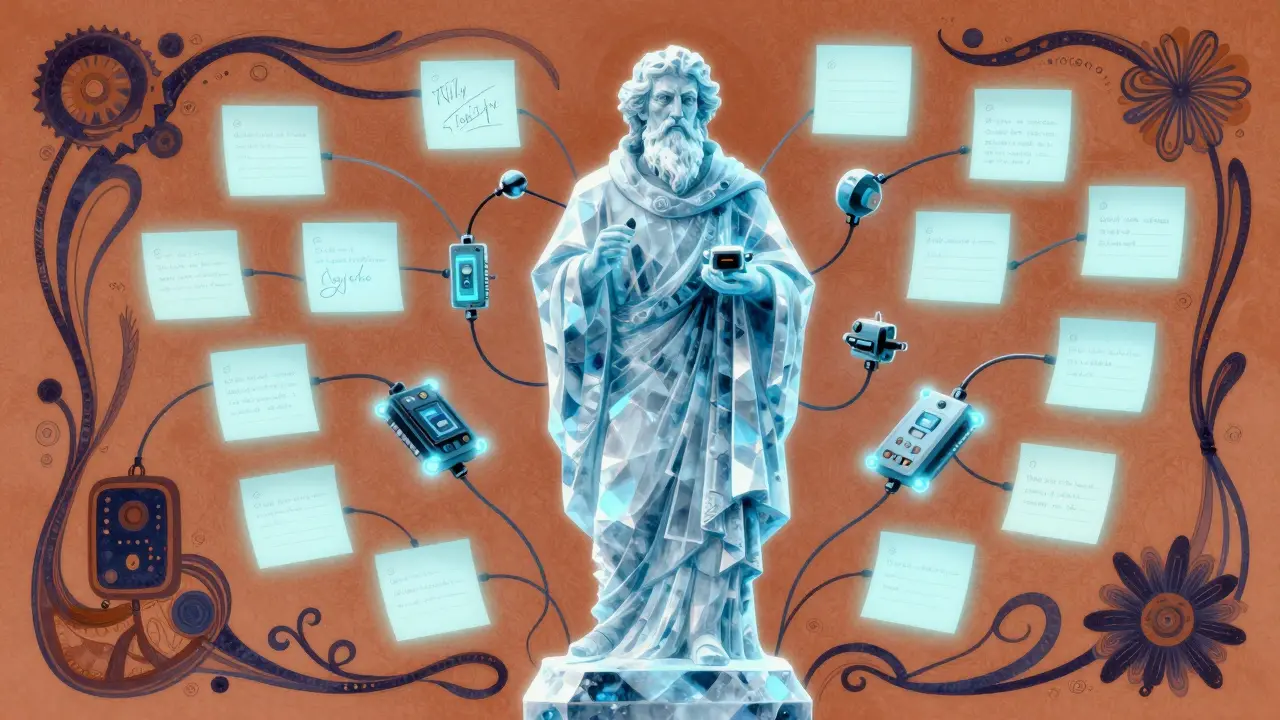
If full fine-tuning is rewriting the book, adapters are adding sticky notes to the margins. Instead of changing the core model, you insert small, trainable modules into the existing layers. The base model stays frozen-unchanged and intact. Only the adapter learns.
This approach solves two big problems: cost and catastrophic forgetting. Since you’re only training a tiny fraction of parameters, you can do it on much cheaper hardware. And since the base knowledge isn’t touched, the model retains its general abilities while gaining new skills.
LoRA (Low-Rank Adaptation) is a parameter-efficient fine-tuning technique that freezes the original model weights and adds low-rank matrices to capture task-specific updates. LoRA drastically reduces memory requirements by learning changes along limited directions in the parameter space, making it possible to fine-tune large models on single GPUs.LoRA is currently the king of adapters. The idea behind LoRA is elegant: useful changes needed to adapt a model often lie along a few important directions in the mathematical space. You don’t need to adjust everything. LoRA identifies those key directions and adjusts only them. In practice, this means you might train just 0.1% of the parameters instead of 100%.
Here is why practitioners love LoRA:
- Efficiency: You can fine-tune a 70-billion-parameter model on a single high-end GPU using QLoRA (Quantized LoRA).
- Modularity: You save the adapter as a small file (often just megabytes). You can swap adapters instantly. Want a coding assistant? Load the coding adapter. Want a legal drafter? Swap in the legal adapter. The base model never moves.
- Reversibility: If the adapter performs poorly, you delete the file. The base model is untouched. No damage done.
Frameworks like Hugging Face’s PEFT (Parameter-Efficient Fine-Tuning) library make implementing LoRA easy. You specify target modules (like attention layers), set a rank (how complex the adaptation is), and let it run. For most business applications today, LoRA is the sweet spot between performance and cost.
| Method | Compute Cost | Storage Size | Best Use Case |
|---|---|---|---|
| Full Fine-Tuning | Very High | Large (Full Model) | Fundamental behavior change, unique domains |
| Adapters (LoRA) | Low/Medium | Tiny (Adapter File) | Task specialization, multi-task setups |
| Prompt Engineering | None | Zero | Quick tests, zero-shot tasks, formatting |
The Conversation Starter: Prompt Engineering
Before you spend any money on training, you should try talking to the model better. Prompt engineering isn’t really "training" in the technical sense. It’s about crafting inputs that guide the model’s existing knowledge toward your desired output. Think of it as giving clear instructions to a very smart intern.
Basic prompting involves writing clear queries. Advanced prompting includes techniques like Chain-of-Thought (asking the model to explain its reasoning step-by-step) or Few-Shot Prompting (providing examples within the prompt itself). These methods require zero computational overhead. You don’t need GPUs. You just need good writing skills and testing.
However, prompts have limits. They live in the input context window. If your instructions are too long, they eat up space meant for the actual content. More importantly, prompts are fragile. A slight change in wording can lead to wildly different results. If you need consistent, structured outputs for an automated system, relying solely on prompts can be risky. That’s where fine-tuning or adapters come in-to bake the consistency into the model itself.

Choosing Your Path: A Decision Guide
So, which path should you take? It depends on what you’re trying to achieve. Here is a practical heuristic to help you decide.
Start with Retrieval-Augmented Generation (RAG) if: Your goal is to give the model access to up-to-date, private information. RAG retrieves relevant documents from your database and feeds them into the prompt. This is better than fine-tuning for facts because fine-tuned models hallucinate more often and become outdated quickly. RAG keeps the knowledge external and fresh.
Choose Prompt Engineering if: You need a quick solution, your task is simple, or you are still experimenting. Use this for formatting text, summarizing short articles, or generating creative ideas. It’s free and instant.
Use LoRA/Adapters if: You need the model to adopt a specific voice, follow a complex structure, or perform a specialized reasoning task that prompts can’t handle reliably. For example, if you need a model to always output JSON in a specific schema, or to write code in a proprietary framework, fine-tuning with LoRA bakes that behavior into the weights. It’s robust and efficient.
Consider Full Fine-Tuning only if: You are building a foundational model for a highly niche domain where general models fail completely, and you have the budget for enterprise infrastructure. This is rare for most businesses.
Implementation Tips for Success
Whichever path you choose, quality data is non-negotiable. Garbage in, garbage out applies doubly to AI. If you fine-tune on messy, inconsistent data, your model will learn those messiness patterns. Clean your datasets thoroughly. Remove duplicates, fix errors, and ensure the format is uniform.
For LoRA specifically, pay attention to hyperparameters. The "rank" (r) determines the capacity of the adapter. A higher rank allows more complex learning but uses more memory. Start small (e.g., r=8 or r=16) and increase only if performance plateaus. Also, monitor for overfitting. If your model memorizes your training examples instead of learning the pattern, it will fail on new data. Use a validation set to check this.
Finally, remember that customization is iterative. You rarely get it perfect on the first try. Test your customized model against real-world scenarios. Compare its outputs to the base model. Did it actually improve? Sometimes, a well-crafted prompt beats a poorly tuned adapter. Let the results guide your next step.
What is the difference between fine-tuning and prompt engineering?
Prompt engineering changes the input to guide the model's existing knowledge, requiring no training or compute resources. Fine-tuning updates the model's internal weights using a dataset, permanently altering its behavior. Prompting is flexible and free but less consistent; fine-tuning is robust and permanent but costs time and money.
Is LoRA better than full fine-tuning?
For most use cases, yes. LoRA achieves similar performance to full fine-tuning for many tasks while using a fraction of the computational resources. It also avoids catastrophic forgetting and allows for easy swapping of specialized skills. Full fine-tuning is only necessary for fundamental architectural changes or extremely niche domains.
Can I use multiple adapters at once?
Yes, some frameworks support stacking or combining adapters. However, this increases complexity and potential conflicts. It is usually better to keep adapters separate for distinct tasks and switch them based on user intent, rather than merging them into a single monolithic configuration.
How much data do I need for fine-tuning?
It varies by task. For simple style adjustments, hundreds of examples may suffice. For complex reasoning or new capabilities, thousands of high-quality pairs are recommended. Quality matters more than quantity; 500 clean, diverse examples often beat 10,000 noisy ones.
What is QLoRA?
QLoRA combines Quantization with LoRA. It compresses the base model to 4-bit precision before applying LoRA adapters. This allows fine-tuning very large models on consumer-grade GPUs with limited VRAM, making advanced customization accessible to smaller teams and individual developers.