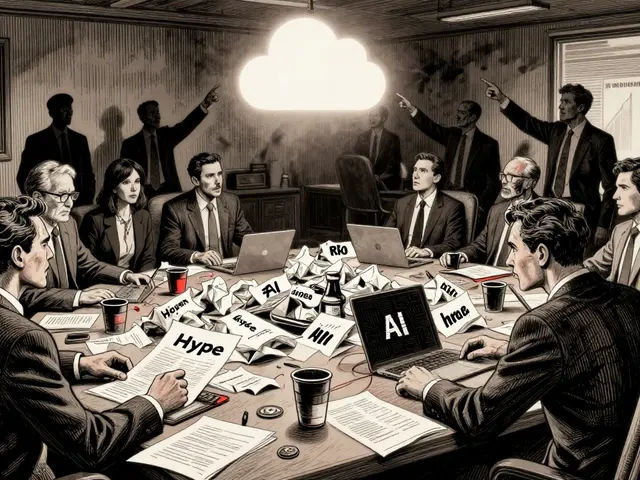
Remember when every CEO promised that Generative AI would double their revenue by next quarter? That was late 2023. By 2024, the hangover set in. The IBM Institute for Business Value reported a sobering reality: despite pouring capital into these initiatives, enterprises saw an average return on investment of just 5.9%. It wasn't magic; it was mess.
But here is the twist. Fast forward to 2026, and the story has changed completely. We are no longer talking about experimental chatbots sitting idle in a server room. We are looking at mission-critical infrastructure. Wharton’s 2025 AI Adoption Report shows that 82% of enterprises now use generative AI at least weekly, with nearly half using it daily. More importantly, three-quarters of business leaders report positive returns. The difference between the companies that failed and the ones that thrived isn’t technology-it’s strategy.
The Shift from Hype to Hard Metrics
To understand why some companies crashed while others soared, we have to look at how they defined success. Early adopters often treated Generative AI as a novelty-a cool toy for marketing teams to generate catchy headlines. This approach led to what MIT researchers call "misaligned resource allocation." Over 50% of generative AI budgets went toward sales and marketing tools, yet the highest ROI was consistently found in back-office automation.
Let’s look at the numbers. Menlo Ventures’ 2025 data reveals that departmental AI spending hit $7.3 billion, a 4.1x year-over-year jump. But where did the money go? Successful organizations didn’t spread themselves thin. They focused on specific pain points. For example, product development teams that followed top AI best practices-like automated code generation and bug detection-reported a median ROI of 55%. That is not a rounding error. That is a transformation.
The key lesson here is simple: stop trying to automate everything at once. Start with the processes that drain your most expensive resources. If your engineers spend 20 hours a week writing boilerplate code, that is your entry point. If your customer support team spends days drafting repetitive responses, that is yours.
Case Study 1: Coca-Cola and Creative Acceleration
Coca-Cola offers a textbook example of doing creative work right. Instead of replacing their designers, they partnered with OpenAI and used DALL·E to accelerate concept development. The goal wasn’t to let the AI design the final campaign alone; it was to move faster through the ideation phase.
Here is what happened:
- Speed: Marketing teams cut campaign development time by 50%.
- Volume: They could launch more campaigns per quarter without burning out staff.
- Consistency: Global brand consistency was maintained because human creatives still held the reins on final output.
This aligns with Kanerika’s 2025 ROI benchmarks, which show that generative AI’s strongest driver is enhancing human output, not replacing it. When you measure success by "hours saved" rather than "jobs eliminated," the math works out. Coca-Cola didn’t just save money; they increased their ability to respond to market trends in real-time.
Case Study 2: Klarna and Customer Satisfaction
While Coca-Cola focused on creation, fintech company Klarna focused on interaction. They deployed generative AI assistants to handle customer inquiries. This is a high-stakes environment. One wrong answer can cost you a customer. Yet, Klarna reported a 20-30% improvement in customer satisfaction scores (CSAT).
Why did this work? Because they solved a specific bottleneck. Human agents were overwhelmed with simple questions like "Where is my order?" or "What is your refund policy?" By offloading these tasks to AI, human agents could focus on complex issues that required empathy and critical thinking.
The result? Faster resolution times for customers and less burnout for employees. This is a classic example of "back-office" efficiency translating to front-end value. You don’t see the AI working, but you feel the benefit immediately.

The Trap of Shadow AI
Not all successful implementations came from the C-suite. In fact, some of the best ROI stories come from the bottom up. MLQ.ai’s 2025 report documents a phenomenon called "Shadow AI." These are unofficial, employee-driven implementations that often deliver better results than formal corporate initiatives.
Consider the anecdotal reports from Reddit’s r/MachineLearning community in late 2025. Marketing professionals were achieving 3-5x speedups in content creation using generative tools, even though their IT departments hadn’t formally approved them. Why? Because they had immediate access to the tools and a clear understanding of their own workflow bottlenecks.
This creates a paradox for leadership. On one hand, unvetted tools pose security risks. On the other hand, they prove that the demand for AI is real and urgent. The lesson for early adopters who succeeded was to legitimize these efforts. Instead of banning shadow AI, they created safe sandboxes for employees to experiment, then scaled the best solutions across the organization.
| Strategy | Focus Area | Typical ROI Outcome | Risk Level |
|---|---|---|---|
| Top-Down Enterprise Rollout | Broad process automation | Low to Moderate (often < 10%) | High (change management fatigue) |
| Targeted Pain Point Solution | Specific department bottleneck | High (50%+ in tech roles) | Low (contained scope) |
| Shadow AI (Employee-Led) | Individual productivity hacks | Very High (immediate personal gain) | Moderate (security/compliance) |
Measuring What Matters: Beyond Cost Savings
If you only measure ROI by dollars saved, you will miss the bigger picture. Deloitte’s 2025 survey of 1,854 executives found that 15% of respondents already achieved significant, measurable ROI, but 38% expected it within a year. The gap lies in definition.
IBM’s analysis stresses that maximizing ROI requires tracking both hard and soft metrics. Hard metrics include:
- Employee Hour Savings: Companies using ChatGPT-powered assistants reported saving hundreds of hours in content creation and internal knowledge sharing.
- Revenue Growth: Increased traffic and conversion rates from personalized marketing.
- Cost Reduction: Automating repetitive tasks to reduce outsourcing needs.
Soft metrics are equally vital. Employee satisfaction is a leading indicator of long-term success. If your team hates the new tool, they will find ways to bypass it. Wharton’s data shows that 89% of employees believe generative AI enhances their skills, compared to only 18% who fear replacement. This sentiment is crucial. When employees feel empowered, adoption sticks.
The Agentic AI Horizon
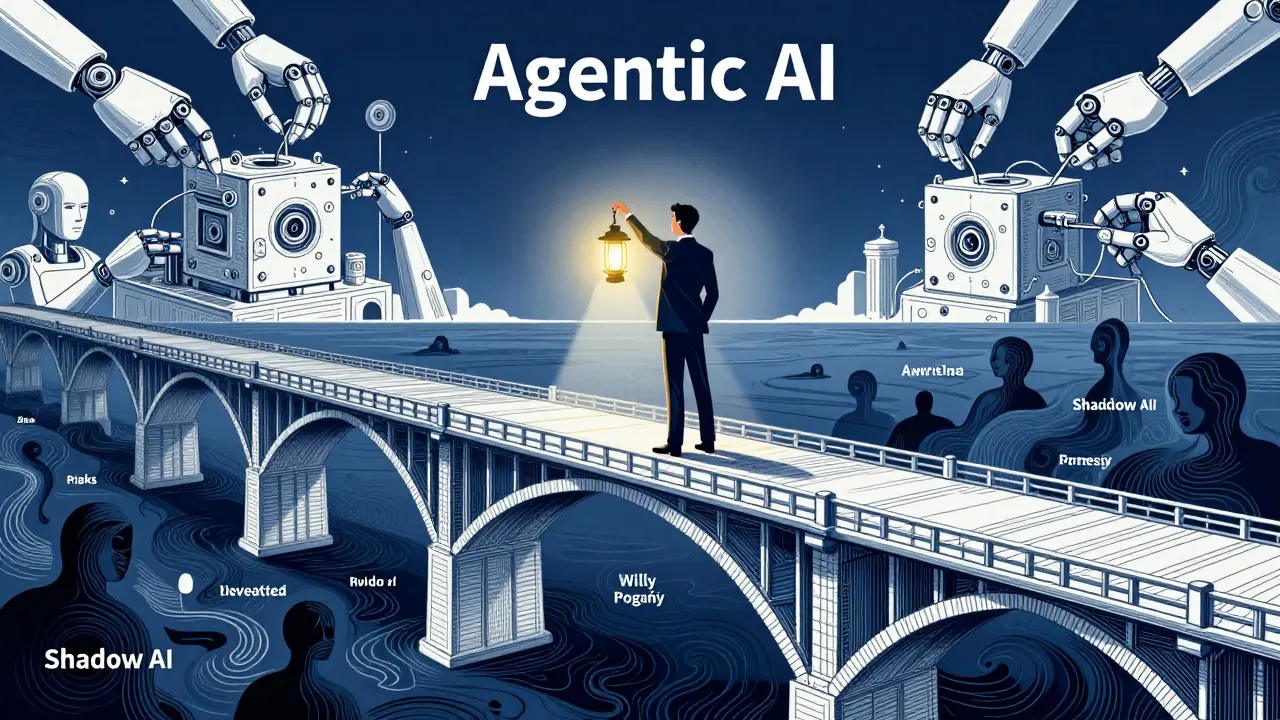
We are currently standing at the edge of a new wave. Generative AI gave us short-term impact-faster emails, better code snippets, quicker drafts. But the next frontier is Agentic AI. These are systems that don’t just generate text; they take action. They can book meetings, process refunds, and debug code autonomously.
Deloitte notes that successful organizations won’t treat generative and agentic AI as competitors. Instead, they will use generative AI to build momentum and lay the foundation for agentic transformation. Google Cloud’s 2025 research shows early adopters are already using AI agents for end-to-end process redesign. This is where the real strategic advantage lies.
However, be cautious. Agentic AI requires robust governance. A generative model might write a bad email; an agentic model might send it. The lessons from early adopters suggest that you must start small. Pick one pain point, execute well, and partner smartly. As MIT’s Aditya Challapally noted, startups that jumped from $0 to $20 million in revenue did exactly that. They didn’t try to boil the ocean.
Common Pitfalls to Avoid
Even with the right tools, many projects fail. Here are the most common mistakes observed in 2025 and 2026:
- Overambitious Scope: Trying to transform the entire company overnight leads to paralysis. Focus on one department first.
- Ignoring Change Management: Technology is easy; people are hard. Invest in training and communication.
- Poor Data Quality: Generative AI is only as good as the data it feeds on. Garbage in, garbage out.
- Lack of Formal Measurement: 72% of enterprises now formally measure ROI. If you aren’t tracking productivity gains and incremental profit, you are flying blind.
The companies that succeeded didn’t have better technology. They had better discipline. They treated AI as a lever to amplify human potential, not a replacement for it. They measured rigorously, iterated quickly, and stayed focused on solving real problems.
What is the average ROI for generative AI in 2025?
While early estimates from 2023 showed an average ROI of just 5.9%, the landscape improved significantly by 2025. Wharton's report indicates that 75% of business leaders now report positive returns. Specific sectors like product development following best practices saw median ROIs of 55%.
How do companies measure generative AI ROI?
Companies measure ROI through a mix of hard and soft metrics. Hard metrics include employee hour savings, reduction in campaign development time, and cost reductions in outsourcing. Soft metrics include customer satisfaction scores (CSAT), employee engagement, and skill enhancement levels.
What is "Shadow AI" and does it affect ROI?
Shadow AI refers to unofficial, employee-driven use of AI tools outside of corporate approval. Surprisingly, it often delivers high immediate ROI for individuals (e.g., 3-5x speedups in content creation). However, it poses security risks. Successful companies legitimize these efforts by creating safe experimentation zones.
Which departments see the highest ROI from generative AI?
Contrary to popular belief, back-office automation often yields higher ROI than sales and marketing. Product development teams leveraging automated code generation and bug detection have reported median ROIs of 55%. Customer support also sees significant gains in efficiency and satisfaction.
How does Agentic AI differ from Generative AI in terms of ROI?
Generative AI focuses on creating content and enhancing human output, delivering short-term productivity gains. Agentic AI involves autonomous actions and process redesign, offering longer-term transformational value. Experts recommend using generative AI to build momentum before scaling to agentic systems.