
| Feature | Traditional Coding | Vibe Coding |
|---|---|---|
| Primary Input | Syntax and Logic (Code) | Natural Language (Prompts) |
| Speed of Prototyping | Slow to Moderate | Near Instant |
| Entry Barrier | High (Requires specialized training) | Low (Anyone who can describe a problem) |
| Iteration Cycle | Manual Refactoring | Conversational Adjustment |
Rapid Prototyping and MVP Development
For startups and product managers, the most painful part of the development cycle is the gap between a wireframe and a working demo. MVP Development (Minimum Viable Product) is where vibe coding truly shines. Instead of spending weeks on a technical specification document, founders can use AI assistants to build a functional interface that users can actually click through. Think of a founder who wants to test a new SaaS concept for a niche subscription service. Rather than hiring a full-stack team for the discovery phase, they can prompt an AI to build a landing page, a user sign-up flow, and a basic dashboard. If the "vibe" isn't right-maybe the navigation is clunky or the aesthetic feels too corporate-they simply tell the AI, "Make it feel more like a minimalist fintech app," and the code updates in real-time. This allows for rapid life-cycle testing without risking thousands of dollars in development capital.Enterprise Infrastructure and Node.js Applications
It's a common misconception that this approach is only for simple websites. In reality, vibe coding is being used to scaffold heavy-duty enterprise backends, particularly those built on Node.js, which is a JavaScript runtime built on Chrome's V8 engine that allows developers to run JavaScript on the server. In an enterprise setting, developers use vibe coding to handle the "boring" parts of the build. For instance, creating a real-time collaboration platform usually involves tedious setup for Socket.io to manage WebSockets. Instead of writing every single connection handler and room management script by hand, a developer can prompt: "Create a Node.js server with Socket.io to support real-time chat with user authentication and channels." The AI generates the entire boilerplate, allowing the engineer to focus on the unique business logic and high-level architecture. Other high-impact enterprise use cases include:- E-commerce Backends: Generating MongoDB product schemas and RESTful APIs for shopping carts and inventory management.
- Data Pipelines: Automating data ingestion scripts that read CSV files, clean the data, and store it in a PostgreSQL database.
- Cloud-Native Apps: Scaffolding Docker containerization configurations and deployment scripts for Kubernetes or AWS Lambda.
Creative Industries and Gaming
Gaming is one of the most exciting playgrounds for this technology. We're seeing a surge in "solo-devs" who can't necessarily write C# or C++ but have brilliant game design ideas. By using AI tools, they can generate basic game mechanics, create interactive scenarios, and test physics loops instantly. It's not just about the code; it's about the iterative loop. A developer can say, "Make the player movement feel more floaty, like a platformer from the 90s," and the AI adjusts the gravity and friction variables in the code. This turns coding into a form of digital sculpting, where the focus is on the feeling and experience rather than the semicolons.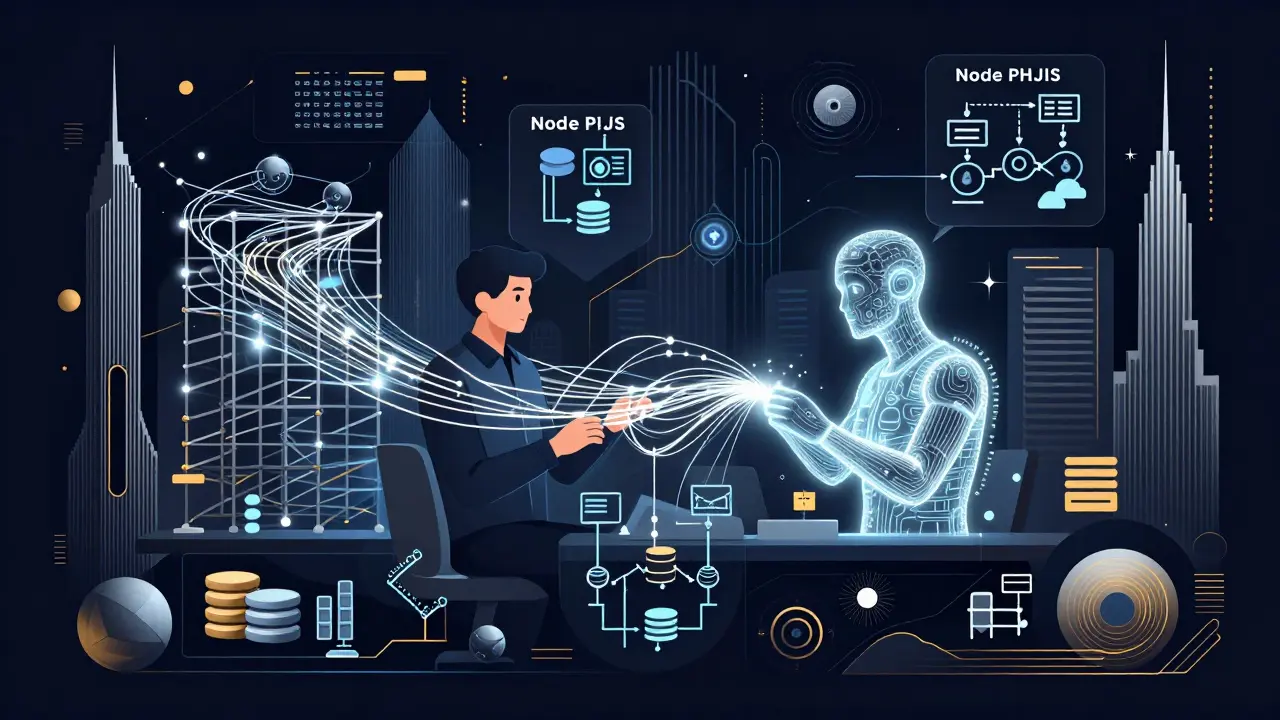
Business Automation and Internal Tools
Inside large companies, the IT department is often a bottleneck. Business analysts and operations managers have a million ideas for custom reports or automation tools, but they don't have the coding skills to build them. Vibe coding removes this gatekeeper. Imagine an HR manager who needs a custom dashboard to visualize employee turnover trends across five different departments. Instead of waiting six months for a ticket to be picked up by the engineering team, they can use a vibe coding tool to generate a database connection, a data visualization layer, and a set of interactive filters. The result is a tailored toolkit that solves a specific business problem in hours, not months.Marketing and High-Impact Microsites
Marketing teams often need "disposable" software-sites that exist for a specific campaign or a one-time product launch. These are the perfect candidates for vibe coding because they prioritize design flexibility and speed over long-term scalability. Using tools like Lovable or Glide, marketers can create interactive product tours or branded scrollable demos. Because these microsites usually operate on the client side, they avoid the security complexities of handling deep personal data, making them a low-risk, high-reward way to experiment with user engagement. If a promotional mini-game for a new sneaker launch needs a total redesign because the brand colors changed, the marketer can simply update the "vibe" via a prompt rather than rewriting the CSS from scratch.
Addressing the Security Elephant in the Room
When you're "vibing" your way to an app, it's easy to forget about the things that don't have a visible "vibe," like security. In financial services or healthcare, you can't just hope the AI handled the encryption. However, the smart way to use vibe coding is to prompt for security specifically. You can tell the AI to "implement strict input sanitization and AES-256 data encryption for all user profiles." This provides a strong, professional starting point. The key is that human oversight remains mandatory; a security expert must still validate the generated code to ensure there are no hallucinations or vulnerabilities before the app hits production.Where Vibe Coding Hits a Wall
While the speed is intoxicating, vibe coding isn't a magic wand for everything. If you're building a high-frequency trading platform where every microsecond of latency counts, or a spacecraft control system where a single bug means a total loss, manual, rigorously tested code is still king. Vibe coding is optimized for the *creative* and *iterative* phases of development. It's a tool for rapid exploration and boilerplate removal. The most successful teams will be those who blend the speed of vibe coding with the discipline of traditional software engineering-using AI to get 80% of the way there in minutes, and using human expertise to polish the final 20% for performance and security.Do I need to know how to code to use vibe coding?
No, you don't need professional coding skills to start. The core of vibe coding is using natural language to describe what you want. However, having a basic understanding of how software works (like the difference between a frontend and a backend) will help you write better prompts and troubleshoot the results more effectively.
Is code generated by vibe coding maintainable?
It depends on the tool and the prompt. AI can generate clean, standardized code, but if you keep adding "vibes" without a clear architectural plan, the codebase can become a mess. For long-term projects, it's best to have a developer review the code and organize it into a proper structure.
Which industries benefit most from vibe coding?
Industries that rely on rapid experimentation-like startups, marketing agencies, and game development-see the most immediate benefit. Additionally, business operations teams in large enterprises use it to automate internal workflows without waiting for IT department resources.
How does vibe coding handle complex architectures like microservices?
Vibe coding is excellent for scaffolding. It can rapidly define API contracts, create inter-service communication logic, and generate the boilerplate for API gateways. While it might not design the entire distributed system from scratch perfectly, it removes the manual labor of setting up the infrastructure.
Can vibe coding be used for mobile apps?
Yes. Many vibe coding tools target web-based applications that are responsive for mobile or use frameworks that can be wrapped into mobile apps. It's particularly useful for creating functional demos of mobile app concepts for user testing or investor pitches.




Victoria Kingsbury
April 13, 2026 AT 03:03The DX improvements here are honestly insane. We're basically moving toward a world where the technical debt is shifted from the syntax to the prompt engineering side of the house. It is a total game changer for rapid iterative prototyping.
VIRENDER KAUL
April 13, 2026 AT 04:25Utterly delusional to suggest that natural language can replace rigorous software engineering. This so called vibe coding is merely a recipe for unmaintainable spaghetti code that will inevitably collapse under its own weight once a real load hits the system. Pathetic
Mbuyiselwa Cindi
April 14, 2026 AT 22:56I've actually tried this for some small internal tools and it's a lifesaver! It really lets you get the logic down without getting bogged down in the boilerplate. Definitely a great way to empower non-technical team members to build their own helper apps.
Tonya Trottman
April 16, 2026 AT 14:02Oh, wonderful. Another way for people who can't distinguish a string from an integer to pretend they're 'engineers.' I'm sure the 'vibe' of the security vulnerabilities will be just lovely when the first data breach happens because someone prompted the AI to make the login flow 'feel smooth.' Truly a peak moment for human laziness.
Henry Kelley
April 17, 2026 AT 03:44i think its pretty cool honestly. i tried it for a lil side project last week and it worked way bettr then i expected. just gotta be carefull with the prompts i guess
Krzysztof Lasocki
April 18, 2026 AT 16:16Wow, we're really just going to let the AI handle the architecture now? Absolute genius move! I can't wait until we have a thousand 'vibe-coded' apps all fighting for the same memory leak. Seriously though, the speed is wild!
Veera Mavalwala
April 19, 2026 AT 08:43The sheer audacity of labeling this 'coding' is a kaleidoscopic disaster of terminology. We are witnessing the slow, agonizing death of craftsmanship in favor of this glossy, superficial facade where a 'vibe' replaces the intellectual rigor of algorithmic thinking, leaving us with a digital wasteland of fragile, prompt-dependent monstrosities that no sane developer would dare touch with a ten-foot pole.
Ray Htoo
April 21, 2026 AT 02:47This is like digital alchemy! Turning a few vague sentences into a working prototype is just magical. I wonder how this will evolve once the AI starts suggesting the 'vibes' instead of just following them.
Santhosh Santhosh
April 22, 2026 AT 04:57I find myself reflecting on how this might impact the entry-level job market for developers who have spent years honing their craft only to find that the industry now values the ability to 'vibe' with a machine more than the ability to understand the underlying memory management or the intricacies of a complex data structure, which feels like a very bittersweet transition into a new era of computing where the human element is shifted from creation to mere curation.
Rocky Wyatt
April 23, 2026 AT 14:35Exactly. It's just another way to mask incompetence. You aren't building a product; you're just guessing until the AI gives you something that doesn't crash immediately. It's a race to the bottom for quality.