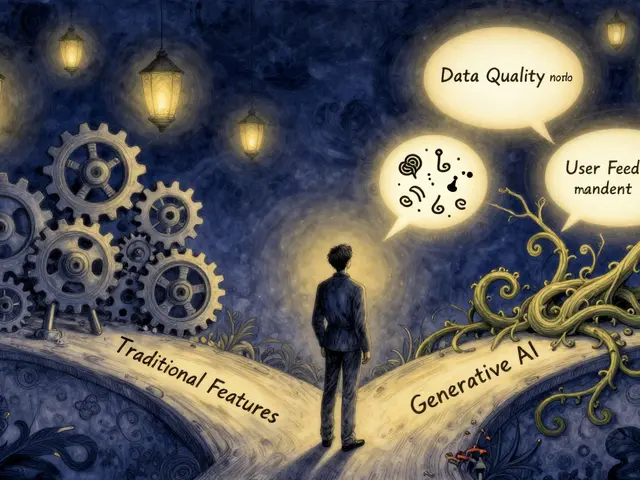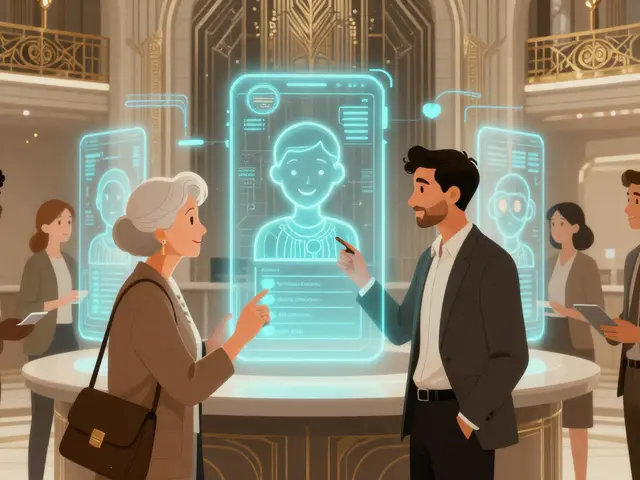
You know that feeling when you ask a chatbot to describe a photo, and it gives you a generic, hallucinated guess because it can't actually see? Or when a voice assistant misinterprets your tone because it’s only listening to words, not the sigh behind them? That limitation is exactly what Multimodal Agents are built to fix. These aren't just smarter chatbots; they are integrated systems engineered to process, synthesize, and generate content across multiple input and output modalities-including text, vision, audio, video, and even sensor data-to produce context-rich responses and execute complex actions.
If you’ve been following AI news, you’ve likely seen headlines about models like OpenAI’s GPT-4o or Google’s Project Astra. But there is a crucial distinction between a multimodal *model* and a multimodal *agent*. A model processes inputs; an agent perceives, plans, acts, and remembers. As of late 2025, these agents represent the critical bridge between narrow AI and something approaching general intelligence. They don’t just answer questions; they look at a messy desk, understand the clutter, plan how to organize it, and potentially use a robotic arm (or a digital interface) to do so. This shift changes everything for developers, businesses, and users who need AI that interacts with the real world, not just a text box.
What Exactly Is a Multimodal Agent?
Let’s break down the jargon. A standard Large Language Model (LLM), like early versions of ChatGPT, was unimodal. It took text in and gave text out. It had no eyes, no ears, and no hands. A Multimodal Agent is an advanced evolution of this concept. It combines perception modules (eyes/ears), planning systems (brain), action components (hands), and memory systems (long-term recall).
Think of it like hiring a personal assistant. A unimodal AI is like a pen pal-you send letters, they reply. A multimodal agent is like a human assistant standing in the room with you. They see what you’re pointing at, hear your frustration in your voice, remember what you said yesterday, and then take action-like booking a flight or fixing a bug in code-based on all that combined context.
The technology relies on foundation models enhanced with cross-attention mechanisms. These allow the system to align different types of data. For example, when you upload a screenshot of a error log, the agent doesn’t just OCR the text; it understands the layout of the UI, the color coding of the error messages, and the surrounding visual context to diagnose the problem faster than a text-only parser could.
The Core Architecture: How They Think and Act
Under the hood, these agents operate through four distinct architectural pillars. If one fails, the whole system stumbles.
- Perception Modules: These interpret diverse sensory information. Using specialized neural networks, the agent converts images into embeddings, transcribes audio, and reads sensor data from IoT devices.
- Planning Systems: This is the "reasoning" engine. It decomposes complex goals into sub-tasks. If you ask the agent to "plan my trip," it breaks this down into checking weather, comparing flight prices, and checking your calendar availability.
- Action Components: The agent executes plans via tool use. This might mean calling an API to book a ticket, sending an email, or controlling a robot arm in a warehouse.
- Memory Systems: Unlike stateless chat sessions, agents retain multimodal information across interactions. They remember that you prefer aisle seats or that the last time you showed them a specific diagram, it was related to project X.
There are three main ways these systems fuse data, according to IBM’s technical overviews. Early fusion encodes all modalities into a common representation space immediately. Late fusion processes each modality separately (e.g., one model for vision, one for text) and combines the outputs later. Mid fusion is a hybrid, combining them at intermediate stages. Most modern high-performance agents, like those powered by transformer architectures, lean toward mid-fusion approaches to balance speed and accuracy.
Real-World Performance vs. Unimodal Systems
Why switch to multimodal if it’s more expensive? Because in complex scenarios, unimodal systems fail hard. A study by Kellton Tech found that multimodal agents outperform unimodal systems by 42.7% in customer service applications where voice tone, facial expression, and spoken content matter simultaneously. Imagine a support bot that hears your anger, sees your confusion via webcam, and adjusts its response strategy accordingly. That’s contextual understanding.
| Feature | Unimodal Agent (Text-Only) | Multimodal Agent |
|---|---|---|
| Input Types | Text only | Text, Image, Audio, Video, Sensors |
| Context Awareness | Low (text-based only) | High (integrates visual/audio cues) |
| Computational Cost | Low (1x baseline) | High (3.2x baseline) |
| Avg Latency | ~190ms | ~850ms |
| Error Rate (Conflicting Data) | N/A | Higher (22.7% compound errors) |
| Best Use Case | Translation, Summarization | Robotics, Diagnostics, Complex Support |
However, this power comes with costs. Multimodal agents require significantly more computational resources. NVIDIA benchmarks indicate a minimum of 32GB VRAM for real-time processing on cloud infrastructure, though edge-optimized models like Meta’s Llama-3-Multimodal can run on devices with 8GB VRAM. You also face higher latency-averaging 850ms per query compared to 190ms for text-only systems. If your application needs millisecond responses, a multimodal agent might be too slow unless heavily optimized.
Key Applications Driving Adoption
Where are these agents actually making money today? Three sectors lead the pack: Healthcare, Manufacturing, and Enterprise Automation.
In healthcare, multimodal agents analyze medical images while simultaneously processing physician notes and patient voice descriptions. Mayo Clinic’s 2024 pilot showed a 28.4% faster diagnostic accuracy using this approach. The agent doesn’t just read the X-ray report; it looks at the scan, listens to the doctor’s verbal concern, and checks the patient’s history, synthesizing all three to flag anomalies a text-only system might miss.
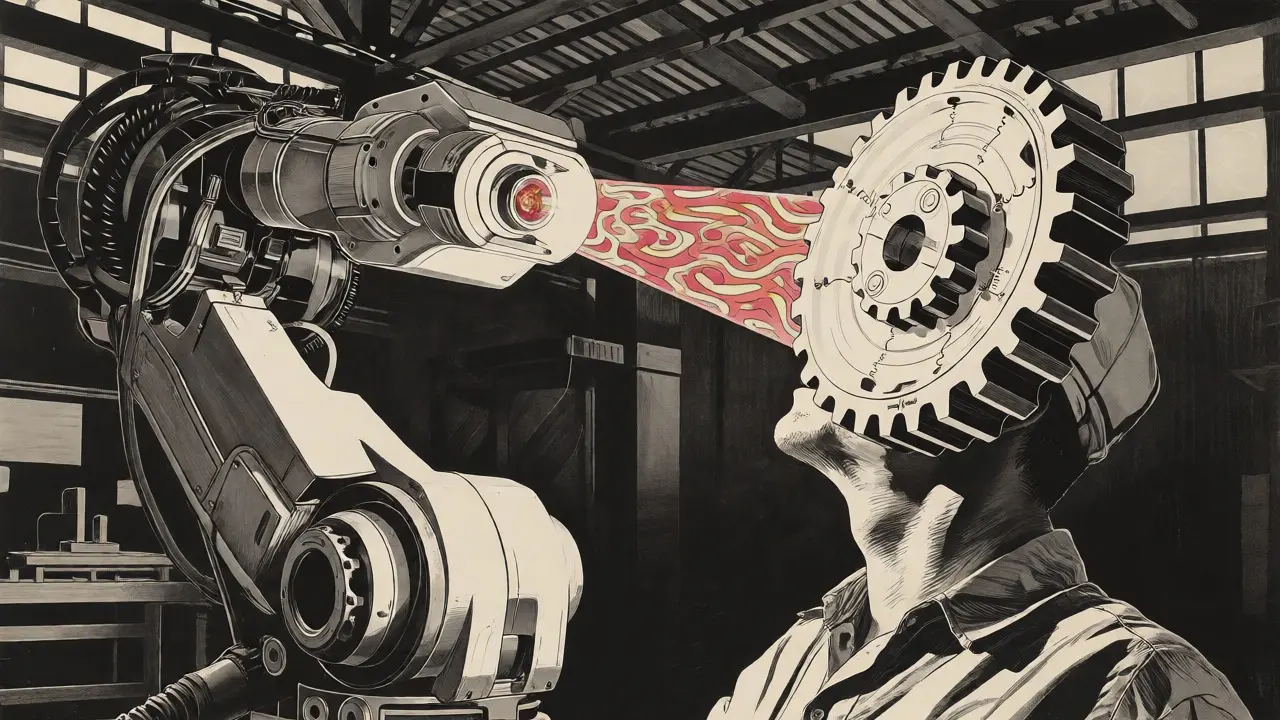
In manufacturing, companies like BMW have deployed robotic multimodal agents in assembly lines. By integrating RGB cameras, tactile sensors, and force/torque sensors, these agents reduced quality inspection errors by 52.3%. They don’t just follow a script; they adapt to slight variations in part placement or lighting conditions, adjusting their grip or inspection angle in real-time.
For enterprise automation, tools like AWS’s multi-modal agent framework integrate Amazon Comprehend for text, Textract for documents, and Transcribe for speech. This allows a single agent to handle a customer support ticket that includes a PDF invoice, a voice note complaint, and a screenshot of a billing error, resolving the issue without human intervention.

Challenges and Pitfalls to Avoid
Don’t let the hype blind you. Implementation is messy. Forrester’s Q4 2025 analysis identifies "integration complexity with legacy enterprise systems" as the primary barrier, cited by 68.3% of surveyed enterprises. Many companies underestimate the cost of sensor integration and staff retraining. One major US retailer abandoned a $2.4M multimodal customer service project after facing a 68.7% failure rate in noisy store environments-the audio input was simply too chaotic for the model to parse reliably.
Another critical issue is "modality conflict." What happens when the image says one thing, but the text says another? University of Washington researchers found that multimodal systems demonstrate 22.7% higher compound error rates when modalities contain conflicting information. To mitigate this, experts recommend implementing confidence thresholding. If the multimodal confidence falls below 75%, the system should fall back to unimodal processing or escalate to a human.
Finally, consider the ethical and regulatory landscape. The EU’s 2025 AI Act amendments specifically address multimodal biometric processing, requiring 95%+ accuracy thresholds for emotion recognition. If you’re deploying agents that analyze faces or voices in public spaces, compliance isn’t optional-it’s a legal requirement.
The Future: Where Are We Headed?
The trajectory is clear: multimodal agents are becoming the dominant AI paradigm. McKinsey predicts that by 2028, 75% of enterprise AI interactions will involve multiple modalities. Current developments, such as Google’s Project Astra and OpenAI’s GPT-4.5, focus on reducing latency and improving robustness. The goal is to move from brittle systems that fail in novel situations to resilient agents that can generalize their understanding.
We are moving away from static prompts toward dynamic, embodied interactions. Soon, your AI won’t just be a window on your screen; it will be a persistent presence in your physical and digital environment, capable of seeing what you see, hearing what you hear, and acting on your behalf with minimal instruction.
What is the difference between a multimodal model and a multimodal agent?
A multimodal model (like GPT-4V) processes multiple types of input (text, images) to generate an output. A multimodal agent adds autonomy: it has memory, planning capabilities, and the ability to use tools or perform actions based on that perception. An agent doesn't just describe an image; it might edit it, save it, or trigger an action based on what it sees.
Are multimodal agents expensive to implement?
Yes, significantly. They typically incur 3.2x higher computational costs than unimodal systems due to the heavy lifting required for vision and audio processing. Additionally, enterprise implementations often require substantial upfront investment in sensor integration and custom training, sometimes exceeding $1M for large-scale deployments.
Can multimodal agents work offline or on edge devices?
Increasingly, yes. While early models required massive cloud GPUs, newer efficient architectures like Meta's Llama-3-Multimodal are designed to run on devices with as little as 8GB VRAM. However, full-capability real-time processing still generally requires cloud connectivity or high-end local hardware.
How do I handle conflicting information from different modalities?
Use confidence thresholding. Assign reliability scores to each modality based on input quality (e.g., blurry images get lower weight). If the overall multimodal confidence score drops below a set threshold (often around 75%), the system should either rely on the most reliable single modality or escalate the decision to a human operator.
Which industries benefit most from multimodal agents?
Healthcare, manufacturing, and retail currently lead adoption. Healthcare benefits from combining imaging with patient records; manufacturing uses them for quality control and robotics; and retail uses them for visual search and personalized customer service experiences.