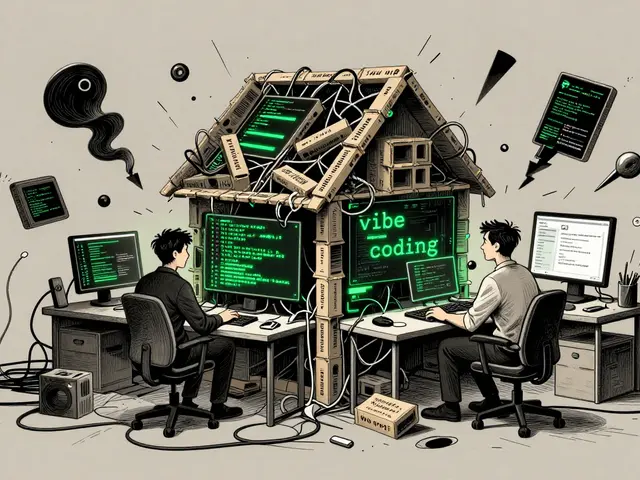
You’ve got the tools. Your developers are using Copilot, Cursor, or maybe even some internal LLM wrappers to speed up their work. But here’s the problem: everyone is coding differently now. One team is generating entire modules with prompts, another is tweaking AI suggestions line-by-line, and nobody is quite sure if the code quality is holding up or just getting faster at creating messes. This isn’t just about style; it’s about maintainability, security, and knowing what actually works when you’re relying on AI-assisted development.
That’s where a Vibe Coding Center of Excellence (CoE) comes in. Unlike traditional CoEs that enforce rigid rules, a Vibe Coding CoE focuses on enablement. It helps teams navigate the new landscape of human-AI pair programming without becoming a bottleneck. If you’re trying to figure out how to structure this, who to hire, and what goals actually matter, this guide breaks down the practical steps to build one that developers won’t hate.
What Is a Vibe Coding Center of Excellence?
A standard Center of Excellence is usually a group that sets standards and enforces them. Think of it as the rule police for code. A Vibe Coding CoE is a specialized team focused on establishing best practices, tooling, and governance specifically for AI-assisted software development. The term "vibe" refers to the intuitive, flow-state nature of working with large language models (LLMs). Developers aren’t just typing syntax; they’re guiding an AI partner. The CoE’s job isn’t to stop that flow but to ensure it doesn’t lead to technical debt or security holes.
The core difference lies in the approach. Traditional CoEs often fail because they focus on compliance over capability. They mandate specific frameworks or linters that might not fit the rapid iteration cycle of AI coding. A Vibe Coding CoE, however, acts more like an enablement hub. It provides the guardrails-like prompt libraries, security scanners for generated code, and review guidelines-that allow developers to move fast without breaking things. According to recent industry shifts, organizations adopting this enablement-first model see significantly higher developer satisfaction compared to those sticking to strict enforcement.
Why You Need a Charter (And What Goes In It)
You can’t just announce a CoE and hope for the best. Without a clear charter, you’ll end up with scope creep and confusion. The charter is your contract with the organization. It defines what the CoE owns and, crucially, what it doesn’t own. For a Vibe Coding initiative, the charter needs to address the unique risks of AI-generated code.
Start by defining the scope. Are you covering all AI tools? Just the enterprise-approved ones? Does this include low-code platforms that use AI backends? Be specific. Next, outline decision rights. Who decides which AI model gets used for production code? Who approves new prompt templates? Gartner suggests pushing 70-80% of technical decisions to the dev teams, keeping only architectural and security-critical choices centralized. This prevents the CoE from becoming a bottleneck.
Your charter should also specify success metrics. Don’t just track lines of code. Track things like "time-to-value," "defect density in AI-generated code," and "developer confidence scores." If you don’t measure what matters, you’ll end up optimizing for the wrong things. Finally, include a review cadence. AI tools change monthly. Your charter must allow for quarterly reviews of these standards so the CoE doesn’t become obsolete six months after launch.

Staffing the Right Team
Hiring for a Vibe Coding CoE is tricky. You don’t just need senior engineers. You need people who understand both deep technical architecture and the nuances of human-computer interaction. A common mistake is staffing the CoE with pure managers who haven’t written code in years. They lack the credibility to guide developers on how to effectively prompt an AI.
Here’s a typical structure for a small-to-mid-sized organization:
- CoE Lead: Needs strong change management skills. This person bridges the gap between executive expectations and developer reality. They should have experience in DevOps or Agile transformations.
- Senior AI Engineer: Someone with hands-on experience in LLM integration, RAG (Retrieval-Augmented Generation) systems, and prompt engineering. They define the technical standards for AI usage.
- Security Specialist: AI code introduces new vulnerabilities, like hallucinated dependencies or insecure patterns. This role focuses on scanning and validating AI output.
- Developer Advocate: Crucial for adoption. This person creates tutorials, hosts workshops, and gathers feedback. They ensure the CoE feels like a helper, not a policeman.
You don’t need a massive team. For most companies, 3-5 full-time equivalents (FTEs) are enough to start. The key is diversity of skill. If everyone is a backend engineer, you’ll miss frontend or mobile-specific AI challenges. Mix in roles that represent different parts of the stack.
Setting Realistic Goals and KPIs
What does success look like? If you tell leadership you’re going to "improve code quality," they’ll ask for numbers. Here are concrete goals you can set for your first year:
| Metric | Target | Why It Matters |
|---|---|---|
| Adoption Rate | >80% of active devs using approved AI tools | Shows the CoE is relevant and tools are accessible. |
| Defect Density | <0.5 defects per KLOC in AI-assisted modules | Proves AI isn’t introducing excessive bugs. |
| Cycle Time Reduction | 15-20% decrease in feature delivery time | Demonstrates ROI to business stakeholders. |
| Developer Satisfaction | >4.0/5.0 on internal surveys | Ensures the CoE supports rather than hinders flow. |
| Standard Compliance | 90% adherence to prompt/security guidelines | Reduces risk of inconsistent or unsafe code. |
Notice that none of these are purely technical. Adoption and satisfaction are critical. If developers bypass your CoE’s recommendations because they find them annoying, you’ve failed, no matter how clean the code is. Focus on removing friction. For example, if your security scanner adds 10 minutes to every commit, developers will skip it. Work with them to integrate checks into the CI/CD pipeline seamlessly.

Pitfalls to Avoid
Most CoEs fail for predictable reasons. The biggest one is over-governance. If your CoE requires a three-day approval process for a new library, developers will ignore you. Keep approvals lightweight. Use automated checks wherever possible.
Another trap is one-size-fits-all standards. What works for a data science team using Python and Jupyter notebooks might not work for a mobile team using Swift. Allow flexibility within your framework. Let teams customize their workflows as long as they meet the core security and quality baselines.
Finally, avoid ignoring the learning curve. Prompt engineering is a skill. Not everyone knows how to write effective prompts. Budget time for training. Create a shared library of successful prompts and anti-patterns. This turns individual knowledge into organizational assets.
Next Steps for Implementation
Ready to start? Begin small. Pick one pilot team. Work closely with them to define initial standards. Gather feedback weekly. Adjust your charter based on real-world usage, not theoretical assumptions. Once you have a proven playbook, expand to other teams. Remember, the goal isn’t control-it’s velocity with confidence.
Do we need a dedicated team for a Vibe Coding CoE?
Not necessarily a large one. Many successful CoEs start with 2-3 part-time members who rotate from existing teams. However, having at least one dedicated lead ensures continuity and accountability. As adoption grows, you may need to scale up to full-time roles.
How do we handle security risks with AI-generated code?
Integrate static analysis tools that specifically scan for AI-related issues, such as hallucinated dependencies or insecure API calls. Make these scans part of the pull request process so developers get immediate feedback. Also, require manual review for critical security components, regardless of who wrote the code.
What if developers resist the CoE’s guidelines?
Resistance usually stems from perceived bureaucracy. Involve developers in creating the guidelines. Show them how the standards save them time later (e.g., easier debugging, better documentation). Offer incentives for early adopters and gather their testimonials to persuade skeptics.
Can a Vibe Coding CoE coexist with Agile methodologies?
Yes, if structured correctly. Instead of imposing heavy upfront planning, the CoE should provide reusable assets and quick-reference guides that support iterative development. Focus on enabling self-organizing teams rather than commanding them.
How often should we update our AI coding standards?
Quarterly reviews are recommended. The AI landscape changes rapidly, with new models and tools emerging frequently. A quarterly cadence allows you to incorporate new best practices without overwhelming teams with constant changes.