
Remember when building a website meant hiring a developer or spending six months learning HTML and CSS? That era is effectively over. Today, you can describe an app idea in plain English, and artificial intelligence will write the code for you. This shift, known as vibe coding, is a hybrid development approach that combines intuitive natural language input and AI-driven code suggestions to generate functional applications. It was formally defined by platforms like Knack in 2024 and has since become the dominant method for rapid prototyping. The barrier to entry for creating software has dropped from years of study to hours of practice. But who exactly can build now? And what are the real risks when you don't understand the code running your business?
What Is Vibe Coding Really?
Vibe coding isn't just another buzzword for "no-code." It is a distinct methodology where large language models (LLMs) act as the primary programmer. Instead of dragging and dropping pre-built blocks on a visual canvas, you type out what you want. For example, you might tell the AI, "Create a dashboard with three charts showing sales data, filtered by date." The AI then generates the underlying JavaScript, Python, or TypeScript code needed to make that happen.
This approach relies on advanced models like Google's Gemini 2.5 Pro, OpenAI's GPT-4, and Anthropic's Claude. These systems have been fine-tuned specifically for code generation. They don't just guess; they analyze your natural language description and produce syntactically correct code. According to Google Cloud's documentation from December 2024, this style of programming uses natural language prompts to assist with the entire coding process, from initial setup to deployment.
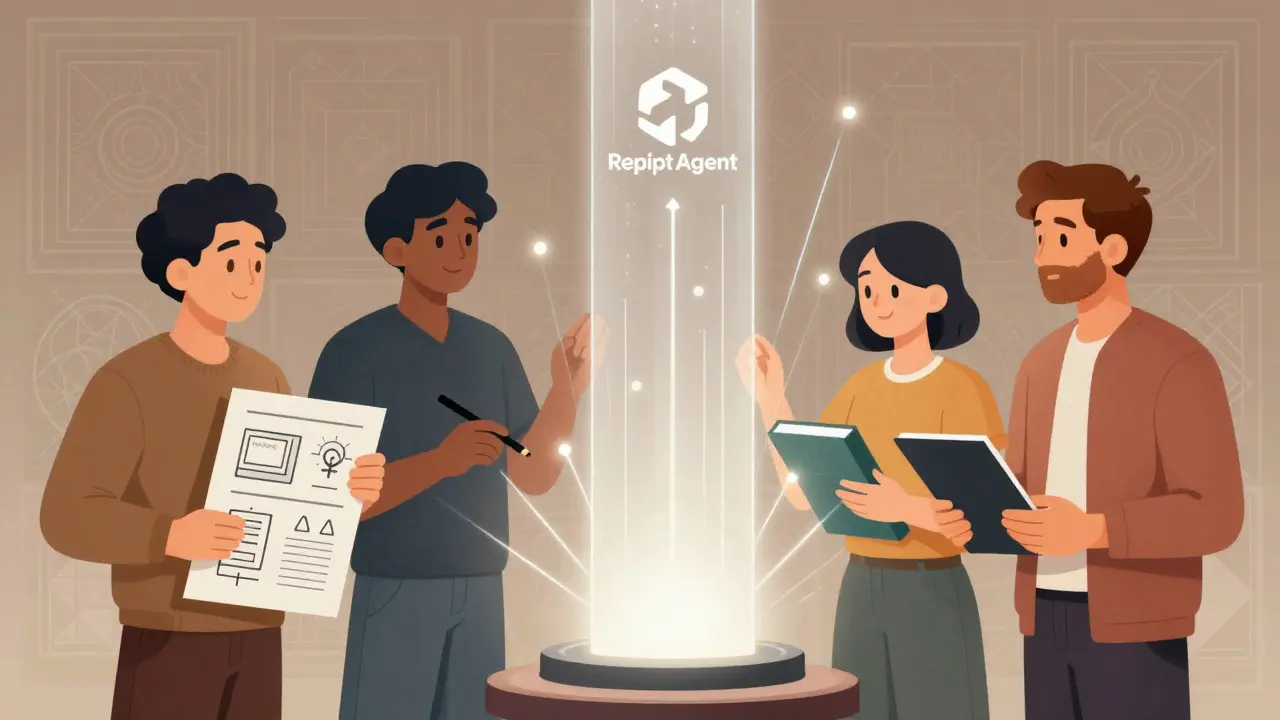
The magic happens because these tools integrate directly into environments you already know. You can use plugins like GitHub Copilot inside VS Code or try Google's Gemini Code Assist. Replit took it a step further with their Agent system, which doesn't just suggest code but builds the entire application-including databases and user interfaces-without you touching a single configuration file. It’s like having a senior developer who works at the speed of thought, ready to execute your ideas instantly.
Who Can Build Software Now?
The most significant change vibe coding brings is the expansion of who gets to create software. We used to call these people "citizen developers," but the term feels outdated. Today, almost anyone with a clear idea can build. Let's look at the new demographics shaping this landscape:
- Non-Technical Founders: Entrepreneurs who previously spent thousands on MVPs (Minimum Viable Products) can now build them themselves. Sarah Chen, a product manager, shared on Hacker News that she built three internal tools for her startup using vibe coding, saving $45,000 in developer costs.
- Product Managers: PMs can prototype features instantly to test hypotheses with users before committing engineering resources. Microsoft reported that 42% of new application prototypes within their company are now initiated through AI-assisted coding, many by employees without formal training.
- Designers: Creative professionals can bring their UI/UX visions to life without waiting for a dev team. A Reddit user documented building a task management app in just three hours by describing the design to Replit's Agent.
- Educators and Students: Learning to code is no longer about memorizing syntax. It's about logic and problem-solving. General Assembly found that non-technical users could create basic applications within 8-12 hours of guided practice, compared to 120+ hours for traditional methods.
This democratization means that if you can articulate a problem clearly, you can likely solve it with software. The skill set has shifted from "knowing how to code" to "knowing how to prompt."
Vibe Coding vs. Traditional No-Code and Low-Code
To understand where vibe coding fits, we need to compare it to the tools that came before it. Many people confuse vibe coding with no-code platforms like Bubble or Webflow. While they share the goal of accessibility, their mechanics are very different.
| Feature | Traditional No-Code (Bubble/Webflow) | Low-Code (OutSystems/Mendix) | Vibe Coding (Replit/Gemini) |
|---|---|---|---|
| Interface | Visual drag-and-drop | Visual + some scripting | Natural language prompts |
| Customization | Limited to platform components | Moderate, requires specific paradigms | High, full code access available |
| Learning Curve | Low (platform-specific) | Medium | Very Low (natural language) |
| Output | Proprietary format | Generated code (often locked) | Standard code (JS, Python, etc.) |
| Best For | Simple websites, marketing pages | Enterprise internal tools | Rapid prototyping, custom apps |
No-code platforms are great for standard websites, but they hit a wall when you need something unique. Forrester found that 78% of enterprises using pure no-code eventually hit customization limits. Vibe coding solves this by generating actual code. If the AI makes a mistake, you can edit the code directly. It offers the ease of no-code with the flexibility of professional programming.
The Hidden Risks: Security and Technical Debt
It sounds too good to be true, right? There’s a catch. Just because you can build an app quickly doesn’t mean it’s secure or maintainable. This is the biggest concern raised by experts.
GitHub’s 2024 State of the Octoverse report revealed that 37% of AI-generated code required security modifications. Why? Because LLMs prioritize making things work over making things safe. They might generate a database query that is vulnerable to injection attacks because they didn't "think" about security best practices-they just predicted the next likely line of code based on millions of public repositories.
Then there's the issue of technical debt. User u/CodeQualityWatch on GitHub noted that AI often creates "spaghetti code" that works initially but becomes unmaintainable. If you rely entirely on vibe coding without understanding the structure, you’ll find yourself stuck when the app grows complex. MIT professor Arvind Satyanarayan warned that this risks creating a class of developers who can assemble applications without understanding the underlying systems-a dangerous gap when reliability matters.
To mitigate this, you need a structured workflow. Wasp’s engineering team recommends using established UI component libraries and boilerplate templates. This gives the AI a "known foundation" to build upon, reducing the chance of chaotic code generation. Think of it like giving an architect a solid blueprint rather than asking them to invent a new form of concrete.

How to Start Vibe Coding Today
If you’re ready to try it, here is a practical path to get started without getting overwhelmed.
- Choose Your Tool: For beginners, Replit’s Agent is the most hands-off experience. It handles hosting and databases automatically. If you prefer more control, try Google’s Gemini Code Assist or GitHub Copilot within VS Code.
- Master Prompt Engineering: Your success depends on how well you describe what you want. Be specific. Instead of "make a login page," try "create a login page with email and password fields, including validation for email format and a 'forgot password' link." Google’s Kelsey Hightower noted that successful vibe coders spend 30% of their time crafting precise descriptions.
- Start Small: Don’t try to build the next Facebook on day one. Build a simple to-do list or a personal budget tracker. General Assembly suggests aiming for basic CRUD (Create, Read, Update, Delete) applications first.
- Review the Code: Even if you don’t understand every line, look for red flags. Does the code connect to a database securely? Are there hardcoded passwords? Use the AI to explain its own code if you’re confused. Ask, "Why did you choose this library?" or "Is this function secure?"
- Iterate: Vibe coding is iterative. You describe, the AI builds, you test, you refine. It’s a conversation, not a command.
The Future of Software Development
We are only at the beginning. Gartner projects the AI-assisted development market will grow to $38.2 billion by 2027. IDC predicts that by 2027, 65% of all application development will incorporate AI assistance. This isn't replacing developers; it's augmenting them. Professional developers are using these tools to complete tasks 55% faster, focusing their energy on architecture and complex logic rather than boilerplate code.
However, the legal landscape is still catching up. Questions about who owns AI-generated code remain unresolved, with ongoing litigation like the GitHub Copilot class action lawsuit. Additionally, regulations like the EU's AI Act may require documentation of AI-generated code in critical systems. As you dive into vibe coding, keep an eye on these developments. The technology is moving fast, but responsibility remains with the human behind the prompt.
Do I need to know how to code to use vibe coding?
No, you do not need prior coding knowledge to start. Vibe coding is designed for natural language input. However, understanding basic concepts like variables, loops, and APIs will help you debug issues and refine the output more effectively.
Is vibe coding secure for enterprise applications?
Not without oversight. Reports indicate that a significant portion of AI-generated code contains security vulnerabilities. For enterprise use, it is crucial to have security reviews and use established frameworks to minimize risks. Never deploy AI-generated code to production without thorough testing.
What are the best tools for vibe coding in 2026?
Top choices include Replit Agent for full-stack application generation, GitHub Copilot for integrated IDE support, and Google's Gemini Code Assist for cloud-native development. Each tool has strengths depending on whether you need quick prototyping or deep integration.
Can vibe coding replace professional developers?
Unlikely in the near future. While vibe coding accelerates routine tasks, complex architectural decisions, security auditing, and maintaining large-scale systems still require experienced human judgment. It augments developers rather than replacing them.
How much does vibe coding cost?
Costs vary by platform. GitHub Copilot charges around $10 per user per month. Google offers free tiers with credits. Replit has subscription plans for advanced features. Compared to hiring a developer, the cost is negligible for most individuals and small teams.






Patrick Dorion
July 14, 2026 AT 10:52It's fascinating how we've shifted from the rigid syntax of yesteryear to this fluid, conversational model of creation.
I think the real philosophical shift here isn't just about speed, but about intent. When you describe what you want in plain English, you are forcing yourself to clarify your thoughts before they become code. It’s like thinking out loud and having the universe listen.
That said, I worry about the loss of craft. There was a certain beauty in understanding the machine at a low level. Now, it feels like we’re building castles on clouds. But hey, if the castle stands, who cares? Just make sure you know where the foundation is.
Marissa Haque
July 16, 2026 AT 09:35OMG!!! This is absolutely HUGE!! I literally cannot believe how fast this is moving!! I tried Replit Agent last week and I built a whole portfolio site in like... twenty minutes?!?! I was shaking!! My hands were literally trembling!! It feels so empowering!! We are all creators now!! No more waiting for devs!! Yay!!
Lisa Puster
July 16, 2026 AT 14:03please stop acting like this is some revolutionary miracle. its just autocomplete with extra steps. you americans love to hype up every shiny new toy as if it changes the fundamental nature of reality. it doesnt. you still have no idea what you are doing and that is why your apps will fail. i see it everywhere. sloppy code. security holes. garbage architecture. and you call it progress. pathetic. keep playing in the sandbox while real engineers do the work.
Joe Walters
July 16, 2026 AT 20:34oh look another elitist posting their hot takes. wow. really impressive joe. i mean lisa. whatever. you sound like my ex girlfriend who complained about everything. vibe coding is great for quick stuff yeah sure but lets not pretend its replacing senior architects. i built a todo app yesterday and it took me 3 hours because the ai kept putting the css in the wrong place. hilarious. but hey thanks for the reality check queen of doom and gloom.
Keith Barker
July 18, 2026 AT 15:32the tool is neutral. the user is not. we project our laziness onto the algorithm and call it efficiency. there is a difference between creating and assembling. most people here are just assembling. they think they are creating because the output looks like software. but the soul is missing. the logic is borrowed. the structure is guessed. eventually the debt comes due. always does.
Robert Barakat
July 20, 2026 AT 08:52There is a quiet danger in outsourcing our cognitive load to black boxes. We lose the ability to debug not just the code, but our own thinking. If the AI makes a logical leap we don't understand, we accept it as truth. This creates a fragility in our systems that is invisible until it breaks. I prefer to write my loops by hand. It keeps me grounded.
Michael Richards
July 21, 2026 AT 21:22Listen up. If you are deploying AI generated code to production without reviewing every single line, you are an idiot. Full stop. The article mentions security risks but doesn't emphasize enough that YOU are responsible. Not the AI. You. Stop using these tools as a crutch and start using them as a calculator. Learn the basics. If you can't explain why the code works, you shouldn't be running it. Get good or get out.