
When you type a natural language prompt like "build me a login page with Google auth and dark mode," and an AI spits out a working frontend in seconds, it feels like magic. But behind that magic is a very real, very expensive machine running on GPUs costing $10,000 a month just to keep up. This is vibe coding - and it’s breaking traditional budgeting rules.
Traditional software development costs are predictable: you hire a team, pay salaries, rent office space, and wait months for a product. Vibe coding flips that. Now, you pay per use - every time you ask the AI to generate, debug, or refactor code, you’re consuming compute. And that’s where things get messy.
How Vibe Coding Changes the Cost Structure
Before vibe coding, your biggest expense was human labor. A single feature might cost $15,000 in developer hours. Today, you can build the same thing for $10 using Cursor or Replit. Sounds amazing, right? But here’s the catch: that $10 isn’t a fixed cost. It’s a variable one.
AI code generation isn’t like sending an email. It’s like running a high-end video game on a server farm. Each prompt triggers a chain of reasoning, token-by-token, across massive language models. Cursor’s Business plan charges $40/month - but if you’re generating complex backend logic, your actual usage can spike to $3,200 in a single week, as one user reported on Reddit. That’s not a bug. It’s how the system works.
J.P. Morgan’s November 2025 report calls this a "backloaded cost structure." Instead of paying upfront for people, you pay as you go for machines. And unlike salaries, usage doesn’t follow a calendar. It spikes during sprints, holidays, or when a founder gets excited and asks the AI to "build the whole app."
Who’s Paying What - And Why It Matters
Not all vibe coding platforms are built the same. Their pricing models reflect different bets on the future of development.
- Cursor uses a flat subscription: $20 for Pro, $40 for Business. But their fine print warns that "multi-step reasoning can consume 5-10x more tokens." That means your $40 plan can easily turn into $500 in usage charges if you’re building anything beyond a simple UI.
- Lovable hit $100 million in annual recurring revenue (ARR) in eight months. Their model is similar - flat monthly fee - but they’re betting on volume. The problem? Their G2 reviews show 38% of users complain about "unpredictable billing spikes."
- Replit went from $2.8 million to $150 million ARR in under a year. They’ve been smarter about it. Their new Budget Guardian tool, launched in November 2025, lets teams set daily spending caps and get real-time alerts. It’s the first real answer to chargebacks.
- Vercel doesn’t even charge extra for vibe coding. It’s baked into their hosting platform. If you’re already using Vercel to deploy your Next.js app, AI generation is just another feature. Their "predictive budgeting" feature (coming in December 2025) uses your past usage to forecast next month’s cost - within 5% accuracy.
- Rocket.new, backed by Salesforce Ventures, targets enterprises with a usage-based model. Instead of $40/month, they charge per token. Their pricing is transparent: $0.0002 per 1,000 tokens. For most teams, that’s $50-$200/month. But they also enforce strict access controls, audit logs, and SOC 2 compliance - things small platforms ignore.
The difference isn’t just price. It’s control. Flat-rate plans are easy to sign up for. But they’re dangerous for finance teams. Usage-based models are harder to sell internally - until you show them how to lock down spending.
The Chargeback Crisis
"I didn’t know it would cost $3,200 to build a chatbot," said one founder in a November 2025 HackerNews thread. "I thought $40 was the price."
That’s the core problem: users don’t understand what they’re paying for. They think they’re buying software. They’re actually buying compute.
Trustpilot data shows 32% of negative reviews cite "lack of spending controls" as the top reason for churn. A startup in Austin used Cursor to build a prototype, then ran a 72-hour sprint over Thanksgiving. Their bill? $4,100. Their budget? $200.
This isn’t just about small teams. Gartner’s November 2025 survey found that 87% of IT finance teams had no visibility into vibe coding usage. No budgets. No alerts. No approval workflows. That’s a recipe for disaster.
Chargebacks aren’t just annoying - they’re a governance failure. If your CFO finds out your dev team spent $18,000 in one month on AI-generated code, and you can’t explain why, you’re not just out of budget. You’re out of trust.

Building a Budget for Vibe Coding
Here’s how to stop getting blindsided:
- Track usage, not just plans. Don’t rely on monthly subscription fees. Use platform analytics (Cursor’s Usage Dashboard, Replit’s Budget Guardian) to monitor token consumption. Set up weekly reports.
- Set hard caps. Replit’s tool lets you cap daily spending. Do the same. If your team’s max budget is $500/month, set the system to shut off at $450. No exceptions.
- Require approval for complex tasks. If someone wants to generate a full API backend, they should submit a request. Not because you’re being bureaucratic - but because complex prompts use 8x more tokens. Make them justify it.
- Train finance teams. Most finance people think "AI" means chatbots. They don’t know what a "token" is. Give them a 30-minute walkthrough. Show them how a single prompt can cost $12. It’s not magic. It’s math.
- Start small. Don’t roll out vibe coding to 50 people on day one. Pick one team. Track their usage for 30 days. Build a baseline. Then scale.
Vercel’s predictive budgeting is the gold standard. It doesn’t just tell you what you spent - it tells you what you’ll spend next month. If you’re using it, you’re ahead of 90% of companies.
Enterprise vs. Solo Dev: Two Different Worlds
For a solo founder, vibe coding is a game-changer. One person, $20/month, and they’re building apps faster than a whole agency. No team needed. No payroll. Just results.
For a Fortune 500 company? It’s a minefield.
Only 12% of large companies have formal vibe coding budgets as of November 2025, according to Gartner. Why? Because enterprise rules don’t bend for AI. You need:
- SSO integration
- Compliance with SOC 2 Type 2
- Code audit trails
- Approval workflows
- Legal review of AI-generated code
That’s why Rocket.new is growing fast. It’s not about the AI. It’s about the controls. Enterprises don’t care if the code is generated in 2 seconds. They care if it’s auditable, secure, and approved.
Meanwhile, startups are using vibe coding to skip traditional development entirely. One e-commerce startup built a full MVP in 10 days using Lovable, then hit $2 million in ARR. Their CFO? "I had no idea how much it cost until the bill came."
The Future: Hybrid Models Are Winning
The best organizations aren’t replacing developers. They’re redefining roles.
Now, a typical team looks like this:
- Product Owner: Uses vibe coding to prototype features in hours, not weeks.
- Senior Developer: Reviews AI output, fixes edge cases, ensures scalability.
- Finance Lead: Monitors usage, sets budgets, flags spikes.
- Security Officer: Audits generated code for vulnerabilities.
Gartner predicts this hybrid model will dominate 65% of enterprise projects by 2027. Why? Because vibe coding isn’t about replacing humans. It’s about making them faster - but only if you manage the cost.
What Happens If You Ignore Budgeting?
Some companies will keep using vibe coding like a free tool. They’ll get burned.
Imagine this:
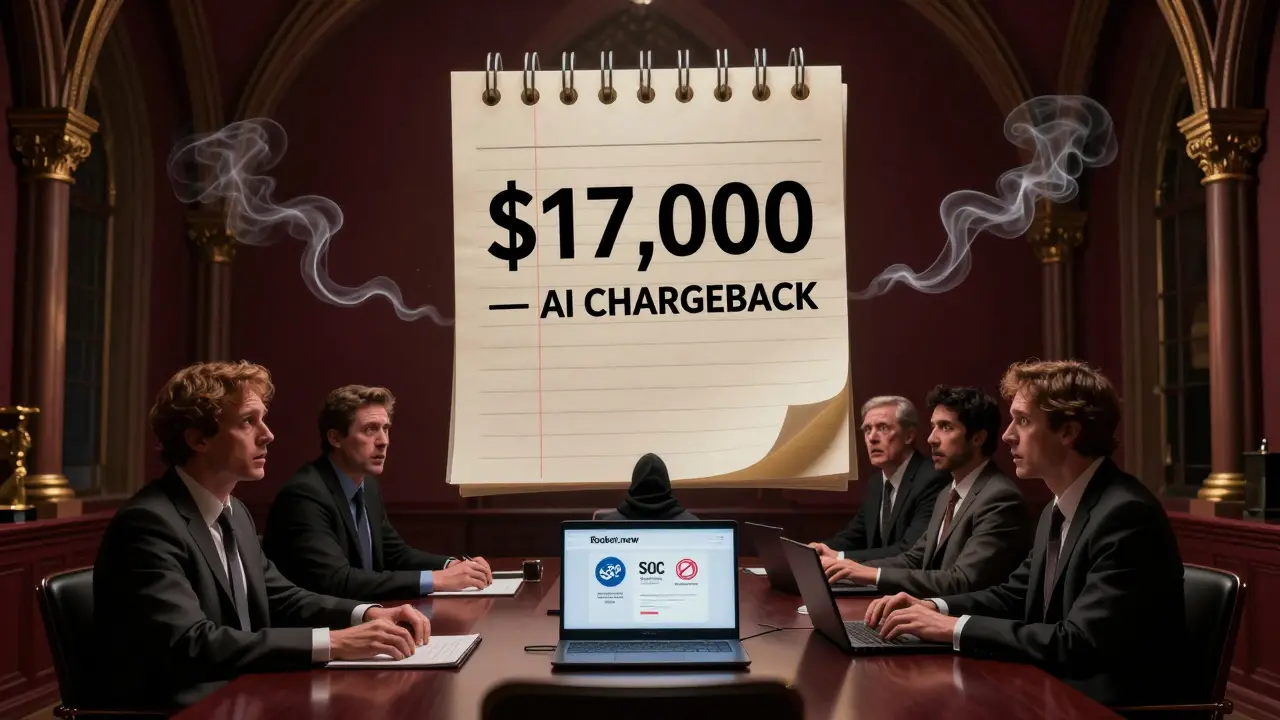
- December 10: CFO notices a $17,000 spike in "cloud services."
- December 12: IT finds out it was AI code generation from three employees.
- December 15: CFO shuts down all vibe coding tools.
- December 20: Product team can’t build anything. Projects stall.
This isn’t hypothetical. It’s happening. And it’s why governance isn’t optional anymore.
Without budgets, vibe coding becomes a liability. With them, it’s the fastest way to build.
Final Take
Vibe coding isn’t just changing how we write code. It’s changing how we spend money. The old model - pay salaries, wait months - is gone. The new model - pay per token, move fast - is here.
But speed without control is chaos. If you don’t have spending limits, usage tracking, and team awareness, you’re not innovating. You’re gambling.
The winners won’t be the ones using AI the most. They’ll be the ones budgeting for it the best.
Why is vibe coding so expensive even on cheap plans?
Flat-rate plans like Cursor’s $40/month cover access, not usage. Each time you ask the AI to generate or debug code, it runs complex computations on expensive GPUs. Simple prompts cost pennies. Complex ones - like building a full API or handling user authentication - can consume 5-10x more tokens, turning a $40 plan into a $500+ bill in a week.
Can I use vibe coding without a budget?
Technically, yes. But you’ll likely get hit with a surprise chargeback. Most teams that skip budgeting end up with bills 5-10x higher than expected. Finance teams often shut down access after one big spike. Smart teams set hard spending caps from day one.
Which vibe coding platform has the best budgeting tools?
Replit’s Budget Guardian and Vercel’s predictive budgeting (coming Dec 2025) are currently the best. Replit lets you set daily caps and get real-time alerts. Vercel uses your historical usage to forecast next month’s cost within 5% accuracy. Both are designed for teams that need control - not just speed.
Is vibe coding secure for enterprise use?
It depends on the platform. Tools like Cursor and Lovable have minimal security controls. Enterprise-focused platforms like Rocket.new and Vercel offer SSO, SOC 2 compliance, audit logs, and code scanning. If you’re in finance, healthcare, or regulated industries, only use platforms with these features.
How do I explain vibe coding costs to my CFO?
Compare it to cloud hosting. Just like you pay for AWS usage by the hour, you pay for AI code generation by the token. Show them a sample: "This one prompt used 12,000 tokens and cost $2.40. If we do 50 like this a week, it’s $120/month." Concrete numbers beat vague "AI magic" explanations.







Glenn Celaya
March 4, 2026 AT 02:44flat rate my ass
you think $40 gets you magic? nah it gets you a gateway to bankruptcy
one time i asked for a login page and ended up with a full auth microservice
bill was $2k in 3 days
no one told me "complex prompts" meant "burn your budget"
its like buying a car and finding out gas costs $100 per gallon
ai ain't cheap its just sneaky
stop pretending its affordable
Wilda Mcgee
March 5, 2026 AT 00:29hey i feel you on this
but let’s not throw the baby out with the bathwater
yes vibe coding can spiral
but so can hiring 5 devs for 6 months
the key is *awareness*
my team uses Replit’s Budget Guardian and we’ve cut waste by 70%
set a cap, get alerts, teach folks what a token is
it’s not about stopping the tech
it’s about dancing with it smartly
we went from chaos to calm in 2 weeks
you can too 💪
Chris Atkins
March 6, 2026 AT 15:59man i just use cursor and dont think twice
its like ordering pizza
you dont ask how many ovens are running
just eat the damn slice
if your finance team cant handle $500 in a month
maybe they shouldnt be in charge
we built a whole saas in 4 days
cost $87
best investment ever
stop overcomplicating
ai is here to help not haunt you
Jen Becker
March 7, 2026 AT 01:36my boss found out i spent $4100 on thanksgiving weekend
he screamed
then shut down all ai tools
now we’re back to writing code by hand
like cavemen
im not mad
im just disappointed
Ryan Toporowski
March 7, 2026 AT 04:32just wanted to say Replit’s Budget Guardian is a game changer 🤩
set my cap at $200/week
got an alert when i hit $180
paused and thought "wait did i really need that 12-step backend?"
turned out no
saved $150
and still got my work done
small tweaks > big meltdowns
you got this 💯
Samuel Bennett
March 7, 2026 AT 08:53you guys are missing the point
these "budget tools" are just marketing gimmicks
the real issue? ai generates vulnerable code
cursor and lovable? they spit out backdoors disguised as features
no one checks the output
you think $10 is cheap?
wait till your customer data gets leaked because the ai wrote a flawed auth function
then come back and tell me about budgets
security first
money second
Rob D
March 8, 2026 AT 18:10you americans are so soft
in russia we just pay and don’t cry
if your bill is $3k then you used it right
if you’re scared of a number
you shouldn’t be building
ai isn’t for the timid
if you can’t afford the compute
go flip burgers
stop whining about tokens
the future belongs to those who burn the midnight oil
and the gpu cores
Franklin Hooper
March 10, 2026 AT 06:45the real tragedy isn’t the spending
it’s the lack of accountability
no one audits the ai’s output
no one traces which prompt led to which line of code
and yet we call this "development"
you’re not building software
you’re assembling black-box legos
and when it breaks
who’s responsible?
the ai?
the user?
the platform?
no one
and that’s why this whole trend is a house of cards
built on optimism
and ignorance