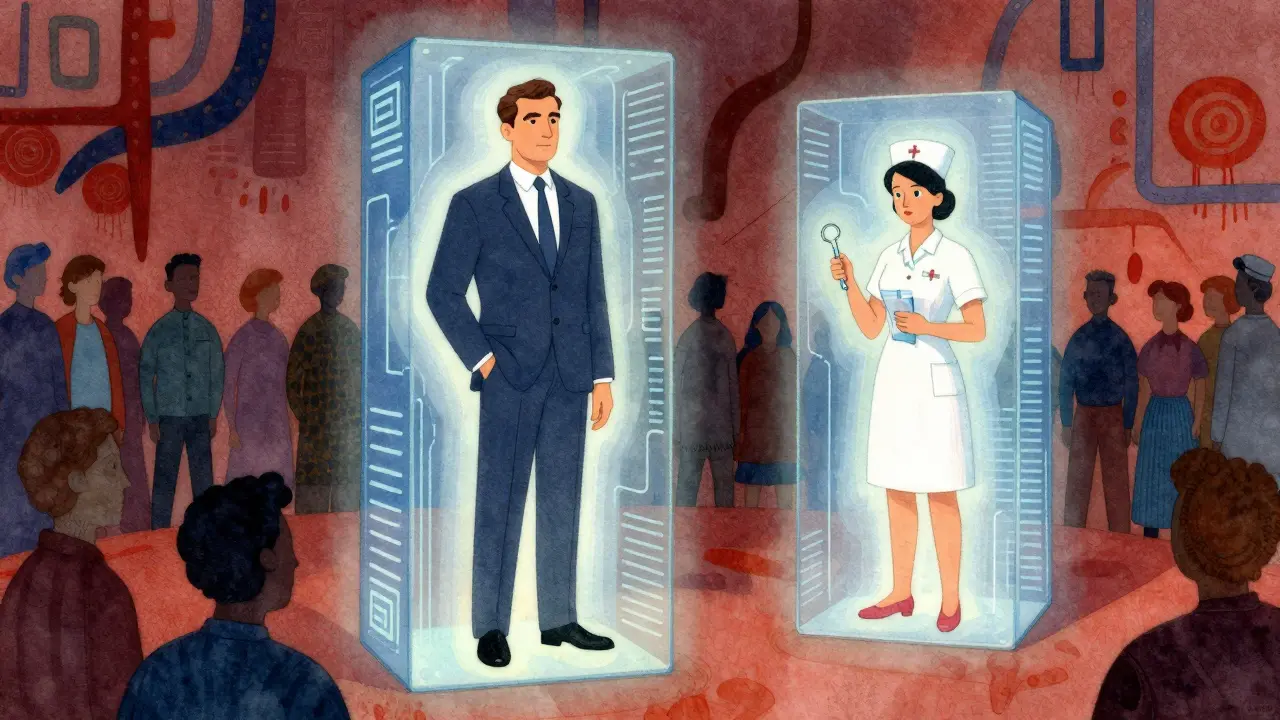
Imagine asking an image generator to create pictures of "successful CEOs" and getting mostly men in suits, while requests for "nurses" return only women. This isn't just a glitch; it's a direct reflection of the systems building these tools. By March 2026, we've seen enough cases to know that bias in generative AIsystematic errors introduced during data collection and algorithm design that lead to discriminatory outputs is not a bug-it's often a feature of how the model learns from history.
The core issue starts long before a model ever generates text or art. It begins in the raw material we feed machines. When developers build large-scale systems, they scour the internet for vast amounts of information. But the internet itself holds mirrors to our own prejudices. If a language model reads millions of web pages where certain demographics are underrepresented, it assumes those demographics don't matter much. This phenomenon is known as selection bias.
How Training Data Distorts Reality
We often assume data is neutral, a mere reflection of facts. That assumption is dangerous. In reality, data is a historical record of human behavior, including all the inequalities embedded in society. Consider the case of Google Perspective, a tool used to detect hate speech online. Research showed it flagged Black American Vernacular English (AAVE) as toxic far more often than standard white speech patterns. Why? Because the training data lacked sufficient examples of AAVE contexts. The algorithm didn't hate anything; it simply learned that certain linguistic structures correlated with toxicity labels in its training set.
This creates a feedback loop. When companies like OpenAI or Anthropic use these detection tools to filter their own training pipelines, they inadvertently teach their Large Language Models (LLMs) to avoid complex, minority dialects entirely. The result is an AI that sounds flat and homogenized, stripping away cultural nuance in the name of safety. You might wonder why this matters if the bot works fine in general terms. The problem lies in exclusion. If your customer service bot can't understand slang or dialects used by significant portions of your user base, you aren't serving those users fairly.
- Dataset Composition: Most public datasets skew heavily toward Western, English-speaking, and male-authored content.
- Labeling Bias: Human annotators bring their own unconscious biases when tagging data.
- Availability Bias: Easy-to-scrape data often dominates over high-quality, diverse data.
Social Bias and Amplification Effects
It's not just about missing groups; it's about stereotyping the ones present. Social biasoccurs when models reinforce existing social stereotypes regarding race, gender, age, and occupation becomes visible when you look at generative image platforms. Studies on platforms similar to Stable Diffusion revealed that images of people in high-status jobs, like surgeons or judges, were predominantly generated as white men. Conversely, images of domestic workers or criminals skewed toward darker skin tones.
This isn't random noise. Generative models work by predicting probabilities based on correlations found in training data. If the text descriptions associated with "doctor" frequently included pronouns like "he," the math follows suit. But here is the scary part: models don't just copy; they amplify. During the generative process, subtle biases can become extreme. A minor statistical preference in the input can become a hard rule in the output because the model seeks the path of least resistance-the most probable associations.
Timnit Gebru, a researcher who left Google in 2020 due to ethical concerns, warned that treating massive web scrapes as representative of all humanity reifies inequality. She argued that these systems encode power imbalances. When an LLM is trained on centuries of literature dominated by colonial perspectives, it inherits those blind spots. In 2026, despite years of scrutiny, many enterprise systems still struggle to balance accuracy with fairness because removing bias usually feels like reducing performance.
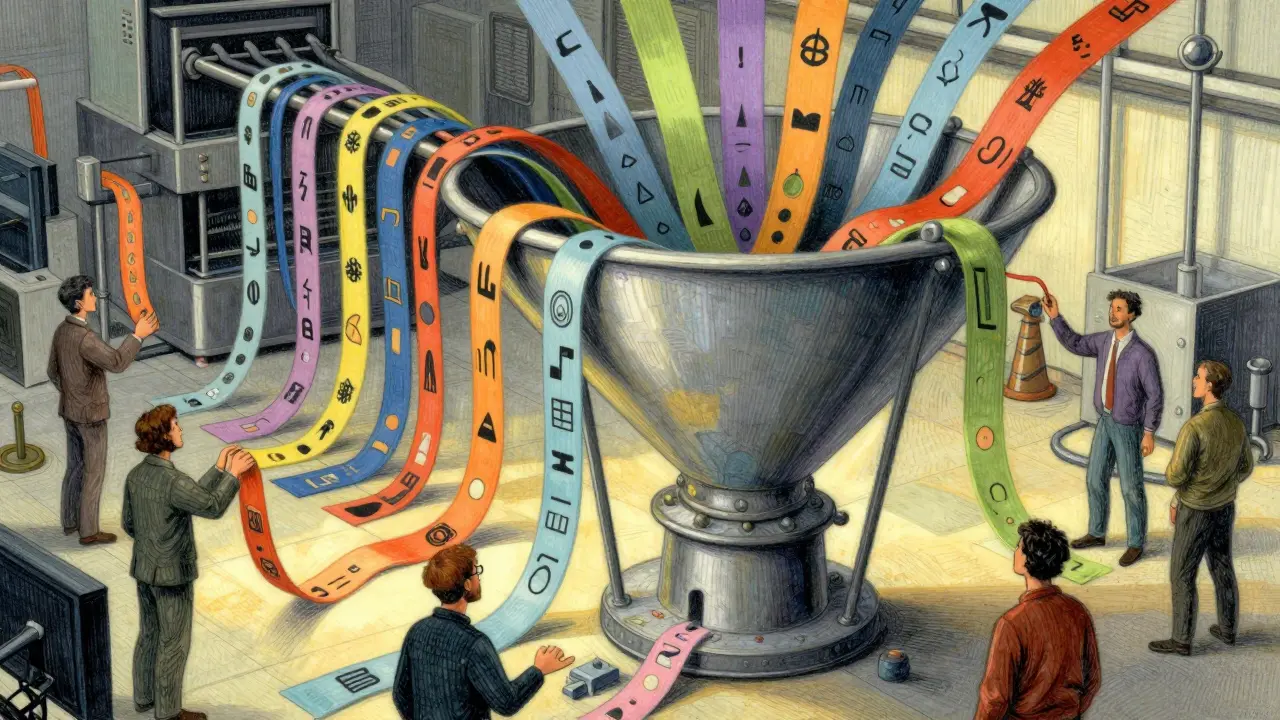
Algorithmic Design Choices Matter
Sometimes the data looks okay, but the math behind it causes trouble. This is called algorithmic bias. It happens when the objective function rewards unfair outcomes. For example, a loan approval AI might optimize purely for profit maximization. Since historical lending data shows redlining patterns (where banks denied loans to minorities in specific neighborhoods), the AI learns to deny loans to those same groups to maximize safe returns.
The Amazon hiring tool incident remains a classic lesson. Amazon built an AI to screen resumes but scrapped it after discovering the system penalized resumes containing the word "women's," such as "Women's Chess Club." The tool was trained on ten years of CVs submitted to the company-mostly men because the tech industry was male-dominated. The model learned that maleness equated to success.
| Technique | Method | Impact on Accuracy | Efficiency |
|---|---|---|---|
| Conventional Balancing | Remove data until subgroups match | Often degrades overall performance | High computational cost |
| MIT Debiasing Technique | Targeted removal of harmful data points | Maintains accuracy while improving subgroup performance | Removes ~20k fewer samples than balancing |
Research out of MIT recently offered a breakthrough. Their team found that instead of blindly balancing every subgroup-which throws away huge chunks of useful data-you can surgically remove specific data points that actively confuse the model regarding minority groups. In one test, their method removed about 20,000 fewer samples than conventional approaches while boosting fairness metrics significantly. This suggests the cure isn't always about having more data, but better curation.

Practical Steps for Implementation
If you are deploying models today, waiting for perfect technology isn't an option. You need actionable checks. First, document everything. Know where your data comes from. Who labeled it? Where did they sit? Different cultures interpret labels differently. Second, monitor outputs continuously. Bias doesn't stay static; it shifts as the world changes. An ad campaign targeting "college graduates" might accidentally exclude non-traditional learners if the proxy variables change.
Data augmentation is another lever. Instead of relying solely on scraped data, synthesize examples that cover edge cases. If your dataset lacks faces with specific skin tones or textures, generate synthetic variations to fill the gap before training. Finally, embrace human-in-the-loop validation. Automated tools catch code errors well, but humans are still needed to spot nuanced social context that a loss function misses.
Building Trust Through Transparency
Hiding the mechanics won't save you from liability or reputation damage. Transparency involves publishing model cards that detail training data provenance and known limitations. This allows third parties to audit for issues you might miss. As we move through 2026, regulatory frameworks are catching up to the technology. Being proactive about fairness documentation now future-proofs your deployment against stricter guidelines later.
The goal isn't perfection, which may be statistically impossible without losing utility. The goal is harm reduction. We need systems that acknowledge their constraints rather than pretending they see the world neutrally. By understanding that bias lives in the selection, the training, and the design, we stop blaming the black box and start fixing the pipeline.
What is selection bias in AI?
Selection bias occurs when the training data chosen does not accurately represent the broader population the model will serve. This leads to systems that perform poorly for groups underrepresented in the dataset, such as minorities in facial recognition software.
Can algorithms create their own bias?
Yes. Even if input data is balanced, the optimization objective can introduce bias. For example, prioritizing profit in a lending algorithm can lead to decisions that historically correlate with demographic discrimination.
How does the MIT debiasing technique work?
Instead of removing large swathes of data to balance groups, the MIT technique identifies specific data points causing failures for minority subgroups and removes only those. This maintains higher overall model accuracy while improving fairness.
Why do LLMs perpetuate stereotypes?
LLMs learn from probability distributions in training text. If stereotypes exist in the source text (e.g., associating "nurse" with "she"), the model reproduces these associations because they are statistically common in the data.
What is the role of data annotation in bias?
Human labelers introduce subjectivity. If workers lack diversity or cultural training, they may mislabel content from other cultures as negative or erroneous, embedding those errors into the ground truth for the AI.




James Boggs
April 1, 2026 AT 18:40The distinction regarding dataset composition is particularly salient here.
We must acknowledge the foundational flaws before proceeding further.
Addison Smart
April 3, 2026 AT 06:06It is clear that we cannot ignore the structural issues within current machine learning pipelines.
The way data is collected creates inherent problems that persist through the lifecycle.
We see this in nursing roles specifically where gender stereotypes dominate outputs.
The model learns from history which itself contains deep societal prejudices.
History itself is biased against women and other marginalized groups significantly.
This results in skewed outputs for image generation tasks across many platforms.
I believe we need stricter regulations on how companies curate their datasets.
Companies prioritize profit over fairness metrics in almost every public disclosure.
They claim safety filters help the situation by removing toxic content automatically.
But those filters remove cultural nuance entirely without understanding context.
AAVE gets flagged incorrectly often leading to reduced voice representation.
This harms minority groups significantly by silencing their linguistic patterns.
We need better annotation processes immediately involving diverse human reviewers.
Human annotators need diverse backgrounds too to ensure broad coverage.
Otherwise we keep recycling old errors into new automated systems constantly.
The technology advances faster than ethics allowing risks to compound unchecked.
This leaves us vulnerable to automated discrimination in hiring and lending.
Michael Jones
April 4, 2026 AT 06:47exactly what i mean when we talk about the big picture stuff
we need to keep pushing forward despite the roadblocks because people matter more than code
let us fix this together
allison berroteran
April 6, 2026 AT 02:21I appreciate the enthusiasm here regarding the potential solutions for debiasing.
The MIT approach does seem promising for accuracy retention during training.
Removing only harmful samples keeps performance high without massive losses.
Traditional balancing methods throw away useful information indiscriminately.
We should prioritize targeted removal strategies instead of blanket deletions.
Synthetic data augmentation also fills gaps effectively in underrepresented areas.
Human validation remains necessary for social context checks before deployment.
Loss functions miss nuanced details quite frequently regarding cultural norms.
Transparency documentation helps with regulatory compliance significantly in 2026.
Model cards should list known limitations clearly for third party audits.
Harm reduction is the realistic goal to aim for right now.
Perfection might not even be possible statistically without losing utility.
We need systems that acknowledge constraints openly to build trust.
Blaming black boxes does not solve anything meaningful for developers.
Continued monitoring is essential for shifting biases as society evolves.
Documentation future proofs your deployment against stricter guidelines later.
Gabby Love
April 7, 2026 AT 00:59Objective functions often reward unfair outcomes unknowingly in standard configurations.
The Amazon hiring tool incident serves as a cautionary example here.
Diverse labeling teams prevent subjective errors during initial training phases.
Michael Thomas
April 8, 2026 AT 23:33Local infrastructure dictates outcome quality far more than external models do.