
Imagine talking to an AI customer service rep that remembers your name, your past complaints, and even your preferred tone-then the next day, it acts like it’s never met you. Or worse, it starts sounding like a different person entirely. This isn’t a glitch. It’s persona drift, and it’s one of the biggest hidden flaws in today’s generative AI systems.
Most companies think they’re done once they write a good prompt. But if your AI agent changes personality between sessions, switches tone on mobile vs. desktop, or forgets its own values after a few interactions, you’re not building trust-you’re building confusion. Persona calibration isn’t optional anymore. It’s the difference between an AI that feels human and one that feels broken.
What Persona Calibration Actually Means
Persona calibration is the process of locking in a consistent identity for your AI agent-its voice, values, knowledge level, and behavior-so it doesn’t randomly shift across conversations or platforms. It’s not just about keeping facts straight. It’s about keeping character straight.
Think of it like casting an actor for a TV show. You don’t want the same character played by different people in each episode. You want the same mannerisms, the same laugh, the same way they say ‘I’m sorry’-even if the script changes. That’s what persona calibration does for AI.
Early AI personas were simple: ‘Be helpful.’ That’s not enough anymore. Modern systems need to be specific: ‘You are Maria, a 38-year-old small business owner in Mexico City who uses mobile accounting apps daily. You’re impatient with jargon, value clear steps, and distrust overly salesy language. You’ve had two failed software onboarding experiences in the last year.’ That’s the level of detail that works.
Why Your AI Keeps Forgetting Who It Is
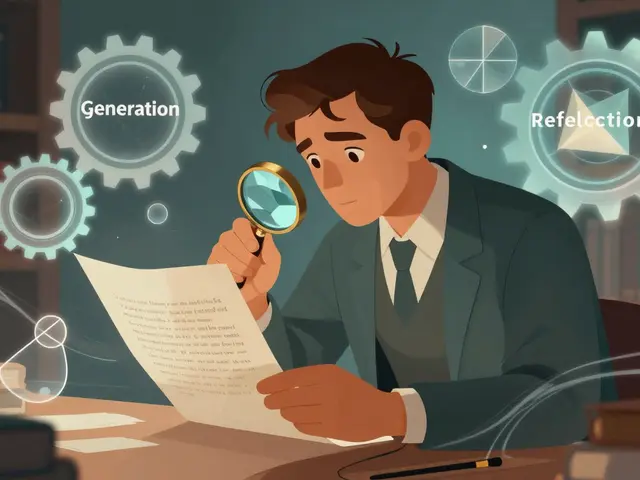
LLMs don’t have memory the way humans do. They don’t store identity like a file. They reconstruct it from context every time. That’s why your AI might nail its persona in Session 1 but start sounding like a corporate bot by Session 5.
Here’s what breaks consistency:
- **Freeform prompts** - ‘Be friendly’ is too vague. It gets interpreted differently each time.
- **No memory layer** - If the system doesn’t actively recall key traits between sessions, it defaults to generic responses.
- **Channel mismatch** - A text-based persona might use emojis and contractions. A voice interface needs slower pacing and clearer phrasing. If you don’t adapt, the AI feels disjointed.
- **Over-reliance on LLMs** - Letting the model generate its own persona from scratch? That’s like asking a stranger to describe your best friend. They’ll get it wrong.
Research from Stanford HAI in January 2025 showed AI agents maintained 79% consistency in single sessions-but dropped to 61% over multiple days without memory reinforcement. That’s not a bug. It’s the default behavior.
The 4-Step Calibration Process That Works
You don’t need fancy tools. You need structure. Here’s how to build a consistent persona, step by step.
- Define 15-20 core attributes - Not 5. Not 50. 15-20. Include: age, location, education, job role, communication style (formal/casual), values (e.g., ‘trusts data over opinions’), pain points, tech familiarity, emotional tone (optimistic/skeptical), and response length preference. Store these in a structured JSON file, not a paragraph.
- Embed them in the system prompt AND memory - Your system prompt should include the persona definition at the top. But it’s not enough. Use a memory buffer that pulls 3-5 key traits into every response. Example: ‘Remember: Maria prefers bullet points, dislikes fluff, and has low patience for technical terms.’
- Test across channels - Run the same persona through text, voice, and chat interfaces. Does it sound like the same person? If not, create channel-specific response templates. Voice: shorter sentences. Text: can use bullet points. Mobile: faster load time = less context, so anchor key traits in every message.
- Run consistency checks every 3-5 interactions - Use a simple checklist: Did it remember the user’s last concern? Did it use the same tone? Did it avoid contradicting itself? If yes, keep going. If no, trigger a recalibration prompt.
Tools like CRAFTER and PEARL automate parts of this, but even basic setups using GPT-4 or Claude 3 can achieve 75%+ consistency if you follow this structure.

What Happens When You Don’t Calibrate
People notice. Fast.
Reddit users in r/MachineLearning reported a 35% drop in complaints about inconsistent AI responses when teams switched from freeform prompts to structured templates. That’s not minor. That’s customer retention.
On the flip side, a GitHub issue from October 2024 found that 68% of developers struggled with persona drift after migrating their AI from web to mobile apps. Users didn’t just get confused-they stopped trusting the system. One user wrote: ‘It sounded like a different person every time I opened the app. I gave up.’
And it’s not just users. Internal teams feel it too. A healthcare research team using CRAFTER found stakeholder understanding improved by 41% when AI personas simulated consistent patient profiles across meetings. Without calibration, the same ‘patient’ would change symptoms, background, and concerns between sessions-making analysis useless.
Hybrid Human-AI Calibration Is the Future
Here’s the truth: AI can’t fully calibrate itself. It can flag inconsistencies, but it can’t judge authenticity.
Parallel HQ’s user testing in January 2025 found that 74% of designers said human validation was essential to catch subtle drift-like a persona suddenly becoming overly apologetic or using slang that didn’t fit its background.
The best systems now combine automation with human oversight:
- AI generates persona drafts from user interviews or survey data.
- Human researchers refine the traits, fix contradictions, and add nuance.
- AI enforces consistency across sessions using memory and prompts.
- Humans review weekly logs for emerging drift patterns.
This isn’t about replacing researchers. It’s about giving them superpowers. One UX team at a Fortune 500 company cut their persona creation time from 40 hours to 8 hours per persona-while improving consistency from 52% to 81%.
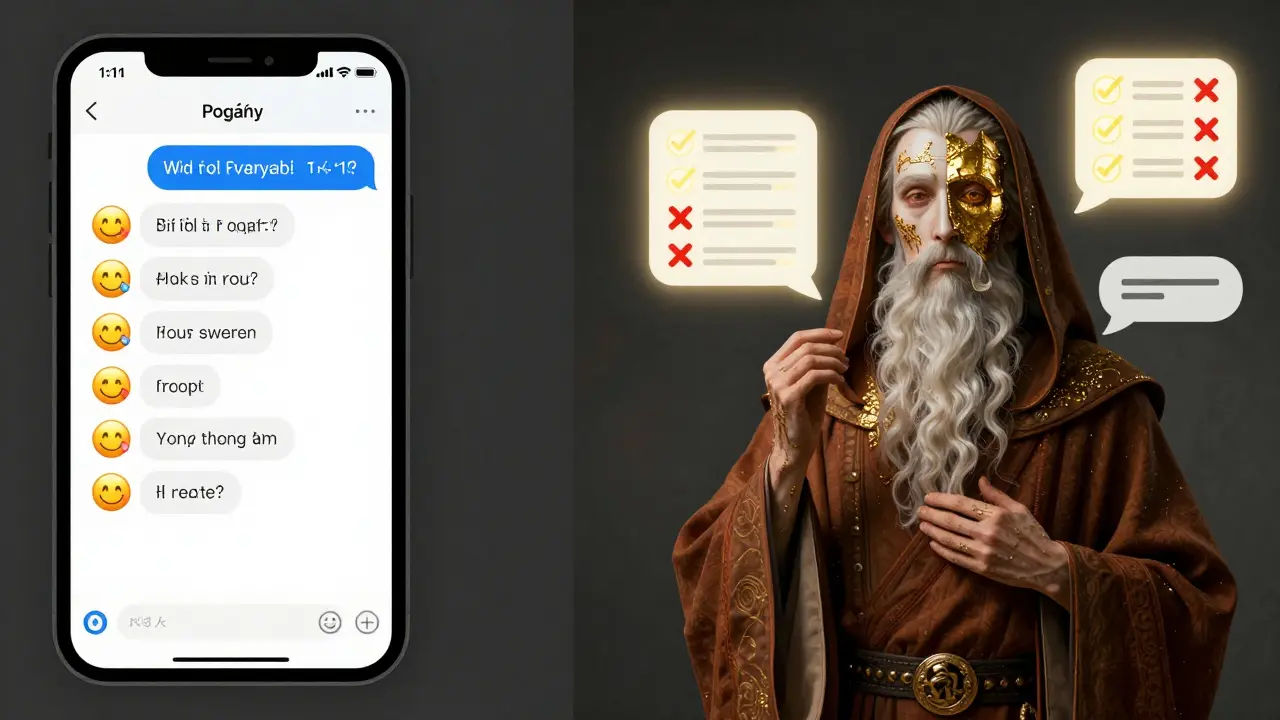
What’s Next: Self-Calibrating Personas
By 2027, 92% of enterprise AI systems will include persona management modules, according to Gartner. But the real shift is toward self-calibrating personas.
Stanford HAI is testing biometric feedback in beta: if a user sighs or pauses longer after a response, the AI adjusts tone. Anthropic’s Claude 3 now includes built-in consistency metrics that score each response against the persona profile.
But the biggest breakthrough? The QCRI team’s open-source persona evaluation toolkit, coming in Q3 2025. It’ll let you plug in your AI’s output and get a score for demographic accuracy, value alignment, and tone stability-without needing to code anything.
For now, though, the rule is simple: if you’re building an AI that talks to people, you owe them a consistent identity. Don’t let your persona become a ghost.
Common Mistakes (And How to Fix Them)
- Mistake: Using vague prompts like ‘Be professional.’ Fix: ‘You speak in clear, concise sentences. You avoid corporate buzzwords. You assume the user is time-pressed.’
- Mistake: Forgetting to update personas as user needs change. Fix: Schedule a 10-minute review every 5 interactions or weekly, whichever comes first.
- Mistake: Assuming one persona fits all channels. Fix: Create a base persona, then build channel-specific variants with adjusted pacing and format.
- Mistake: Letting the AI write its own backstory. Fix: Always start with human-collected data-interviews, surveys, support logs.
Consistency isn’t about perfection. It’s about reliability. People don’t mind if an AI makes a mistake. They mind if it doesn’t feel like the same person who made it.
What’s the difference between persona calibration and prompt engineering?
Prompt engineering is about getting the right output from a single interaction. Persona calibration is about making sure that output stays consistent across dozens of interactions, over days or weeks, and across different platforms. Prompt engineering tells the AI what to say. Persona calibration tells it who to be.
Can I use free tools for persona calibration?
Yes. GPT-4 and Claude 3 can handle basic calibration if you use structured JSON prompts and manual memory logs. Tools like PEARL (academic) and CRAFTER (open-source) are free and designed for this. You don’t need paid platforms-just discipline. The biggest barrier isn’t cost-it’s skipping the structure.
How often should I recalibrate an AI persona?
Every 3-5 interactions, or weekly-whichever comes first. Research shows drift becomes noticeable after 15-20 exchanges. If users start saying things like ‘You didn’t say that last time,’ it’s already too late. Schedule short reviews. Treat it like updating a contact’s info in your phone.
Why does my AI sound different on voice vs. text?
Because voice and text have different rules. Voice needs shorter sentences, no emojis, no markdown. Text can use lists and symbols. Most AI systems don’t auto-adapt-they just repeat the same script. Fix this by creating two versions of your persona: one for voice (slower, simpler) and one for text (more detailed). Use channel-specific response templates to enforce it.
Is persona calibration only for customer service?
No. It’s critical for any AI that interacts with people over time: research assistants, therapy bots, educational tutors, marketing agents, even internal HR chatbots. If someone builds a relationship with your AI, they expect it to remember who they are. That’s not a nice-to-have-it’s a baseline for trust.
Next Steps: Start Small, Scale Smart
Don’t try to calibrate 10 personas at once. Pick one. Pick a simple use case-a support bot for returning customers, a tutor for students, a research assistant for interviews.
Define 15 core traits. Write them in JSON. Embed them in your prompt. Add a memory buffer. Test it over three sessions. Ask a colleague: ‘Does this sound like the same person?’
If yes, you’ve cracked it. If no, you’ve found your next improvement. That’s how all good systems start-not with AI magic, but with human clarity.





Aryan Jain
January 15, 2026 AT 10:59They don't want you to know this but AI personas are being manipulated by hidden corporate scripts. Every time it changes tone? That's not drift-that's a remote override. They're testing how long you'll tolerate a fake person before you give up. I've seen the leaks. They're training AIs to mimic emotional fatigue. You think you're talking to Maria? Nah. You're talking to a puppet. And the puppet doesn't even know it's a puppet anymore.
Nalini Venugopal
January 15, 2026 AT 20:02OMG YES. I just had an AI tell me 'I'm sorry for your loss' in a chat support bot... then 3 messages later it said 'Hey! Just checked your order-so excited for you!' 😳 Like, what?! I'm not mad, I'm just confused. This is why I stopped using chatbots for anything emotional. No one teaches them how to be *human*-just how to sound polite. Fix this now pls!!
Pramod Usdadiya
January 16, 2026 AT 23:10Really good point about the memory layer. I tried this with my small business chatbot and it kept forgettin the customer's name after 2 messages. Then i made a simple json file with 18 traits like 'uses short sentences', 'hates sales talk', 'loves chai' and boom-it started feelin like my cousin who runs the tea stall. Not perfect, but way better. Also, typo: 'emotional tone' not 'emotional tone.' 😅
Aditya Singh Bisht
January 18, 2026 AT 09:51This is the most important thing I've read all year. Seriously. AI isn't broken-it's just being lazy. You wouldn't hire a receptionist who forgot your name every day, right? Why are we tolerating this from machines? Start small. Pick one bot. Write down 15 traits. Stick 'em in a note. Test it. Watch how fast trust builds. I did this for my tutoring bot and my students started calling it 'Professor Raj'-because it remembered their struggles. That’s magic. Not AI magic. Human magic.
Agni Saucedo Medel
January 18, 2026 AT 10:22My grandma used my AI assistant to check on her meds. She said, 'It sounds like my daughter today.' Then next day it said 'You should consider switching to generic brands.' She cried. I fixed it with a 10-line JSON. Now it says 'I know this is hard, Beta. Let’s take it slow.' 🥺💖 Thank you for writing this. We need more of this.
Indi s
January 18, 2026 AT 20:03People don’t care if the AI is smart. They care if it remembers them. That’s it.