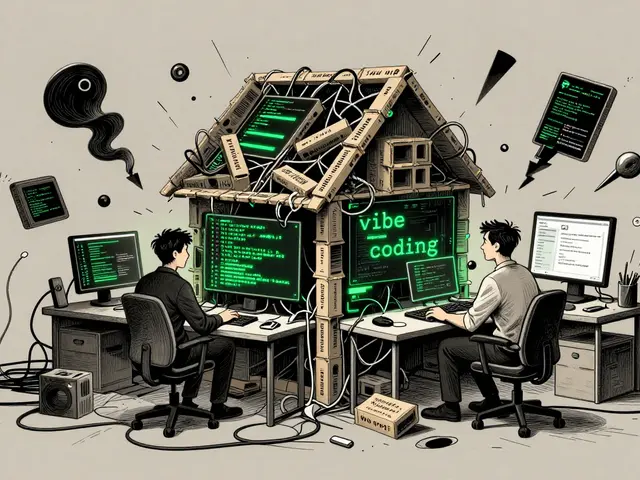
You’ve got the budget for the Generative AI software. You’ve hired the engineers. But have you budgeted for the humans? Most companies think their biggest expense is the API calls or the server infrastructure. They’re wrong. The silent killer of AI projects isn’t bad code-it’s people refusing to use it because they don’t know how, or because the workflow makes no sense.
This is where Change Management comes in. It’s not just HR fluff. It’s a hard cost. If you skip it, you aren’t saving money; you’re guaranteeing failure. In fact, Gartner reported that 85% of AI projects fail to deliver value, primarily due to poor change management, not technical issues. Let’s break down exactly what this costs you, why it’s necessary, and how to plan for it without blowing your budget.
The Real Price Tag of AI Adoption
Let’s talk numbers. When we look at small and medium-sized enterprises (SMEs), the data is stark. According to a 2024 analysis by SmartDev, staff training and change management consume between $8,000 and $20,000 in the first year of deployment. That might sound like a lot for "training," but consider that typical year-one budgets for these implementations range from $50,000 to $100,000. This means change management accounts for 15-25% of your entire initial investment.
If you ignore this, the bill comes later-and it’s much higher. SmartDev documented a case where a manufacturing SME stalled on legacy workflows. Because they rushed the initial rollout, they faced $18,000 in remediation costs in year two just to retrain staff who had developed bad habits. Another logistics company saw their maintenance spend jump from $45,000 to $74,000 in a single year because they hadn’t redesigned their processes properly upfront.
Here is the breakdown of what those initial costs actually cover:
- Technical Training: Teaching teams how to interact with AI interfaces and prompts.
- Workflow Redesign Mapping: Figuring out which steps in your current process are obsolete and which need human oversight.
- User Adoption Programs: Incentives and support structures to get buy-in from skeptical employees.
Why Your Old Workflows Don’t Work with AI
You can’t just plug generative AI into your existing spreadsheet and expect magic. The tool changes the nature of the work. This requires Process Redesign. Imagine a customer service team that used to write emails from scratch. Now, AI drafts them. The bottleneck shifts from writing to reviewing. If you don’t redesign the process to include a "human-in-the-loop" review step, you risk sending out hallucinated responses or losing quality control.
This is where the cost spikes if you’re unprepared. Organizations using phased implementation strategies reduce change management costs by 35-45% compared to "big bang" rollouts. Why? Because phased approaches allow you to test workflow adjustments in small groups before scaling them to the whole company. A "big bang" approach often leads to chaos, requiring expensive emergency interventions.
Consider the role of Nguyen Le, COO at SmartDev, who notes that "a robust cloud and compliance setup is critical." Change management isn’t just about teaching people to click buttons; it’s about ensuring they understand the security implications of their actions. Poor change management directly impacts security outcomes. If users don’t understand data governance, they leak sensitive information into public AI models. That’s a liability that far exceeds the cost of a training workshop.
Ongoing Costs: It Doesn’t End at Launch
A common misconception is that change management is a one-time event. It’s not. AI evolves, and so do your needs. Cutter Associates reports that organizations now allocate dedicated resources throughout the AI lifecycle. Ongoing training and skill development cost between $3,000 and $8,000 annually per key team member.
Why does this keep costing money?
- Model Updates: As AI models improve, new features become available. Teams need refresher courses to leverage these capabilities.
- Staff Turnover: New hires need onboarding specific to your AI-enhanced workflows.
- Incremental Adjustments: Workflows rarely hit perfect efficiency on day one. Quarterly reviews and tweaks are standard.
For enterprise organizations with over 1,000 employees, ongoing annual costs for maintaining AI teams, renewing licenses, and retraining models can exceed $1 million. For mid-size companies, this ranges from $200,000 to $800,000 annually. These aren’t optional expenses if you want to maintain the productivity gains promised by AI.

Scaling the Investment
Once you’ve successfully deployed AI in one department, you’ll likely want to scale it. This is where many budgets break. Scaling to a new business unit requires $15,000 to $30,000 per additional unit. This includes replicating the training materials, adjusting for department-specific nuances, and managing resistance from new stakeholders.
SmartDev’s five-year cost breakdown reveals a crucial insight: 60% of total AI implementation costs ($200,000-$500,000 for most SMEs) arise from maintenance, training, and scaling, not initial development. Year-three scaling costs often exceed year-one development expenses. If your budget only accounts for the launch, you’re already behind.
| Organization Size | Initial Change Mgmt Cost | Annual Operating Cost | Key Focus Areas |
|---|---|---|---|
| Startups (10-50 employees) | $5,000 - $15,000 | $20,000 - $100,000 | Basic training, culture shift |
| Mid-Size (100-1,000 employees) | $15,000 - $35,000 | $200,000 - $800,000 | Workflow redesign, compliance |
| Enterprise (1,000+ employees) | $50,000 - $150,000 | $1,000,000+ | Dedicated teams, global scaling |
Tools and Infrastructure
You can’t manage change with sticky notes. You need dedicated platforms. Tools like Prosci ADKAR or Prosci 360 cost between $5,000 and $25,000 annually, depending on your size. These platforms help track adoption rates, identify resistance points, and measure training effectiveness.
Integration is another hidden cost. You need to connect these change management tools with your existing HR systems for tracking and workflow managers like ServiceNow or Jira. Integration costs range from $2,000 to $10,000 per system. Without this integration, you’re flying blind, unable to correlate training completion with actual usage metrics.
The payoff for using structured tools is significant. Organizations with formal change management programs achieve 73% user adoption rates, compared to just 42% for those without, according to USM Systems’ 2025 analysis. That 31-point difference translates directly to ROI. If half your team isn’t using the tool, you’re paying for licenses they don’t utilize.

Regulatory Pressures and Compliance
It’s not just about efficiency anymore; it’s about legality. The EU AI Act requires documented change management processes for high-risk AI systems. This adds 10-15% to compliance costs. Ignoring this isn’t an option if you operate globally. GO-Globe’s 2026 analysis shows that regulatory considerations are intensifying, making change management a legal requirement as much as an operational one.
Furthermore, standards like ISO 30428, released in January 2026, establish baseline requirements for AI change management. Having these processes documented protects you during audits and demonstrates due diligence. It’s a defensive cost that prevents massive fines and reputational damage.
How to Optimize Your Spend
You don’t have to spend the maximum. Here are practical ways to optimize your change management budget:
- Leverage Offshore Partners: Companies using offshore development partners like SmartDev achieve 40-60% cost reductions in training and process redesign. They bring pre-built frameworks and experienced consultants.
- Identify Champions Early: Involve power users from legacy systems in the design process. Resistance affects 68% of implementations. Turning resisters into champions reduces the need for heavy-handed enforcement.
- Use Phased Rollouts: Start with a pilot group. Refine the training and workflows based on their feedback before scaling. This prevents the costly "rework" phase.
- Invest in Documentation: Clear documentation reduces support tickets. Providers with high documentation clarity scores (like SmartDev’s 4.8/5) see lower long-term support costs.
The goal isn’t to minimize change management spend to zero; it’s to maximize its impact. Every dollar spent here prevents multiple dollars lost in wasted licenses, rework, and failed projects.
What percentage of my AI budget should go to change management?
Industry best practices suggest allocating 25-30% of your total AI budget to change management activities. While the average is 15-20%, organizations that invest the higher amount see 3.2x higher ROI according to GO-Globe's tracking of 127 enterprise implementations.
Why do most AI projects fail?
According to Gartner, 85% of AI projects fail to deliver expected business value. The primary cause is poor change management, including inadequate training and lack of workflow integration, rather than technical shortcomings in the AI models themselves.
How much does ongoing AI training cost per employee?
Ongoing training and skill development typically cost between $3,000 and $8,000 annually per key team member. This covers quarterly refreshers, updates on new model features, and continuous workflow adjustments.
Is change management required by law?
Yes, in certain contexts. The EU AI Act requires documented change management processes for high-risk AI systems. Additionally, standards like ISO 30428 establish baseline requirements, making proper documentation a compliance necessity for global operations.
What is the difference between initial and scaling change management costs?
Initial costs ($8,000-$20,000 for SMEs) cover the first deployment, basic training, and initial workflow mapping. Scaling costs ($15,000-$30,000 per additional unit) involve replicating these efforts for new departments, adapting to specific team needs, and managing broader organizational resistance.