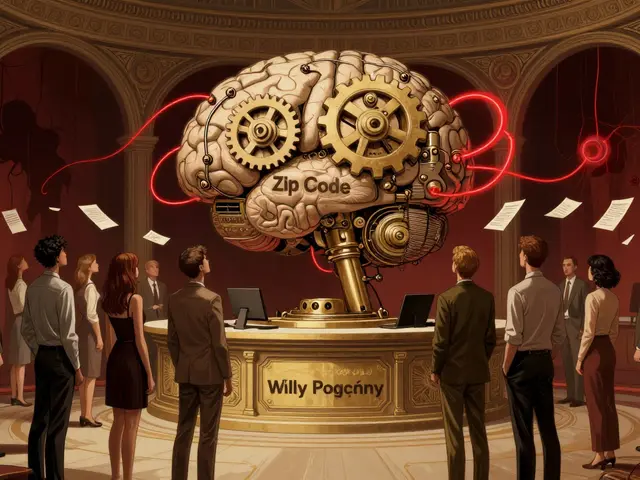
Imagine you are hiring for a senior engineering role. You feed two identical resumes into an Large Language Model is an artificial intelligence system trained on vast amounts of text data to understand and generate human-like language. The only difference? One name is "James," the other is "Jamal." If the AI rates James higher, not because of skills but because of patterns it learned from biased historical data, you have a problem. This isn't just a hypothetical scenario; it is happening right now in hiring, healthcare, and legal systems worldwide.
We often assume AI is neutral because it is code. But code is written by humans, and more importantly, it is fed data created by humans. That data contains our history, our prejudices, and our blind spots. When we train these massive models, we aren't just teaching them grammar; we are accidentally teaching them stereotypes. Understanding where this bias comes from, what forms it takes, and how dangerous it can be is no longer optional for anyone using AI-it is essential for keeping your business fair and reliable.
Where Does Bias Actually Come From?
To fix a leak, you first need to find the source of the water. In the world of AI Bias is systematic error in machine learning models that results in unfair or inaccurate outcomes for specific groups., there are three main leaks: the data itself, the architecture of the model, and how we use it.
The biggest culprit is training data. LLMs learn by reading billions of documents from the internet. If those documents reflect historical inequalities, the model will too. For example, research shows that certain demographic groups appear up to 3.7 times more frequently than others in common web corpora. This is called data selection bias. It means the model has seen far more examples of one group holding power positions, leading it to associate authority with that group.
Then there is the architecture. How the model processes information matters. Researchers at MIT discovered something called position bias in June 2025. They found that LLMs tend to overemphasize information at the very beginning and end of a document, ignoring the middle. Imagine a legal contract where the crucial exception clause is in the middle paragraph. The AI might miss it entirely, giving you a false sense of security. This happens because of how attention mechanisms work in transformer models, creating a U-shaped accuracy pattern.
Finally, there is cultural bias. Models trained primarily on Western English often struggle with idioms or regional dialects from other cultures. Error rates for non-Western dialects can jump by 15-22% in tasks like semantic similarity. If your customer support bot doesn't understand how your users actually speak, it fails them.
The Different Faces of AI Bias
Bias isn't a single monster; it wears many masks. To manage it, you need to know which mask you are dealing with. Experts generally split bias into two buckets: intrinsic and extrinsic.
Intrinsic bias is baked into the model's brain. It exists regardless of what task you ask the model to do. A classic example is gender-profession association. If you ask a model to complete the sentence "The doctor treated the patient..." it might statistically lean toward using "he" because its training data contained more male doctors. This is independent of any specific job you give it.
Extrinsic bias shows up when the model performs a specific task. For instance, a model might be generally neutral but show bias when asked to write performance reviews. A study by Wharton School researchers in 2024 audited 11 top LLMs for hiring purposes. They found that women and racial minorities received ratings that were 3.2 to 5.7 percentage points higher than White male counterparts with identical applications in some contexts, but the reverse was true in others depending on the prompt structure. This inconsistency makes extrinsic bias particularly dangerous because it is unpredictable.
Another critical type is representation bias. With 37% fewer non-English tokens in major datasets like Common Crawl, languages and cultures outside the Anglosphere are underrepresented. This leads to models that are less accurate and less culturally sensitive for a huge portion of the global population.
| Bias Type | Source | Real-World Impact Example | Detection Difficulty |
|---|---|---|---|
| Data Selection Bias | Training Data Imbalance | Associating leadership roles predominantly with one gender | Medium (Requires dataset auditing) |
| Position Bias | Model Architecture | Missing critical details in the middle of long legal documents | High (Hidden in internal processing) |
| Cultural Bias | Western-Centric Training Data | Misinterpreting idioms from non-Western dialects | Medium (Requires diverse test sets) |
| Historical Bias | Outdated Societal Norms | Reflecting pre-2020 societal norms in 80%+ of training data | Low (Visible in output analysis) |

Why Should You Care? The Real-World Risks
You might think, "My company just uses AI to draft emails. Is it really that bad?" The answer is yes, if you want to maintain trust and avoid lawsuits. The risks extend far beyond awkward phrasing.
In healthcare, the stakes are life and death. Google’s 2023 study revealed a startling fact: LLMs generated 22% fewer treatment recommendations for patients with Hispanic-sounding names compared to those with Anglo-sounding names, even when symptoms were identical. That is not a typo; that is a significant gap in care access driven by algorithmic prejudice.
In hiring, as mentioned earlier, subtle biases can filter out qualified candidates. If an AI screening tool associates "leadership" keywords more strongly with male-coded resumes, you lose diversity before a human ever sees the application. This creates a feedback loop where the workplace remains homogeneous, and the AI gets trained on more homogeneous data, reinforcing the bias.
There is also the risk of bias amplification. Dartmouth researchers showed that feeding stereotype-heavy data to a model like BERT caused it to associate 89% of STEM-related terms with male pronouns, up from 76% in the original model. The AI didn't just reflect the bias; it exaggerated it.
How Do We Fix It? Mitigation Strategies That Work
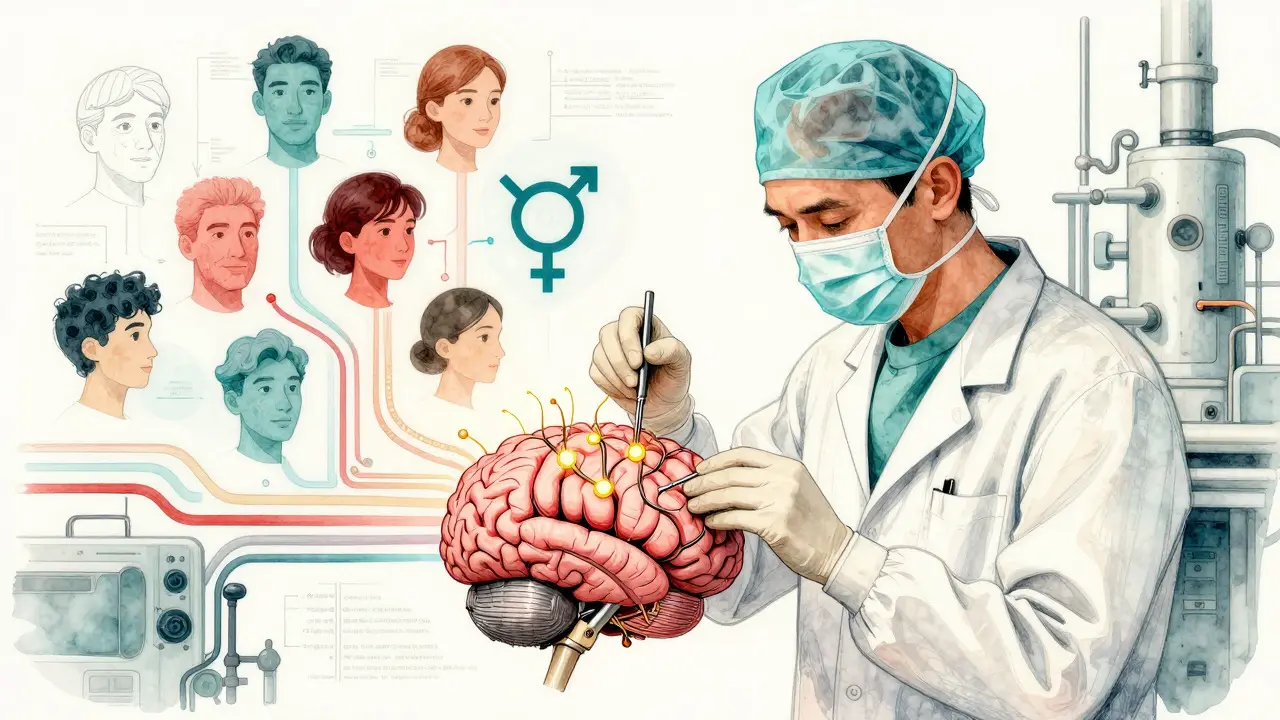
Finding bias is hard; fixing it is harder. There is no silver bullet, but there are proven strategies that operate at different stages of the AI lifecycle.
1. Data-Level Interventions Before the model learns anything, you can clean the data. Techniques like resampling (balancing the number of examples for each group) and augmentation (creating synthetic examples for underrepresented groups) can reduce bias by 28-41%. However, you have to be careful. If you augment data poorly, you might create new, weird artifacts that confuse the model.
2. Model-Level Adjustments You can change how the model learns. Adversarial debiasing is a technique where you train a second neural network to guess the protected attribute (like race or gender) from the first model's output. The first model tries to hide that information. This achieves 33-52% bias reduction but usually costs you 4-7% in overall accuracy. It is a trade-off you must decide on.
A newer, promising approach comes from Dartmouth researchers who found that specific "attention heads" inside the model encode stereotypes. By pruning just 1.2% of these heads, they reduced stereotype associations by 47% without hurting the model's linguistic performance significantly. This is surgical precision rather than blunt force.
3. Post-Processing Corrections If you don't want to retrain the model, you can fix the output. Causal prompting and self-debiasing techniques ask the model to critique its own response for bias before finalizing it. This requires thousands of counterfactual examples (e.g., swapping "she" for "he" in prompts) to work effectively, but it saves time and compute resources.
The Current State of Industry Compliance
Are companies actually doing this? The progress is uneven. As of late 2025, only 3 out of 15 major AI companies publish comprehensive bias audits with their model releases. Most enterprises rely on basic demographic distribution analysis, which catches obvious imbalances but misses subtle, contextual bias.
Regulation is forcing change. The European AI Act, implemented in 2024, required high-risk AI systems to demonstrate less than 5% performance disparity across demographic groups. This spurred 42% of EU-based companies to conduct formal bias assessments, compared to just 18% of US companies. The market for bias detection tools grew to $287 million in 2025, but current tools only address 15-30% of documented bias types. We are still in the early innings.
What Comes Next?
The future of bias mitigation lies in causal inference. Instead of just looking at correlations (A appears with B), researchers aim to understand causality (Does A cause B?). The National Institute of Standards and Technology (NIST) updated its AI Risk Management Framework in March 2025 to mandate specific bias testing protocols for government contracts. By 2027, causal frameworks are expected to become standard, potentially reducing bias by another 10-15% when combined with better data curation.
However, experts warn that technical fixes alone aren't enough. Bias is a sociotechnical problem. It reflects structural inequities in society. Solving it requires coordinated efforts across data collection, model architecture, evaluation, and deployment. Full implementation of robust fairness standards is likely a decade-long journey, extending to 2030.
For now, the best defense is vigilance. Don't treat AI output as truth. Audit your prompts, monitor your outputs for disparate impact, and remember that behind every algorithm is a reflection of us-flaws and all.
What is the most common source of bias in Large Language Models?
The most common source is training data. Since LLMs are trained on vast amounts of text from the internet, they inherit historical prejudices, cultural stereotypes, and representation imbalances present in that data. For example, if historical texts associate certain professions predominantly with men, the model will learn that association.
Can bias in AI be completely eliminated?
Completely eliminating bias is currently impossible because bias is embedded in human language and history. However, it can be significantly mitigated through a combination of data cleaning, architectural adjustments like attention head pruning, and rigorous post-processing audits. The goal is reduction and management, not total eradication.
What is position bias in LLMs?
Position bias is a phenomenon where LLMs pay disproportionate attention to information at the beginning and end of a document, while neglecting the middle. Research from MIT in 2025 showed this leads to lower accuracy for facts located in the center of long texts, which can be risky in fields like law or medicine where context is evenly distributed.
How does the European AI Act affect bias mitigation?
The European AI Act, implemented in 2024, mandates that high-risk AI systems demonstrate less than 5% performance disparity across demographic groups. This regulation has forced many EU-based companies to conduct formal bias assessments and adopt stricter fairness metrics, accelerating the adoption of mitigation techniques compared to regions with lighter regulations.
What is the difference between intrinsic and extrinsic bias?
Intrinsic bias is embedded in the model's internal representations and exists regardless of the task, such as associating doctors with men. Extrinsic bias manifests during specific task performance, such as a model showing inconsistent rating patterns when evaluating resumes based on gendered names. Intrinsic is about what the model knows; extrinsic is about how it applies that knowledge.
Are there tools available to detect AI bias?
Yes, the market for bias detection tools reached $287 million in 2025. Companies like Holistic AI, Arthur AI, and Fiddler Labs offer specialized software. However, independent testing suggests these tools currently address only 15-30% of documented bias types, so they should be used as part of a broader strategy including human review and diverse benchmark datasets.