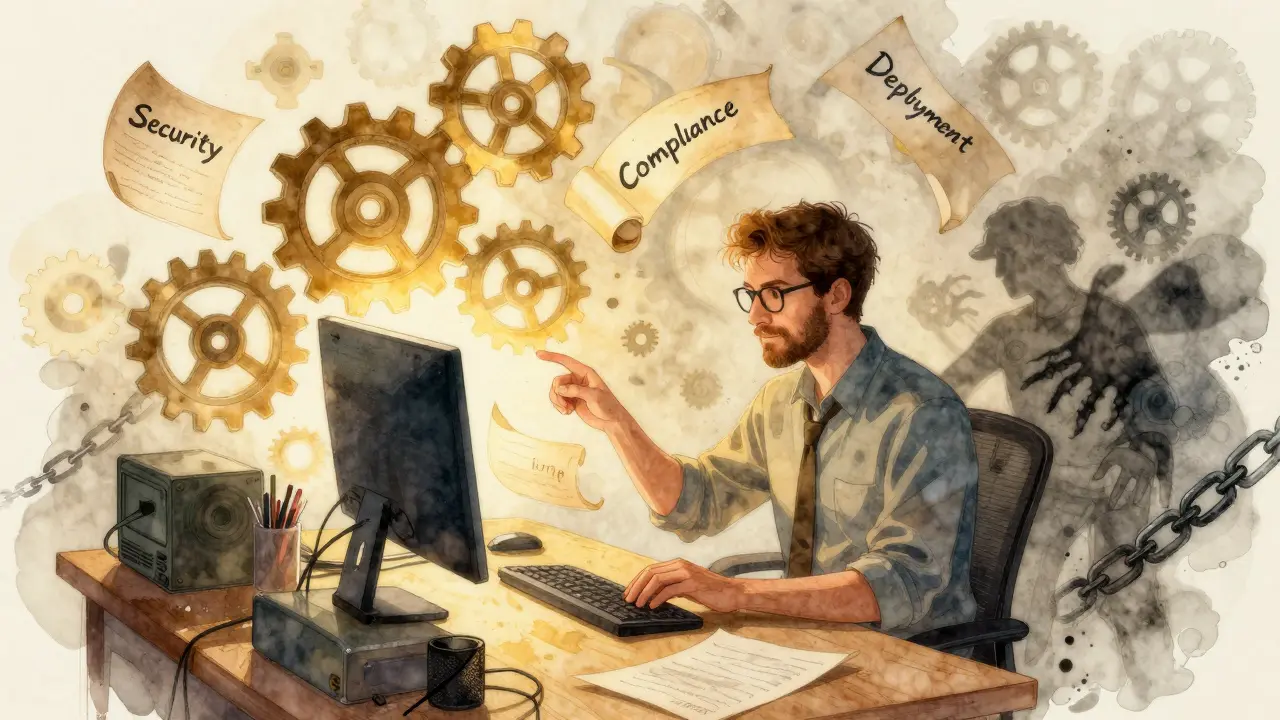
Imagine this: your team is on a roll. Features are shipping, bugs are fixed, and momentum is building. Then comes the governance update. A new security policy. A mandatory approval step. A change in infrastructure rules. Suddenly, every PR stalls. Every deployment gets delayed. The team’s energy drops. What went wrong? It wasn’t the policy. It was how it was communicated.
Too many organizations treat governance like a rulebook handed down from on high. But in modern software teams, governance that feels like a roadblock doesn’t just slow things down-it kills morale, trust, and innovation. The real challenge isn’t enforcing standards. It’s communicating them in a way that makes developers feel supported, not stifled.
Do: Embed Governance in the Workflow
The best governance doesn’t ask developers to stop and think. It shows up where they’re already working. Tools like GitHub’s CODEOWNERS files, automated security scanners in IDEs, and CI/CD pipelines that block risky code before it even gets reviewed are game-changers. When a developer writes a line of code that could expose a vulnerability, and the system flags it instantly with a clear explanation-"This library has a known CVE in version 2.1. Use 3.4 instead."-they don’t need a meeting. They fix it. Fast.
Companies like Netflix and Spotify don’t rely on checklists. They build paved paths. These are pre-approved templates for services, databases, and deployments that come with security, compliance, and observability baked in. Developers pick a path. They don’t have to memorize rules. The system enforces them silently. CircleCI’s Platform Team Toolkit shows this approach cuts governance overhead by up to 70%. Why? Because the right choice becomes the easiest one.
Don’t: Make Governance a Mystery
Nothing kills trust faster than a policy that pops up out of nowhere. A January 2025 post on Dev.to shared a story of a team that lost three weeks because a new encryption policy was rolled out without warning. No documentation. No transition plan. Just a Slack message: "All services must comply by Friday." The result? Panic, workarounds, and broken builds.
Governance isn’t about control. It’s about clarity. If you’re introducing a new requirement, explain the why. Not just "Use Terraform." But: "We’ve seen 40% fewer configuration drift incidents since standardizing on Terraform. That means fewer outages during peak traffic." Organizations that document the business impact of policies see 3.2x higher compliance rates, according to Forrester. Developers aren’t resisting rules-they’re resisting ignorance.
Do: Let Teams Self-Service
Imagine a developer needs a new database. In a broken system, they fill out a form. Wait a week. Get an email. Repeat. In a good one, they open a self-service portal, pick "PostgreSQL with backup and monitoring," click deploy, and it’s live in 90 seconds-with compliance baked in.
This isn’t fantasy. It’s what Airbnb, Uber, and Microsoft do. Their internal developer platforms give teams autonomy within guardrails. Need a Kafka topic? Here’s the template. Need a Kubernetes namespace? Here’s the policy. Need to request an exception? There’s a form with automated risk scoring. No manager approval needed unless the risk is high.
These systems reduce manual requests by 80%. Developers get speed. Leadership gets consistency. And because teams can act without waiting, they feel trusted. That trust builds ownership. And ownership drives better outcomes.
Don’t: Over-Automate Without Context
Automation is powerful. But when it’s too rigid, it becomes a nightmare. A 2024 survey by Bunnyshell found that 32% of developers felt frustrated by "governance overreach"-rules that blocked them even when the context made the risk negligible.
For example: a policy that blocks all HTTP endpoints in production. Fine. But what if the team is building a public API? Or a legacy system that can’t be upgraded? Blind automation doesn’t adapt. It alienates.
The fix? Give teams a way to request exceptions-with context. A form that asks: "Why do you need this? What’s the risk? How are you mitigating it?" Then let automated tools assess the answer. This turns governance from a gate into a conversation. Airbnb calls this "guardrails, not gates." The result? 28% higher developer satisfaction and 22% faster feature delivery.

Do: Talk to Developers, Not at Them
One of the biggest mistakes? Assuming developers don’t care about security or compliance. They do. But they care about being heard.
Companies with high velocity don’t just announce policies. They host "governance office hours." Weekly 30-minute sessions where engineers can ask: "Why is this rule here?" "Can we tweak it?" "What happens if we don’t follow it?" McKinsey found that 62% of high-performing teams use this method. It’s not about changing policy every week. It’s about building understanding.
And it works. When developers understand the consequences of a decision, they make better ones. Spotify’s internal platform doesn’t force compliance. It shows impact. "This change reduces incident response time by 11 minutes." That’s persuasive. It turns governance from a burden into a tool.
Don’t: Treat Governance as a One-Time Project
Governance isn’t something you set up and forget. It’s a living system. Policies evolve. Tools change. Teams grow.
A 2024 Hatica report found that 43% of engineering leaders cited "inconsistent understanding across teams" as a top problem. Why? Because policies were written once, stored in a Confluence page, and never revisited.
The solution? Build feedback loops. Use metrics. Track how often policies are overridden. How many exceptions are requested? How long do deployments take after a new rule? Then adjust. Google’s SRE book recommends dedicating 15-20% of platform team time to governance communication-not just implementation, but listening, iterating, improving.
And don’t wait for complaints. Proactively ask: "What’s slowing you down?" Use anonymous surveys. Run retrospectives focused on process friction. The goal isn’t perfection. It’s progress.
Do: Measure What Matters
You can’t improve what you don’t measure. But not all metrics are equal.
Stop measuring lines of code or number of deployments per day. Those encourage speed at the cost of quality. Instead, measure velocity with stability. How many features are delivered without incidents? How long does it take to fix a bug? What percentage of deployments are successful on the first try?
Companies using software engineering intelligence platforms-like Harness or Humanitec-track both velocity and compliance in real time. They don’t just say "We’re compliant." They show: "Here’s how our deployment success rate improved after we automated policy checks." That’s powerful.
And here’s the kicker: organizations that measure this balance see 35% more predictable delivery timelines, according to Hatica.io. When governance data is visible, it becomes part of the team’s daily rhythm-not a separate audit.
Don’t: Ignore the Human Side
Nicole Forsgren, co-author of "Accelerate," says it plainly: "Governance that requires developers to stop and seek approval kills flow state. And it takes 23 minutes to get it back." That’s not a number. That’s 23 minutes of deep focus lost. For every approval form, every waiting email, every unclear rule.
Developers aren’t machines. They need rhythm. They need trust. They need to feel like they’re building something meaningful-not just ticking boxes.
Dr. Nicole Lazzaro warns that governance framed as a restriction triggers "psychological reactance." People rebel against being told what to do-even if it’s for their own good. But when governance is framed as an enabler-"This tool helps you ship faster and sleep better"-compliance jumps.
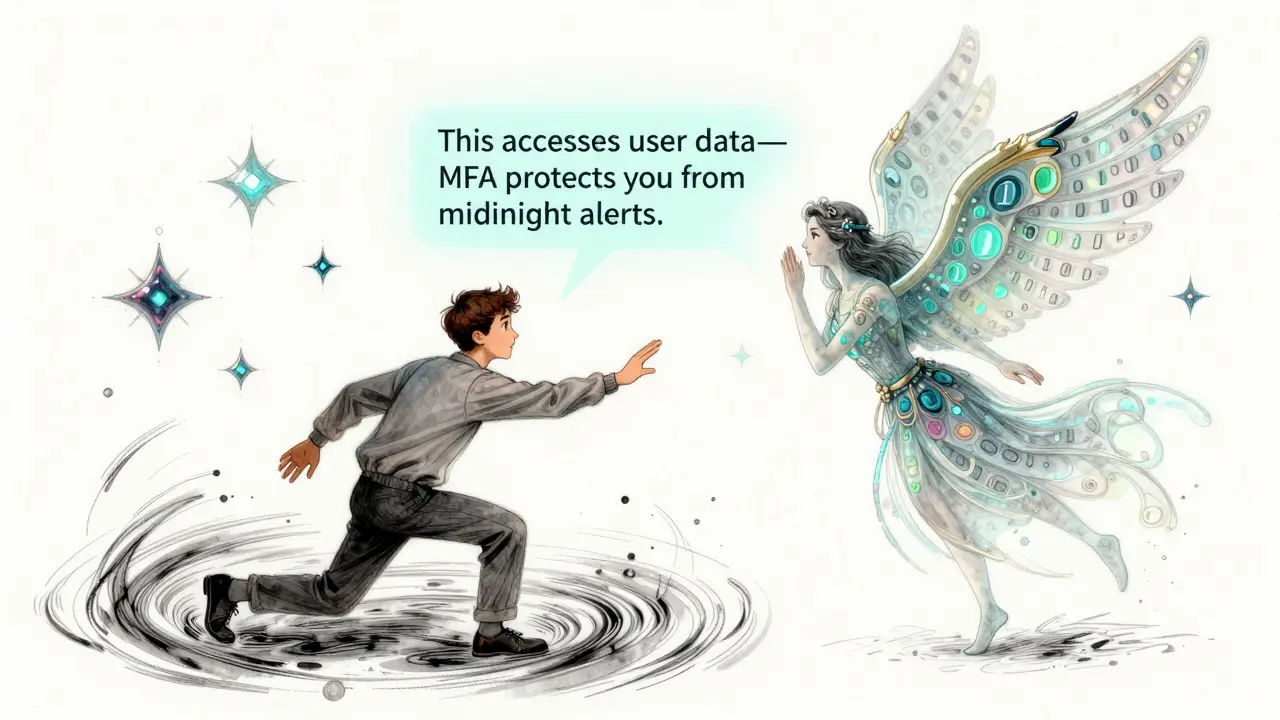
The shift is subtle but critical. Don’t say "You must use this." Say "This is how we help you avoid midnight alerts."
Do: Train Your Platform Team as Communicators
Platform engineers aren’t just coders. They’re translators. They bridge the gap between security teams, compliance officers, and developers.
The best ones don’t just build tools. They write clear docs. They host demos. They answer questions. They empathize.
Forrester found that organizations training platform teams in change management and technical writing see 3.5x higher governance adoption. Why? Because they speak the language of both sides. They don’t say "PCI-DSS requirement 6.2.3." They say "This stops hackers from stealing payment data. And here’s how it saves you from being on call at 3 a.m."
Invest in their skills. Let them attend workshops. Give them time to shadow developers. Make communication part of their KPIs.
Do: Start Small, Scale Fast
You don’t need to overhaul everything at once. Start with one pain point. Maybe it’s manual database provisioning. Or inconsistent secrets management. Pick one thing that slows teams down. Build a self-service solution for it. Automate the policy. Document the impact. Show the results.
Once that works, move to the next. CircleCI’s guide says it takes 3-6 months to get this right. That’s not a deadline. It’s a rhythm. Let teams see success. Let them ask for more. Momentum builds faster than mandates.
Do: Use Data to Win Buy-In
Leaders care about risk. Developers care about speed. The bridge? Data.
When you show that automated governance reduces deployment failures by 50%, or cuts onboarding time from two weeks to two days, you’re not just enforcing rules. You’re proving value. That’s how you get buy-in from engineering leads, CISOs, and even executives.
Financial services companies, for example, have 142 policy checkpoints per project. Yet they maintain 22% higher velocity than industry averages-not because they’re stricter, but because they communicate the trade-offs clearly. They show: "This extra step cuts fraud risk by 90%. That means fewer customer complaints. Fewer fines. Less overtime."
Future-Proof Your Approach
The next big shift? AI-assisted governance. GitHub’s 2025 roadmap includes "policy explainers" powered by Copilot that show developers why a rule applies to their specific code change. Imagine: you push a change. A bot replies: "This function accesses user data. Our policy requires MFA for all data access. Here’s how to fix it."
That’s not automation. That’s collaboration.
By 2027, Gartner predicts 50% of software teams will use intelligence platforms to measure and boost productivity. The winners won’t be the ones with the most rules. They’ll be the ones who made governance invisible, intuitive, and empowering.
Governance isn’t the enemy of velocity. Poorly communicated governance is.
Build systems where the right thing is the easiest thing. Explain the why. Listen to the how. And let developers do what they do best-build.
What’s the difference between governance and bureaucracy in software teams?
Governance is about enabling safe, consistent outcomes through clear, automated standards. Bureaucracy is about control through manual steps, delays, and unclear rules. Governance reduces friction. Bureaucracy adds it. For example, a governance system might auto-deploy a secure service when a developer selects a template. Bureaucracy would require five email approvals, a signed form, and a monthly review meeting.
How do you get developers to care about governance?
You don’t ask them to care. You show them how governance helps them. Link policies to outcomes they care about: fewer半夜 alerts, faster deployments, less rework. Spotify presents policies as "suggested improvements" with data on how they reduce incidents. That approach leads to 89% voluntary adoption. When developers see governance as a tool-not a trap-they embrace it.
Is governance as code the future?
Yes. Governance as code means policies are written in code, tested like software, and applied automatically. It’s not just about Terraform or YAML. It’s about making governance version-controlled, reviewable, and traceable. Teams using this method report 45% fewer process blockers. It turns abstract rules into something tangible, testable, and improvable-just like the rest of the codebase.
What if a team keeps breaking governance rules?
Don’t punish them. Investigate. Are the rules unclear? Is the tooling broken? Is the policy outdated? In 2024, Hatica found that 60% of repeated violations were caused by poor tooling or vague documentation-not willful negligence. Fix the system, not the person. Host a blameless retrospective. Ask: "What made this hard?" Then improve the template, the warning, or the automation.
How long does it take to build a governance system that doesn’t kill velocity?
It takes 3-6 months to build a solid foundation. The first month is about listening: talk to developers, map pain points. The next two months are about building one high-impact self-service tool. The following months are about iterating based on feedback. Don’t rush. A slow, well-tested system beats a fast, broken one. Companies like Netflix spent two years refining theirs. The payoff? 2.3x higher business performance.






Rakesh Kumar
February 23, 2026 AT 08:10This post hit me right in the feels. I’ve been on both sides of this-teams that felt like prisoners to process, and teams where governance just… worked. The difference? One felt like a jailer, the other like a coach. When our CI pipeline started auto-rejecting vulnerable deps with a link to the fix, I didn’t hate it-I thanked it. That’s the magic.
Bill Castanier
February 24, 2026 AT 18:54Self-service portals aren’t optional anymore. They’re the baseline. If your devs are still filling out forms for database access, you’re already behind.
Ronnie Kaye
February 25, 2026 AT 23:21Let me guess-this was written by someone who’s never had to deploy during a holiday weekend because some intern used a deprecated npm package. Yeah, automation’s great. But when it blocks you because you’re building a legacy integration that can’t be upgraded? That’s not governance. That’s tyranny in a GitHub Actions workflow.
Ian Maggs
February 26, 2026 AT 23:22The real issue, isn’t it, that governance is often conflated with control-when, in fact, true governance is the architecture of trust? It’s not about rules; it’s about the implicit contract between the team and the organization: ‘We trust you to build well, and we’ve built the guardrails so you don’t have to fear the consequences of failure.’ And yet… we keep building walls instead of bridges.
Flannery Smail
February 28, 2026 AT 23:03Everyone says ‘make the right choice the easiest choice’ but no one talks about how hard it is to actually design that. Most ‘self-service’ tools are just forms with prettier UIs. And the ‘paved paths’? Half of them are outdated by the time they’re documented.
Tony Smith
March 1, 2026 AT 19:03It’s not about the tools. It’s about the culture. I’ve seen teams with perfect automation still fail because the platform team refused to answer Slack messages. Governance is communication, not configuration. If your engineers have to guess why a rule exists, you’ve lost. The best governance teams I’ve worked with didn’t just build systems-they held weekly office hours, wrote blog posts explaining each policy in human terms, and celebrated when a dev found a better way. That’s not compliance. That’s collaboration.
One team I advised had a 70% drop in production incidents after they started tagging policy changes with the story behind them: ‘This rule was added because Sarah’s service took down the payment gateway during Black Friday. We’re not trying to slow you down-we’re trying to keep you off the phone at 3 a.m.’ That’s not policy. That’s empathy.
And yes, AI explainers will help. But only if they’re trained on real stories, not just compliance checklists. A bot saying ‘This violates PCI-DSS 6.2.3’ is useless. A bot saying ‘This function accesses payment data without MFA. Last month, this exact pattern caused a $2.3M breach at Company X. Here’s how to fix it in 2 clicks’? That’s leadership.
Stop thinking of governance as a firewall. Think of it as a seatbelt. You don’t yell at people for wearing them. You show them how it saved someone’s life. And then you make sure it’s comfortable.
Michael Gradwell
March 3, 2026 AT 04:04Ugh. Another article telling devs they’re not lazy, they’re just misunderstood. Newsflash: some devs *are* lazy. And some policies exist because people kept deploying unencrypted databases. Stop romanticizing autonomy. Some things need to be forced. The rest is just feel-good fluff.
Priyank Panchal
March 4, 2026 AT 16:40You think this is hard? Try enforcing governance in a team where half the devs still use AWS console manually and the CTO says ‘just let them work’. No automation. No docs. No accountability. Your ‘paved path’ is a dirt road with potholes and no signs. Stop writing articles. Go fix real teams.