
Imagine trying to read a novel where every single word forces you to re-read every other word in the book before you can understand the next sentence. That is essentially what standard Transformer models are neural network architectures that rely on self-attention mechanisms to process sequential data doing when they encounter long documents. As Large Language Models (LLMs) grow in capability, they hit a hard wall: computational complexity. The standard self-attention mechanism scales quadratically-meaning if you double the input length, the memory and compute requirements quadruple. This bottleneck makes processing sequences longer than a few thousand tokens prohibitively expensive.
This is where Sparse Attention is a technique that reduces computational cost by limiting which tokens attend to each other and its cousin, the Performer variant is an approximation method using kernel functions to achieve linear scaling, come into play. These aren't just minor tweaks; they are fundamental architectural shifts designed to break the O(n²) curse. By selectively ignoring irrelevant token interactions or approximating them mathematically, these methods allow models to handle sequences tens of thousands of tokens long without melting your GPU cluster. If you are building or deploying LLMs for long-context tasks like legal analysis, genomic sequencing, or high-resolution image processing, understanding these efficient transformer ideas is no longer optional-it’s essential.
The Core Problem: Why Standard Attention Fails at Scale
To appreciate the solution, we have to look at the problem clearly. In a standard Transformer, every token in your input sequence calculates an attention score against every other token. For a sequence of length n, this results in n × n calculations. When n is 1,000, that’s one million operations. Manageable. But when n hits 65,536-a common requirement for analyzing full-length medical records or complex codebases-that number jumps to over four billion.
The memory footprint follows suit. Processing a 16,384-token sequence with dense attention requires approximately 1 terabyte of memory just for the attention matrices alone. Most enterprise GPUs don’t even have that much VRAM, let alone the bandwidth to move it around efficiently. This quadratic scaling is the primary reason why early Transformers were capped at relatively short contexts. It’s not that the model *can’t* understand more; it’s that the hardware literally runs out of space to store the relationships between words.
Sparse attention solves this by introducing structure. Instead of attending to everything, tokens only attend to a subset of other tokens. This reduces the complexity from O(n²) to something much friendlier, like O(n√n) or O(nw), where w is a window size. The result? You can process sequences up to 30 times longer than conventional implementations while using a fraction of the memory.
How Sparse Attention Patterns Work
Sparse attention isn’t a single technique but a family of strategies, each with different trade-offs between speed, memory, and accuracy. The goal is to maintain enough global context so the model doesn’t lose track of the overall meaning, while cutting out redundant local calculations. Here are the most effective patterns used in modern LLMs:
- Local/Windowed Attention: Each token attends only to a fixed window of neighboring tokens (e.g., ±128 tokens). This is incredibly efficient for capturing local syntax and semantics. Complexity drops to O(nw). However, distant parts of the document become invisible to each other unless bridged by another mechanism.
- Global Attention: A small set of specific tokens (e.g., 32 per sequence) are designated as "global." They attend to all other tokens, and all other tokens attend to them. This acts as a communication hub, allowing information to flow across the entire document indirectly. Used heavily in Longformer is a sparse attention transformer developed by Allen Institute for AI.
- Strided Attention: Tokens connect to others at regular intervals (e.g., every 8th token). This creates a sparse mesh that captures some long-range dependencies without the full cost of dense attention. Complexity remains around O(n√n).
- Random Attention: Randomly sampled token pairs are allowed to attend to each other. This provides statistical coverage of relationships, ensuring that no two distant tokens are permanently isolated. It adds O(n log n) complexity.
OpenAI’s original Sparse Transformer implementation combined these approaches. They used block-sparse attention kernels that sliced query, key, and value matrices into blocks, avoiding unnecessary computations in the upper triangle of the attention matrix. This reduced operations by approximately 50% compared to naive dense implementations.
Performer Variants: Approximation Over Sparsity
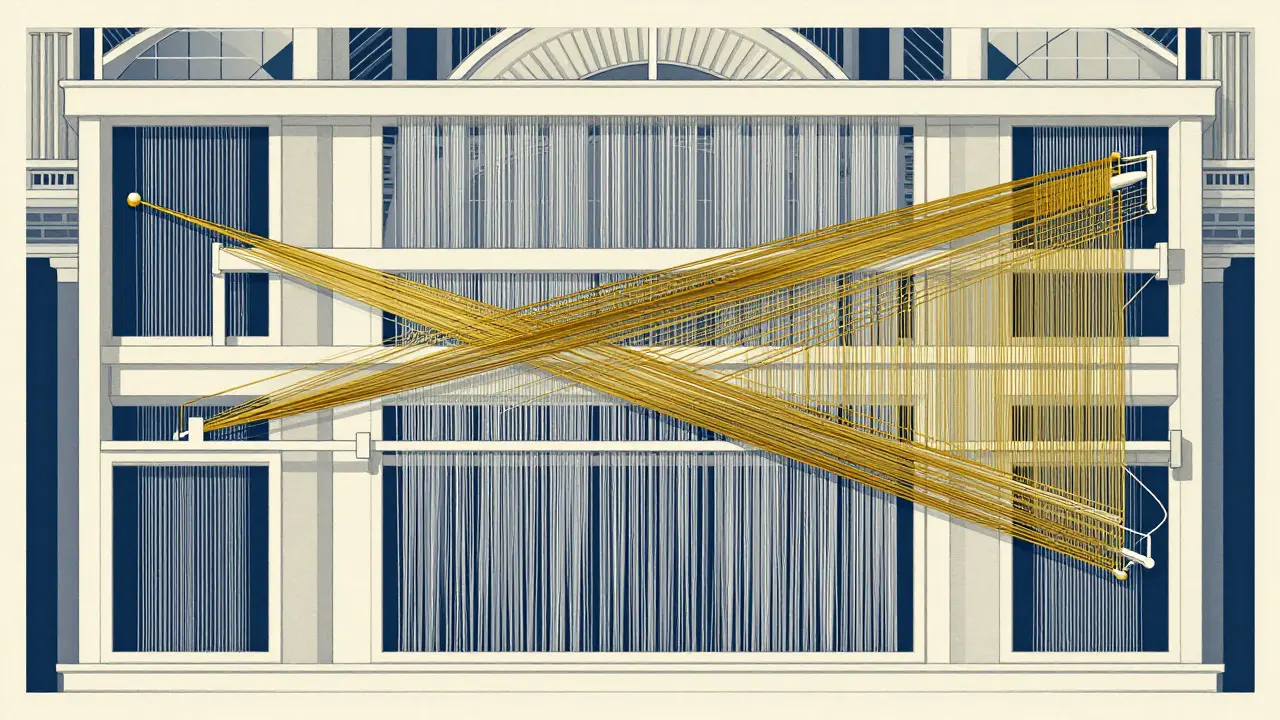
While sparse attention cuts corners by ignoring certain connections, Performer is a transformer variant that uses kernel-based approximation to achieve linear time complexity takes a different mathematical approach. Introduced by Google Research in 2020, Performer doesn’t strictly limit which tokens attend to which. Instead, it approximates the softmax attention function using random feature maps.
The core idea relies on the fact that the attention mechanism is essentially a normalized dot product. By mapping inputs into a higher-dimensional space using positive orthogonal random features, Performer can approximate this operation in linear time, O(n). This means doubling the sequence length only doubles the computation, not quadruples it.
Recent developments have refined this further. The release of Performer-LSH v3 is an updated version combining locality-sensitive hashing with sparse patterns in late 2024 combines locality-sensitive hashing with sparse attention patterns. This hybrid approach achieves O(n log n) complexity while maintaining 98.7% of dense attention’s accuracy on the Long Range Arena (LRA) benchmark. For developers who want linear scaling without manually designing sparse masks, Performer variants offer a compelling alternative.
Comparing Key Implementations: Longformer, BigBird, and Beyond
Not all sparse transformers are created equal. Different architectures excel in different scenarios. Choosing the right one depends on your specific use case, whether it’s question answering, document classification, or image generation.
| Model | Complexity | Key Mechanism | Best Use Case | Limitation |
|---|---|---|---|---|
| Longformer | O(n) | Dilated + Global + Local | Document Classification, QA | Accuracy drop on short-text sentiment |
| BigBird | O(n) | Random + Band + Global | Long Context QA, Genomics | Higher variance in performance |
| Sparse Transformer (OpenAI) | O(n√n) | Block-Sparse Kernels | Image Generation, Audio | Complex implementation |
| Performer | O(n) | Kernel Approximation | General Purpose Linear Scaling | Approximation error on very large models |
Longformer, developed by the Allen Institute for AI, is particularly strong in document-level tasks. In benchmarks, it achieved 92.3% accuracy on the PubMedQA dataset with 32,768-token sequences, outperforming standard transformers that had to truncate inputs. Its combination of dilated (strided), local, and global attention creates a robust information flow.
BigBird, from Google Research, excels in question answering with long contexts. It scored an 85.7 F1 on TriviaQA-Random, beating standard transformers. Its random attention component ensures that any token has a chance to interact with any other, mitigating the isolation risk of purely local windows.
However, there are trade-offs. Sparse attention models showed a 3.2-4.7% accuracy drop on the LRA Pathfinder task compared to dense variants. More importantly, they underperform on tasks requiring immediate global context, such as sentiment analysis on short texts, where a 7.3% accuracy drop was observed compared to BERT.

Practical Implementation: Getting Started
Implementing these models isn’t as simple as swapping a library call. The learning curve is moderate to steep. According to a survey of practitioners, 68% needed 2-4 weeks to become proficient, primarily struggling with designing effective attention patterns and troubleshooting convergence.
- Choose Your Framework: Hugging Face Transformers library offers pre-built implementations of Longformer and BigBird. Start here. Custom sparse kernels in PyTorch require significant engineering effort and often lack documentation.
- Tokenize and Pad: Ensure your tokenizer handles long sequences correctly. Padding strategies matter more here because sparse patterns depend on positional indices.
- Select the Pattern: For document summarization, windowed attention with global tokens works well. For genomic data, BigBird’s random attention is often superior. Don’t guess-benchmark on a small subset of your data.
- Adjust Hyperparameters: Learning rates may need to be lower. Batch sizes can often be larger due to reduced memory usage. Monitor loss curves closely; sparse models can diverge if the attention mask is too restrictive.
- Optimize Hardware: Use mixed-precision training. Storing weights in single-precision while computing activations in half-precision delivers up to 3x speedups on NVIDIA V100 GPUs. Combine this with gradient checkpointing to make memory usage independent of layer count.
A developer at a major healthcare tech firm reported reducing inference time for 32K-token medical documents from 47 seconds to 8.2 seconds using Longformer. However, they noted that matching the accuracy of their previous dense model required significant hyperparameter tuning. Another user on Reddit documented a 63% reduction in GPU memory usage for document summarization but saw a 5.8% drop in ROUGE-L scores until they implemented global tokens to bridge the context gap.
Market Adoption and Future Trends
The demand for efficient transformers is driving rapid adoption. The transformer optimization market, including sparse attention techniques, was valued at $1.7 billion in Q3 2024, with a projected 38.7% CAGR through 2027. Enterprise adoption is strongest in healthcare (42% of large projects) and legal technology (37%), where document lengths routinely exceed 10,000 tokens.
FlashAttention currently holds a 23% market share in transformer optimization tools, followed by Sparse Transformer (18%) and Longformer (15%). However, the trend is shifting toward hybrid approaches. A survey of leading AI researchers indicated that 78% believe the future lies in adaptive sparse-dense mechanisms that dynamically allocate computational resources based on input characteristics.
Google Research recently integrated sparse attention patterns into their Gemini 2.5 architecture, optimizing for multimodal long-context processing. Meanwhile, the Allen Institute released Longformer v2 with dynamic window sizing, improving accuracy on variable-length documents by 6.2%. These updates suggest that static sparse masks are being replaced by intelligent, content-aware attention strategies.
As Professor Yoshua Bengio noted at NeurIPS 2024, "while sparse attention solves today's memory constraints, we need more principled approaches to determining optimal attention patterns rather than relying on heuristic designs." The next frontier isn’t just making attention sparse; it’s making it smart.
What is the main difference between Sparse Attention and Performer?
Sparse Attention reduces complexity by structurally limiting which tokens attend to each other (e.g., only neighbors or specific global tokens). Performer, on the other hand, uses mathematical approximation (kernel functions) to estimate the attention scores for all tokens, achieving linear scaling without explicitly dropping connections. Sparse attention is often more accurate for structured data, while Performer offers easier integration for general linear scaling needs.
When should I use Longformer instead of a standard Transformer?
Use Longformer when your input sequences consistently exceed 4,096 tokens, such as in legal document analysis, medical record processing, or long-form summarization. If your tasks involve short text like tweets or short reviews, standard Transformers or BERT will likely perform better and faster, as sparse attention introduces overhead that isn't justified for short sequences.
Does Sparse Attention sacrifice accuracy?
It can, depending on the task. For tasks requiring deep global context, like complex reasoning across a whole book, sparse attention may show a 3-5% accuracy drop compared to dense attention. However, for many practical applications like document classification or retrieval-augmented generation, the accuracy loss is negligible (often <1%) while the speedup is massive (3-5x).
How much memory does Sparse Attention save?
For a 16,384-token sequence, dense attention requires ~1 TB of memory. Windowed Sparse Attention with a 128-token window reduces this to approximately 8.39 GB. This represents a >99% reduction in memory usage for the attention matrices, allowing you to run larger models on consumer-grade GPUs.
Is Performer still relevant in 2026?
Yes, especially with recent updates like Performer-LSH v3. While FlashAttention has gained popularity for its hardware-efficient dense attention, Performer remains a top choice for pure linear-scaling requirements where implementing custom sparse masks is too complex. It is particularly useful in research settings and for applications needing predictable O(n) performance regardless of sequence structure.