Why Your "Vibe" Needs a Guardrail
You’ve seen the demos. A developer types a few sentences into an AI coding assistant, hits enter, and watches a full-stack application assemble itself in seconds. It feels like magic. In early 2025, Andrej Karpathy coined the term vibe coding to describe this shift: moving away from manual syntax writing toward natural language prompting, rapid iteration, and trusting the AI’s output based on feel rather than line-by-line inspection.
For a solo founder building an MVP or a student learning Python, vibe coding is liberating. It lowers the barrier to entry and accelerates prototyping. But here is the hard truth no one talks about in the hype videos: you cannot run a Fortune 500 company on vibes alone.
When you scale vibe coding across hundreds of developers, the risks multiply exponentially. You face security vulnerabilities hidden in generated code, architectural drift where systems become unmanageable spaghetti, and compliance failures that could shut down operations. To manage this, organizations need specific human roles. We are not talking about replacing developers; we are talking about evolving them into three critical positions: AI Champions, AI Architects, and Verification Engineers.
This guide breaks down what these roles actually do, why they are non-negotiable for governance, and how they fit together to make AI-assisted development safe and scalable.
The Problem with Scaling Unstructured AI Code
Before defining the roles, we need to understand the failure mode. In traditional software engineering, the bottleneck was typing speed and logic complexity. In vibe coding, the bottleneck shifts to context management and quality assurance.
Large Language Models (LLMs) are probabilistic engines. They predict the next likely token. They do not "know" your entire codebase unless you explicitly feed it context. When a team of fifty developers uses AI agents to generate code independently, several things go wrong quickly:
- Context Fragmentation: Developer A generates a module using Library X. Developer B generates a dependent module using Library Y because the AI suggested it. The integration fails silently until production.
- Security Blind Spots: AI models often replicate common patterns found in public repositories. If those patterns contain known vulnerabilities (like SQL injection flaws), the AI will reproduce them without warning.
- Technical Debt Acceleration: Vibe coding encourages "code first, refine later." Without oversight, this leads to a codebase that works today but is impossible to maintain tomorrow.
Governance isn’t about slowing down innovation. It’s about ensuring that the speed of AI doesn’t outpace your ability to control the outcome. This is where specialized roles come in.
Role 1: The AI Champion (The Culture Carrier)
The AI Champion is not necessarily a coder. Think of them as a hybrid between a product manager, a change agent, and a technical evangelist. Their primary job is to bridge the gap between leadership’s strategic goals and the development team’s daily workflow.
In an organization adopting vibe coding, resistance is inevitable. Senior developers may feel threatened by AI. Junior developers may over-trust it. The AI Champion manages this cultural shift.
Key Responsibilities
- Prompt Engineering Standards: They create and maintain libraries of effective prompts. Instead of letting every developer guess how to ask the AI for help, the Champion provides templates for secure, efficient code generation.
- Training and Upskilling: They organize workshops on how to critique AI output. They teach developers that their role has shifted from "writer" to "editor."
- Roadmap Alignment: They ensure that the tools being used align with the company’s tech stack. For example, if the company uses React, the Champion ensures the AI prompts specify React components, preventing accidental Vue.js or Angular injections.
Without an AI Champion, vibe coding becomes chaotic. Developers use different tools, follow different practices, and produce inconsistent results. The Champion creates the "playbook" that makes scaling possible.

Role 2: The AI Architect (The Structural Guardian)
If the AI Champion handles culture, the AI Architect handles structure. Traditional software architects design system blueprints before a single line of code is written. In a vibe coding environment, code appears instantly. The AI Architect must therefore focus on constraints and boundaries.
The AI Architect defines the rules that the AI agents must follow. They don’t write the code; they write the instructions that govern how the code is written.
Key Responsibilities
- System Design Constraints: They establish the high-level architecture-microservices vs. monolith, database choices, API protocols-and embed these constraints into the AI’s system prompts. The AI should never be allowed to choose the database type; it must use the approved standard.
- Integration Strategy: As AI generates modules, the Architect ensures they can talk to each other. They define the interfaces and data contracts that all generated code must adhere to.
- Toolchain Integration: They select and configure the AI development platforms (like GitHub Copilot Workspace, Cursor, or Replit Agent) to integrate seamlessly with existing CI/CD pipelines.
A good analogy: The AI Architect builds the highway system. The AI agents drive the cars. If the highway has no lanes, no signs, and no traffic lights, the cars will crash. The Architect ensures the infrastructure exists so the AI can move fast without causing accidents.
| Aspect | Traditional Software Architect | AI Architect (Vibe Coding Context) |
|---|---|---|
| Primary Output | Design documents, UML diagrams | System prompts, constraint guidelines, prompt libraries |
| Focus Area | Long-term scalability, performance optimization | Context window management, consistency across AI generations |
| Interaction with Code | Reviews code post-implementation | Pre-configures AI behavior pre-generation |
| Speed of Iteration | Weeks to months | Hours to days |
Role 3: The Verification Engineer (The Quality Gatekeeper)
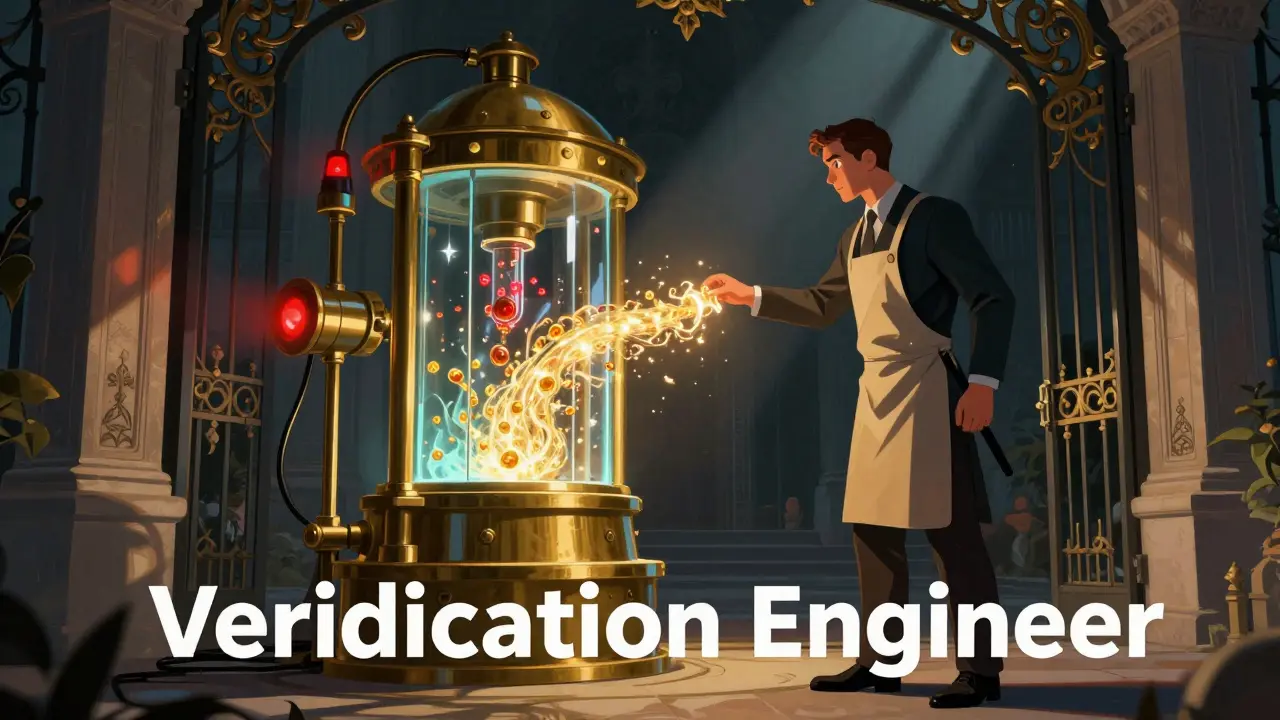
This is perhaps the most critical new role. In traditional development, testers check if features work. In vibe coding, Verification Engineers check if the AI hallucinated, introduced security flaws, or violated architectural constraints. They are the immune system of the codebase.
Because AI can generate plausible-looking code that is functionally broken or insecure, human verification is mandatory. However, manual review of thousands of lines of AI-generated code is impossible. The Verification Engineer builds automated checks to catch errors at scale.
Key Responsibilities
- Automated Testing Pipelines: They create rigorous unit tests, integration tests, and security scans that run automatically whenever AI commits code. If the AI generates a function, the Verification Engineer’s scripts immediately test it against edge cases.
- Security Auditing: They specialize in identifying vulnerabilities unique to AI-generated code, such as dependency confusion attacks or hardcoded secrets. They use static analysis tools tailored for LLM outputs.
- Regression Prevention: Since vibe coding changes code rapidly, the Verification Engineer ensures that new AI-generated features don’t break existing functionality. They maintain a suite of regression tests that act as a safety net.
Consider a scenario: An AI agent generates a login page. It looks perfect. But the Verification Engineer’s automated scan reveals that the password hashing algorithm used is outdated and vulnerable to brute-force attacks. The engineer blocks the merge and forces the AI to regenerate with the correct cryptographic standards. This happens in minutes, not weeks.
How These Roles Work Together
These three roles form a governance triangle. They don’t operate in silos; they interact continuously to keep the vibe coding process healthy.
- Planning Phase: The AI Architect defines the structural constraints and selects the appropriate AI tools. The AI Champion communicates these standards to the development team and provides training on how to use the new tools effectively.
- Development Phase: Developers use AI to generate code. The AI Champion monitors usage patterns and updates prompt libraries based on what works best. The AI Architect adjusts system prompts if they notice consistent architectural drift.
- Review Phase: The Verification Engineer runs automated tests on the generated code. If issues are found, they provide feedback to the AI Architect (to adjust constraints) and the AI Champion (to update training materials).
This loop ensures continuous improvement. The more the AI generates, the smarter the governance becomes. Over time, the Verification Engineer’s tests become more precise, the Architect’s constraints become tighter, and the Champion’s prompts become more effective.
Implementing Governance Without Killing Speed
The biggest fear among teams adopting vibe coding is that governance will slow them down. It shouldn’t. In fact, proper governance speeds up delivery by reducing rework.
Here are practical steps to implement these roles without creating bureaucracy:
- Start Small: Don’t hire full-time Verification Engineers on day one. Assign experienced senior developers to wear this hat part-time while you build the automated testing pipeline.
- Automate Everything Possible: The Verification Engineer’s goal is to replace manual reviews with automated checks. Invest in tools that scan code for security and style violations instantly.
- Create a "Safe Sandbox": Allow developers to experiment freely in a sandbox environment. The AI Champion oversees this space, encouraging creativity without risking production stability.
- Measure Outcomes, Not Lines of Code: Shift KPIs from "lines of code written" to "features delivered per sprint" and "bug escape rate." This aligns incentives with quality and efficiency.
Remember, the goal of vibe coding is to amplify human potential, not replace it. By introducing AI Champions, Architects, and Verification Engineers, you ensure that the amplification is directed, safe, and sustainable.
The Future of Human-AI Collaboration
We are only at the beginning of this transition. As AI models become more capable, the nature of these roles will evolve. AI Champions may become "Prompt Strategists," focusing on advanced interaction techniques. AI Architects may become "System Prompt Engineers," designing complex logical frameworks for AI agents. Verification Engineers may leverage AI-to-AI testing, where one model checks the work of another.
But the core principle remains unchanged: humans must remain in the loop. AI provides the speed and volume; humans provide the direction, ethics, and judgment. Organizations that recognize this balance will thrive. Those that try to automate everything away will eventually face catastrophic failures.
Vibe coding is powerful. But power requires responsibility. Build your team accordingly.
What is the difference between a traditional QA tester and a Verification Engineer?
A traditional QA tester focuses on verifying that software meets functional requirements through manual or automated testing. A Verification Engineer in the context of vibe coding specifically addresses the unique risks of AI-generated code, such as hallucinations, subtle security vulnerabilities, and architectural inconsistencies. They build automated pipelines that validate AI output against strict constraints before it enters the main codebase.
Do small startups need all three roles?
Not necessarily. Small teams can combine these responsibilities. A lead developer might act as both the AI Architect and Verification Engineer, while a product owner serves as the AI Champion. However, as the team grows beyond 10-15 developers, separating these functions becomes critical to maintain code quality and security.
How does an AI Architect prevent "architectural drift"?
Architectural drift occurs when individual developers make small deviations from the system design, leading to inconsistency. An AI Architect prevents this by embedding strict design constraints into the AI’s system prompts. For example, they might configure the AI to always use a specific database library or follow a particular folder structure. Automated linters and code scanners also enforce these rules.
Can AI replace the need for human Verification Engineers?
While AI can assist in testing (e.g., generating test cases), it cannot fully replace human judgment. AI models can miss nuanced security flaws or business logic errors that require contextual understanding. Human Verification Engineers design the testing strategies, interpret complex failure modes, and ensure ethical compliance, which AI currently cannot do reliably.
What skills are required to become an AI Champion?
An AI Champion needs strong communication skills, a solid understanding of software development lifecycles, and familiarity with AI tools. They should be able to translate technical concepts for non-technical stakeholders and train developers on best practices. Experience in change management or product management is highly beneficial.