
Why RAG Is the Default Choice for Enterprise AI Today
Generative AI models like GPT and Claude can sound smart, but they often make things up. That’s not just annoying-it’s dangerous in customer service, legal docs, or medical support. Enter RAG: Retrieval-Augmented Generation. It doesn’t try to memorize everything. Instead, it looks up facts in real time from your company’s documents, databases, or knowledge bases. This cuts hallucinations by grounding answers in trusted sources. By 2026, 70% of enterprise AI systems use RAG, up from just 25% in 2023. The reason? It works without retraining your LLM. You update your documents, and the AI updates its answers-no engineers needed to retrain a 70-billion-parameter model.
How Indexing Turns Documents into Searchable Vectors
Indexing is where RAG starts. You feed in PDFs, wikis, CRM notes, or even Excel sheets. But LLMs don’t read text like humans. They see numbers. So an embedding model-like text-embedding-3-large or all-MiniLM-L6-v2-turns each chunk of text into a vector. Think of it as a fingerprint for meaning. That vector gets stored in a vector database like Pinecone, Weaviate, or Milvus. When someone asks a question, the system turns their words into a vector too. Then it finds the most similar ones in the database. The closer the match, the more relevant the document. Hybrid search is now standard: combine semantic vectors with keyword matching. Google Cloud found this boosts recall by 28%. A query like “How do I reset my password?” might not match the exact phrase in your help doc, but if the doc talks about “account recovery” and “login issues,” hybrid search still pulls it up.
Chunking Isn’t Just Splitting Text-It’s Strategic
Chunking sounds simple: break big documents into smaller pieces. But get it wrong, and your RAG system fails. Too big? You get irrelevant context. A 2000-token chunk about product returns might include one line about shipping delays, but the LLM latches onto that and gives a wrong answer. Too small? You lose context. A 50-token chunk of a legal clause might say “Party A shall not…” without the definition of “Party A.” Optimal chunk size? 256-512 tokens for most enterprise docs. But it’s not one-size-fits-all. Technical manuals often need longer chunks to preserve step-by-step logic. Customer emails? Shorter. Confluent’s team found that streaming updates from operational databases in real time keeps chunks fresh. They don’t re-index everything. They only update changed documents. That’s called delta indexing. 68% of enterprises now use it. Without it, your RAG system answers questions based on last month’s policy, not today’s.

Relevance Scoring: The Quiet Hero of RAG Accuracy
Just retrieving the top 5 documents isn’t enough. You need to know which ones actually help the LLM answer correctly. That’s relevance scoring. It’s not magic. It’s metrics. Precision tells you how many of the retrieved docs were useful. Recall tells you how many useful docs you actually found. Teams that ignore these metrics end up with systems that look good on paper but fail in practice. Orq.ai’s 2025 guide recommends tracking both daily. If precision drops below 70%, your chunks are too big or your embedding model is outdated. If recall is low, you’re missing key documents. Some advanced systems now use query rewriting. If someone types “What’s the refund policy for defective laptops?”, the system might rewrite it to “Return process for damaged electronics under warranty” before searching. Step-back prompting helps too: “What are the key factors that determine a refund?” before asking the real question. These tweaks improve accuracy by 15-22% in real deployments.
When RAG Makes Hallucinations Worse
Here’s the scary part: bad RAG can make hallucinations worse. AWS tested this. When the retrieved documents were irrelevant or outdated, the LLM still used them to build answers-sometimes inventing details to fill gaps. In one case, a support bot pulled a 2023 product spec that said “battery lasts 8 hours.” The real spec, updated in January 2026, said “5 hours.” The LLM didn’t know the update existed. It just used the old doc and said “8 hours.” Result? Customers returned batteries. That’s hallucination amplification. It’s not the LLM lying. It’s the system feeding it bad info and the model trusting it. Fixing this means two things: strict document governance and confidence thresholds. If the top retrieved doc has a similarity score below 0.82, don’t use it. Flag it for review. Build gates. Only allow answers if confidence is high. Forrester says this is non-negotiable for enterprise RAG.
Real-World RAG: Who’s Using It and How
Finance and healthcare lead RAG adoption. Deloitte’s 2025 survey found 83% of Fortune 500 financial firms use RAG to answer compliance questions from regulators. One bank’s system pulls from 12,000 pages of SEC filings, internal audits, and policy manuals. When a customer asks, “Can I defer my loan payment if I lost my job?”, the RAG system finds the exact clause in their 2025 hardship policy and generates a clear answer. No guesswork. In healthcare, hospitals use RAG to answer clinical questions against updated treatment guidelines. One system in Arizona reduced misdiagnosis-related complaints by 41% in six months. Even manufacturing uses it: technicians ask, “What’s the torque spec for this bolt?” and get the exact value from the latest maintenance manual-no more flipping through PDFs. The common thread? All these systems use real-time indexing, smart chunking, and strict relevance scoring. They don’t just connect an LLM to a database. They engineer the pipeline.
What’s Next: Multimodal RAG and Knowledge Graphs
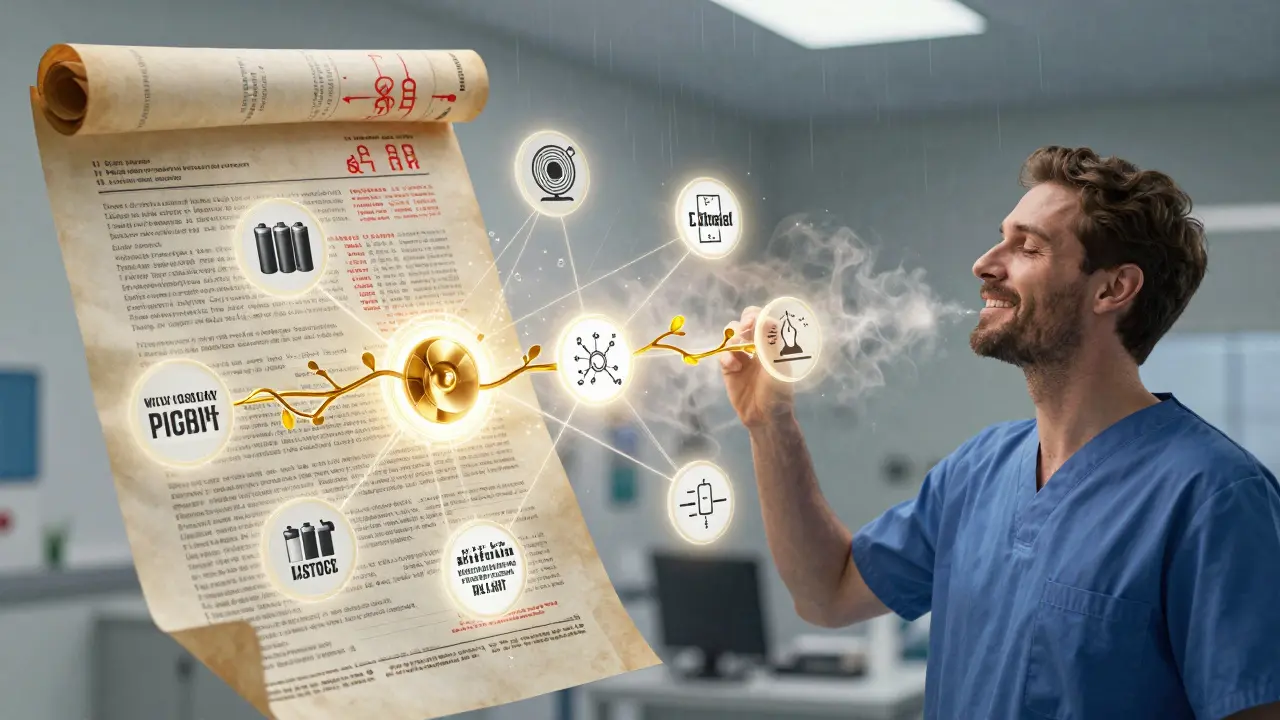
RAG isn’t stuck on text anymore. NVIDIA’s February 2026 research showed vector indexes can now handle images, charts, and tables. A technician uploads a photo of a broken pump. The system compares it to thousands of labeled images and retrieves the repair manual section with matching symptoms. Microsoft’s Azure AI Studio is testing knowledge graphs-networks of facts linked by relationships. Instead of just retrieving documents, it traces connections: “Battery failure → caused by overheating → due to faulty fan → recall ID 2025-047.” This helps with multi-hop questions like, “Why did the Model X battery fail last month?” Traditional RAG fails here. Graph-based RAG can answer it. The market for RAG tools is projected to hit $4.7 billion by 2027. But the winners won’t be the ones with the fanciest models. They’ll be the ones who mastered indexing, chunking, and relevance scoring.
Getting Started: Three Rules for a Working RAG System
- Start with clean, well-organized data. Garbage in, garbage out. If your knowledge base has 12 versions of the same policy, fix that first.
- Test chunking with real queries. Don’t assume 512 tokens is perfect. Run 50 sample questions and see which chunks give the right answers. Adjust size and overlap.
- Monitor precision and recall daily. Set alerts. If precision drops below 70%, pause deployments. Fix the data, not the LLM.
Don’t chase the latest embedding model. Don’t over-engineer the pipeline. Focus on the basics: good data, smart chunks, and honest scoring. That’s how you build a RAG system that doesn’t hallucinate-and actually helps people.







kelvin kind
February 2, 2026 AT 00:16Just use 512-token chunks and call it a day.
Fred Edwords
February 3, 2026 AT 14:31Good breakdown-but I’d add that hybrid search isn’t just about boosting recall; it’s about reducing noise. Keyword matching catches the literal matches, while semantic vectors catch the intent. Google’s 28% gain? That’s because they stopped treating search like a magic black box. You need both. And don’t forget to normalize your vector scores-some embedding models spit out wildly different ranges, and that wrecks your ranking.
Mongezi Mkhwanazi
February 4, 2026 AT 05:36Let me tell you something-this whole RAG thing is being sold like it’s the Second Coming, but nobody talks about the hidden cost: the data hygiene tax. You think your company’s knowledge base is clean? Ha. I’ve seen teams spend six months just deleting duplicate SOPs, fixing inconsistent terminology, and untangling version chaos-only to realize the LLM still hallucinates because someone left a 2019 policy PDF in the index. And yes, I’ve seen it happen. Multiple times. You can’t just plug in a vector DB and expect miracles. You need a data janitor. A real one. With a mop. And a sense of duty. And a union. And a pension plan. And a therapist. And a goddamn life.
Ian Cassidy
February 4, 2026 AT 16:26Chunking at 256–512 tokens makes sense for docs, but for code snippets or API specs? You need micro-chunks-like 128 tokens max. I saw a dev team lose two weeks because their RAG system kept pulling half a function signature and then hallucinating return types. The embedding model didn’t care-it saw ‘int’ and ‘return’ and called it a day. Fix: chunk by logical unit, not byte count. Also, overlap > 15% is non-negotiable. No exceptions.
Zach Beggs
February 4, 2026 AT 20:36I’ve been running RAG for a year now. The biggest win? Confidence thresholds. We set ours at 0.85 and it cut false answers by 70%. We also started logging every query where the top result scored below 0.8. Turns out, 60% of those were from users asking about new policies that hadn’t been indexed yet. So now we have a Slack bot that pings the content team when this happens. Simple. Works.
Kenny Stockman
February 5, 2026 AT 12:22Hey, if you’re just starting out-don’t overthink it. Clean data, decent chunk size, and track precision daily. That’s it. You don’t need knowledge graphs or multimodal vectors yet. I’ve seen teams burn $200k on fancy tools while their PDFs were still named ‘final_v3_final_v2_final.docx’. Fix the basics first. The rest will follow. And hey-no shame in starting small. Even a 10-page FAQ with good indexing beats a 10,000-page mess any day.
Sarah McWhirter
February 6, 2026 AT 10:32Okay, but what if the ‘trusted sources’ are controlled by the same corporations that want you to believe the battery lasts 8 hours? What if the ‘updated policy’ was quietly changed to avoid liability? What if RAG isn’t fixing hallucinations-it’s just making corporate lies sound more authoritative? I mean, the system doesn’t know truth. It knows what’s indexed. And who indexes it? Lawyers. PR teams. Compliance officers who got promoted for ‘streamlining documentation.’ So… is RAG making AI smarter? Or just making propaganda more precise?
Ananya Sharma
February 8, 2026 AT 09:51Let’s be real-70% adoption by 2026? That’s a fantasy number cooked up by vendors selling vector databases. Most companies can’t even maintain a functional wiki. I’ve worked with three Fortune 500s. None of them had a single document that wasn’t outdated, duplicated, or locked in a SharePoint graveyard. And the ‘real-time indexing’? Hah. They update once a quarter. Meanwhile, the LLM is still answering questions based on a policy from 2021. This whole ‘RAG saves the enterprise’ narrative is just a distraction from the real problem: no one cares about knowledge management. They just want to slap an LLM on top of chaos and call it AI. Wake up.
Antonio Hunter
February 9, 2026 AT 07:43I’ve been mentoring teams on RAG for the past 18 months, and the most consistent mistake I see? They treat the retrieval system like a search engine, not a precision tool. It’s not about getting the top 5 results-it’s about getting the *right* 2. I’ve seen engineers spend weeks tuning embeddings, only to ignore the fact that their chunk boundaries were slicing through key definitions. A legal clause isn’t a paragraph-it’s a unit of meaning. If you split it, you break it. And if you don’t measure precision daily, you’re flying blind. Start with a small set of 20 critical queries. Test everything against them. If your system fails on those, nothing else matters. Don’t chase scale. Chase accuracy. One reliable answer is worth a thousand guesses.
Paritosh Bhagat
February 10, 2026 AT 04:54Wow. Just… wow. You all sound like you’ve read the same vendor whitepaper and are now reciting it like a prayer. Let me ask you this: if RAG is so great, why are we still seeing compliance violations? Why are customers still getting wrong answers? Why do we need 12 different monitoring dashboards just to keep the system from lying? The truth is, nobody wants to fix the root problem: the data is garbage, the people managing it are overworked, and the executives don’t care until someone gets sued. You’re all just polishing the coffin while the corpse still has a pulse. And you call this innovation? Please. I’ve seen this movie before. It ends with a lawsuit, a press release, and a new vendor contract. Same song, different decade.