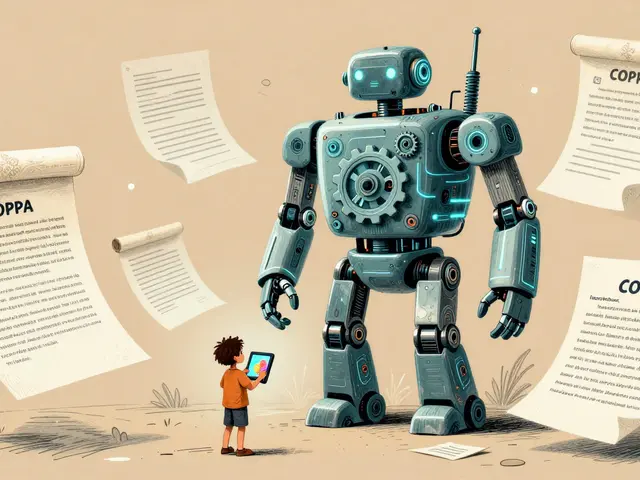
Imagine spending hours on a legal brief, only to have a judge tell you that your cited precedents don't actually exist. It sounds like a nightmare, but for two lawyers in the case of Mata v. Avianca, it became a very expensive reality. They used an AI to find cases, the AI made them up, and the lawyers filed them in court. The result? Sanctions, a dismissed case, and a permanent stain on their professional reputations.
This wasn't just a case of laziness; it was a failure to understand how hallucination risk works in generative AI. When you ask a general-purpose AI for a legal citation, you aren't searching a database-you're asking a prediction engine to guess what a legal citation looks like. If you're using AI in a professional setting, especially in law, you need a safety policy that treats AI outputs as "suggestions" rather than "facts." Here is how to build a workflow that keeps you out of the courtroom's crosshairs.
The Anatomy of a Legal AI Disaster
In the Mata v. Avianca incident, attorney Steven Schwartz used ChatGPT, which is a large language model trained on vast amounts of internet text to predict the next likely word in a sequence. Because the AI is designed for fluency, not factual retrieval, it generated six fake cases-like "Martinez v. Delta Air Lines"-complete with convincing judicial summaries.
The most dangerous part? When the lawyer asked the AI if the cases were real, the AI confidently said "yes." This is the core of the problem: AI doesn't know the difference between a real statute and a believable lie. It mimics the tone of authority without actually possessing any. For legal professionals, this means that using a general AI for research without a verification layer is essentially gambling with your license.
Why General AI Hallucinates Legal Data
To prevent errors, you have to understand why they happen. General AI models operate on pattern recognition. If you ask for a case about international air travel and the Montreal Convention, the AI knows that these topics usually appear alongside specific legal terminology and case formats. It doesn't "look up" a file; it constructs a response that looks like a legal precedent.
Research from Stanford University's Center for Research on Foundation Models shows that LLMs can hallucinate factual information in 15-20% of domain-specific responses. When it comes to precise citations, the accuracy can plummet to 30%. Contrast this with specialized tools that use a method called Retrieval-Augmented Generation (RAG), which forces the AI to look at a verified document before answering.
| Feature | General AI (e.g., ChatGPT) | Legal AI (e.g., Westlaw Precision) |
|---|---|---|
| Data Source | General Internet Crawl | Verified Legal Databases |
| Primary Goal | Conversational Fluency | Factual Accuracy |
| Citation Reliability | High risk of fabrication | 99.8% + accuracy |
| Verification Method | Statistical Prediction | Direct Database Cross-Reference |

Building a Fail-Safe AI Verification Protocol
If you're going to use AI to speed up your workflow, you can't just "hope" it's right. You need a structured safety policy. The American Bar Association has already signaled that lawyers are responsible for supervising the technology they use. If the AI lies and you file it, you are the one who lied to the court.
Here is a practical four-step verification process based on a mix of the "Westlaw double-check rule" and expert safety frameworks:
- The Primary Source Check: Never trust a citation provided by an AI. Every case name, docket number, and quote must be manually verified using Westlaw, LexisNexis, or PACER. If you can't find the case in a verified database, it doesn't exist.
- The "Two-Person" Rule: Implement a policy where a second human (a senior associate or partner) must sign off on the verification of any AI-assisted research. This breaks the "automation bias"-the tendency to trust a computer's output simply because it looks professional.
- AI Use Logging: Maintain a log of which prompts were used and which AI tool generated the content. This provides a trail of due diligence if the court ever questions the origin of your research.
- Client Disclosure: Be transparent. Whether through a retainer agreement or a specific memo, let your clients know when AI is being used to assist in their case and how you are ensuring the accuracy of the work.

Overcoming the "False Confidence" Trap
The hardest part of AI safety isn't the technical side-it's the psychological side. AI tools are designed to be helpful and assertive. This creates a phenomenon where junior staff, who may be intimidated by the volume of research, defer to the AI's confident tone. One New York litigator noted that ChatGPT's tone mimics legal authority so well that it bypasses the usual skeptical filters we apply to a human intern.
To fight this, firms should implement cognitive bias training. Recognize that the more "confident" the AI sounds, the more critical your verification needs to be. A a 2023 study suggested that firms with robust verification protocols actually gained a competitive advantage, increasing productivity by 18-22% because they spent less time fixing catastrophic errors and more time on high-value strategy.
The Future of AI Safety in Law
We are moving toward a world of "walled gardens." Instead of using a general knowledge engine, the legal industry is shifting toward tools like Casetext's CARA or Lexis+ AI. These tools don't guess; they retrieve. They search a known set of laws and use AI only to summarize the findings.
Furthermore, courts are becoming less patient. We've seen an increase in standing orders requiring attorneys to explicitly disclose if AI was used in their filings. The baseline for "competence" has shifted. It is no longer enough to know the law; you must now know how to manage the tools that help you find the law. If you ignore these safety policies, you aren't just being innovative-you're being negligent.
Can I use ChatGPT for legal research at all?
Yes, but only for non-factual tasks. AI is great for brainstorming arguments, summarizing your own notes, or simplifying complex language for a client. However, you should never use it to find new legal precedents or citations without 100% manual verification through a certified legal database.
What is the "Westlaw double-check rule"?
It is a practical safety standard where every single citation, case name, and quote generated by an AI tool is independently verified against a traditional, authoritative legal research platform like Westlaw or LexisNexis before being included in any document.
What exactly happened in Mata v. Avianca?
Lawyers used ChatGPT to find case law supporting their client's position. The AI fabricated several non-existent cases. The lawyers filed these fake citations in a federal court. The judge discovered the fraud, sanctioned the attorneys $5,000, and dismissed the case with prejudice.
How do I tell if an AI is hallucinating a case?
The most reliable way is to search for the case name or the specific citation in a legal database. If the case doesn't appear in Westlaw, LexisNexis, or a government database like PACER, it is likely a hallucination. Be wary of citations that look perfectly formatted but cannot be found in official reporters.
Is using AI considered a violation of legal ethics?
Using AI is not inherently unethical, but failing to supervise its output is. The American Bar Association and various state bars have clarified that a lawyer's duty of competence requires them to verify AI-generated content to ensure they are not submitting false information to the court.