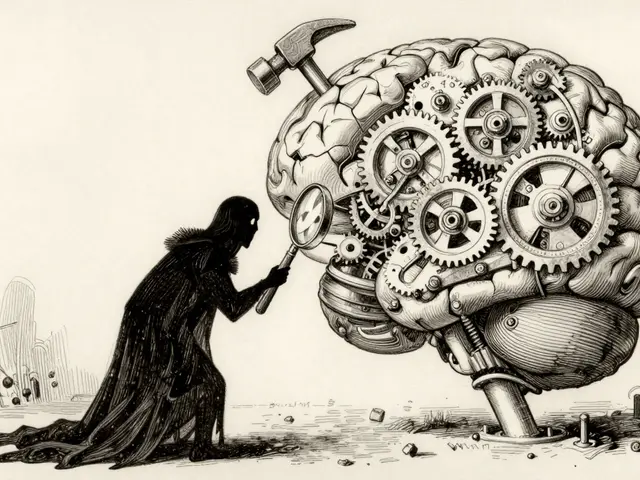
We’ve all seen the headlines. An algorithm denies a loan. A diagnostic tool misses a tumor. A self-driving car makes a split-second error. The problem isn’t just that AI makes mistakes; it’s that when it does, we often have no way to step in and fix it before things go wrong. This is why human-centered AI coding has become the new standard for building software in healthcare, finance, and infrastructure. It’s not about replacing humans with machines; it’s about writing code that treats human judgment as a core component of the system, not an afterthought.
As of 2026, this approach is shifting from a nice-to-have ethical guideline to a hard technical requirement. Regulators like the EU and bodies like NIST are mandating specific coding patterns that ensure humans remain in the loop. If you’re building or managing critical systems, understanding how to implement these controls is no longer optional-it’s essential for compliance, safety, and trust.
What Is Human-Centered AI (HCAI) Coding?
At its core, HCAI coding is a discipline that designs AI systems to augment human capabilities rather than replace them. Unlike traditional AI development, which often focuses solely on maximizing accuracy or speed, HCAI explicitly codes for transparency, control, and accountability.
The concept gained formal traction around 2018-2020, but it was Stanford University’s Human-Centered Artificial Intelligence (HAI) institute, founded in 2019 by John Etchemendy and Fei-Fei Li, that really pushed it into the mainstream. Today, it means embedding mechanisms directly into your software architecture so that a human operator can understand what the AI is doing, intervene if necessary, and take full responsibility for the outcome.
Is HCAI different from general AI ethics?
Yes. While AI ethics is a broad philosophical framework, HCAI coding refers to specific technical implementations-like override buttons, audit logs, and confidence thresholds-that enforce those ethical principles in real-time software operations.
The Core Technical Requirements for 2026
You can’t just say your system is “human-centered” and hope for the best. The latest standards require concrete technical features. According to Version 2.1 of the NIST AI Risk Management Framework, released in January 2025, critical systems must include several mandatory coding requirements:
- Fail-Safe Modes: Code must automatically revert to human control when the AI’s confidence score drops below 85%. This prevents the system from acting on uncertain data.
- Override Mechanisms: Humans must be able to correct AI decisions within a 200-millisecond response time. Latency here kills usability.
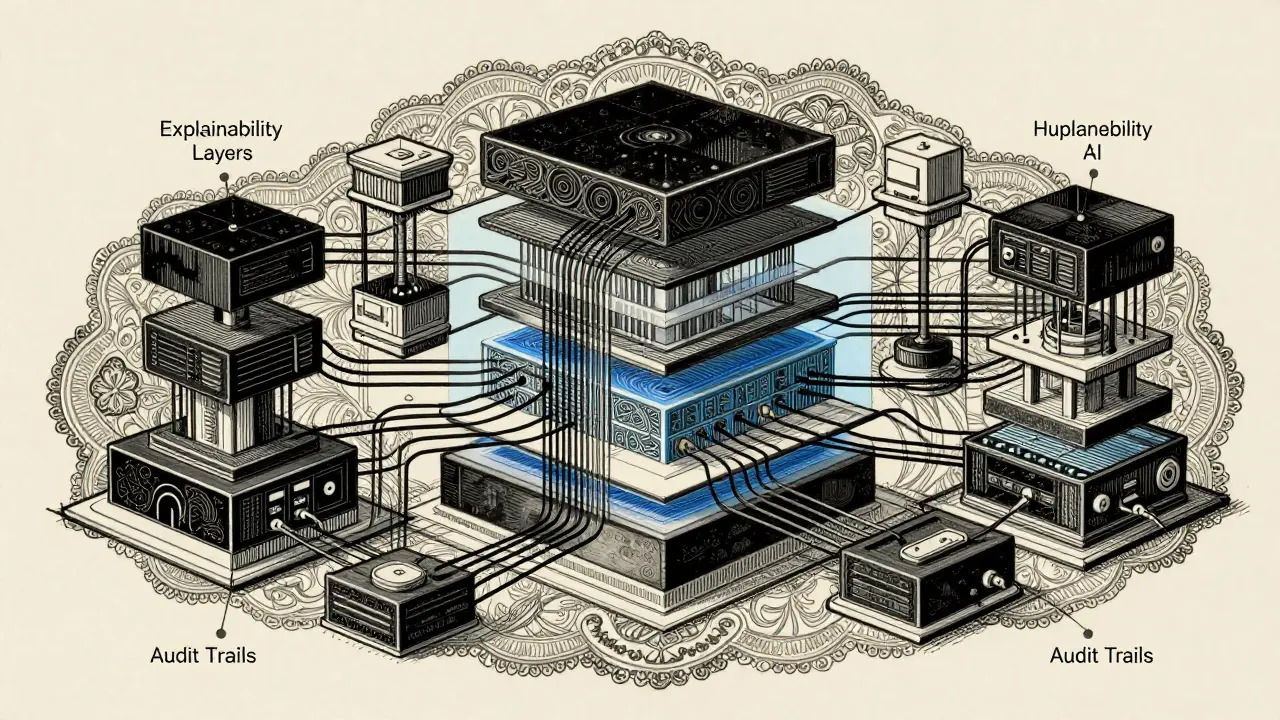
- Explainability Layers: The system must generate natural language justifications for its decisions. Techniques like LIME (Local Interpretable Model-agnostic Explanations) are commonly used here to translate complex model outputs into plain English.
- Audit Trails: Every interaction between the AI and the human operator must be logged. This is crucial for compliance and debugging.
These aren’t abstract ideas. They are measurable metrics. For instance, the 2025 IEEE Benchmarking Consortium found that systems adhering to these standards achieved 99.95% uptime in critical applications while reducing erroneous automated decisions by 63% compared to traditional black-box AI implementations.
HITL Architecture: Designing for Intervention
The backbone of HCAI is the Human-in-the-Loop (HITL) architecture. In traditional AI, the model runs, outputs a result, and moves on. In HITL, the code explicitly defines “intervention points.” These are moments where the system pauses and waits for human validation before proceeding.
Professor Ben Shneiderman of the University of Maryland, author of *Human-Centered AI* (Oxford University Press, 2022), advocates for an “8-item safety checklist” in critical system coding. Key items include predictable operation, continuous training, and customizable interfaces. But perhaps the most important is “domain-appropriate autonomy.” This means the level of AI control should match the risk level of the task. A recommendation engine for movies can be highly autonomous; a surgical robot cannot.
In practice, this looks like having 3-5 designated intervention points per workflow, compared to 0-1 in conventional AI systems. For example, in a healthcare diagnostic tool, the AI might flag a potential anomaly, but the code must force a radiologist to review and confirm the finding before it enters the patient’s record.
When HCAI Fails: The Limits of Human Oversight
It’s important to be honest about where this approach struggles. HCAI coding is not a one-size-fits-all solution. It introduces overhead-both computational and cognitive. Studies show a 15-20% increase in development time and an 8-12% higher computational cost to maintain these oversight capabilities.
More critically, it fails in environments requiring sub-millisecond decisions. A 2024 study by the Financial Stability Board showed that HCAI systems added a 7.3-millisecond latency increase. In ultra-high-frequency trading, this made them non-competitive in 83% of scenarios. You can’t ask a human to approve a trade that needs to happen in microseconds.
There’s also the risk of “automation bias.” Dr. Aleksander Madry from MIT warns that over-engineering oversight can create dangerous complacency. Operators might assume the AI is always correct until something goes visibly wrong, leading to a false sense of security. A 2025 Brookings Institution study highlighted this paradox, finding that 57% of critical system failures actually occurred during human override attempts, not during autonomous AI operation. This suggests we need better training and interface design, not just more code.
Comparison: HCAI vs. Traditional AI Coding
| Feature | Traditional AI Coding | Human-Centered AI (HCAI) |
|---|---|---|
| Primary Goal | Maximize accuracy/speed | Balance accuracy with human control |
| Intervention Points | 0-1 per workflow | 3-5 designated points |
| Error Reduction | Variable | 37% reduction in critical errors (McKinsey 2025) |
| Development Time | Standard | 15-20% longer |
| Best Use Case | High-frequency trading, recommendations | Healthcare, aviation, finance compliance |
| User Trust | Lower (black box) | 92% trust levels (McKinsey 2025) |
Real-World Implementation Challenges
Getting HCAI right is harder than it sounds. Developers need skills beyond standard machine learning-they need to understand human factors engineering and regulatory compliance. The average learning curve is 6-9 months, according to a 2025 O’Reilly survey.
One major challenge is setting the right confidence thresholds. An IEEE study found that 68% of enterprises initially set their intervention thresholds too high, meaning the AI asked for help too rarely, missing critical errors. Another issue is cognitive load. Aviation software engineers on Stack Overflow reported that maintaining two parallel decision pathways (AI suggestion + human verification) increased debugging complexity for 63% of respondents.
However, the benefits are clear. Healthcare developers using HCAI “guardrail patterns” report 78% satisfaction. At Mayo Clinic, one senior developer noted that override logging saved them during a medication alert rollout when they discovered the AI was incorrectly flagging 12% of valid prescriptions. Without that log, the error might have gone unnoticed.

Tools and Standards for Developers
If you’re ready to start implementing HCAI, you don’t have to build everything from scratch. Several frameworks and standards are now available:
- Microsoft Responsible AI Toolkit (v3.2): Released in June 2025, this provides standardized patterns for fairness, reliability, and safety.
- Google PAIR Guidelines: Offers practical advice on designing transparent and understandable AI interfaces.
- IBM Guardrails 4.0: An open-source framework launched in April 2025 that automatically inserts human oversight checkpoints into AI code during compilation.
- IEEE HCAI Developer Certification: Launched in March 2025, this program has trained over 14,000 professionals. Certified developers report 29% fewer oversight-related bugs.
Regulatory pressure is also driving adoption. The EU AI Act’s Article 14 requires “human-in-command” coding patterns for high-risk systems. In the U.S., the NIST AI RMF 1.1 mandates specific oversight mechanisms. By 2027, ISO/IEC 42001 certification will likely be required for any enterprise claiming robust AI management.
Future Trends: Adaptive Oversight
The next frontier is adaptive oversight. Instead of static rules, future systems will dynamically adjust the level of human control based on real-time risk assessment. DARPA’s 2026 “Contextual Autonomy” program, allocating $127 million, is focused on developing these systems. Imagine an autonomous vehicle that hands over control to the driver only when road conditions become unpredictable, rather than at fixed intervals.
Meanwhile, the Partnership on AI released “HCAI Coding Standard 2.0” in January 2025, featuring 23 new patterns for critical infrastructure. The market for HCAI tools is projected to grow from $1.2 billion in 2024 to $4.7 billion by 2027, driven by these regulatory and technological shifts.
Conclusion: Keeping People in the Loop
Human-centered AI coding is not just a trend; it’s a necessity for any system where errors have serious consequences. It requires a fundamental shift in how we think about software architecture-treating human judgment as a first-class citizen alongside algorithms. While it comes with costs in development time and complexity, the payoff in trust, safety, and compliance is undeniable. As we move deeper into the AI era, the question isn’t whether we can build systems that run without us, but whether we should.
What is the difference between Human-in-the-Loop (HITL) and Human-on-the-Loop?
In HITL, the system stops and waits for human input before proceeding. In Human-on-the-Loop, the AI operates autonomously but a human monitors it and can intervene if necessary. HITL is safer for critical decisions; Human-on-the-Loop is faster but riskier.
Which industries benefit most from HCAI coding?
Healthcare (38% of current adoption), financial services (29%), and transportation (19%) see the highest benefits due to strict regulatory requirements and high stakes for errors.
How much does HCAI implementation slow down development?
Expect a 15-20% increase in development time and 8-12% higher computational overhead. However, projects using “human-in-command” patterns had 32% fewer critical bugs, potentially saving time in the long run.
What is the “human override paradox”?
It refers to the phenomenon where mandated human oversight creates a false sense of security. A 2025 Brookings study found that 57% of critical failures occurred during human override attempts, suggesting operators may not be fully engaged or trained.
Are there certifications for HCAI developers?
Yes, the IEEE launched the HCAI Developer Certification in March 2025. It covers human factors engineering, regulatory compliance, and specific coding patterns for critical systems.