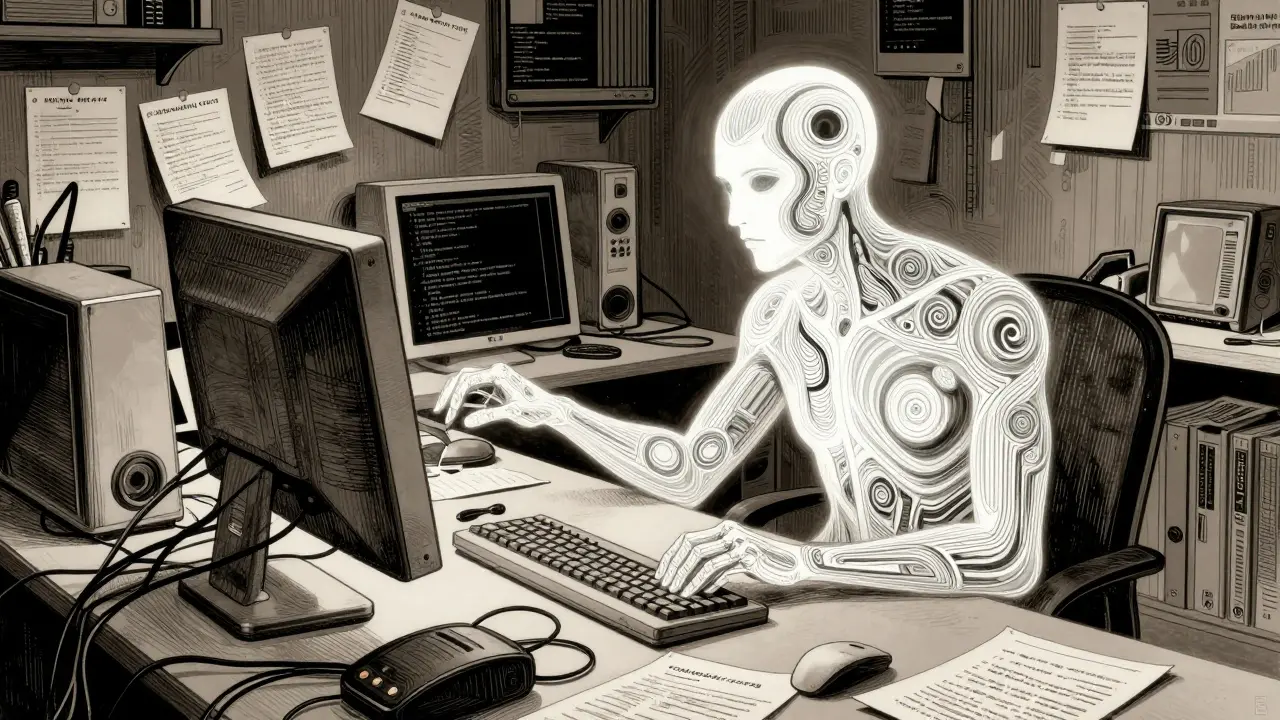
It’s June 2026, and your team is moving fast. Really fast. You’ve got developers using vibe coding, which is a development approach where natural language prompts guide AI agents to generate functional code iteratively to build features in hours instead of weeks. The prototype works. The demo impressed stakeholders. But then comes the Monday morning reality check: nobody knows how the authentication logic actually functions because it was generated by an AI agent three days ago, reviewed briefly, and merged. This is the maintainability crisis facing modern engineering teams.
Vibe coding isn’t just a trend; it’s a fundamental shift in how software gets built. Unlike traditional programming where you write every line, or low-code platforms like Mendix that provide structured visual interfaces with built-in governance, vibe coding produces portable, raw code. That freedom is its superpower, but also its biggest risk. Without explicit standards, your repository becomes a patchwork of inconsistent styles, hidden security vulnerabilities, and untraceable logic flows. Establishing coding standards for these repositories isn’t optional-it’s the only way to keep velocity high while ensuring long-term stability.
Why Traditional Standards Fail in AI-Driven Workflows
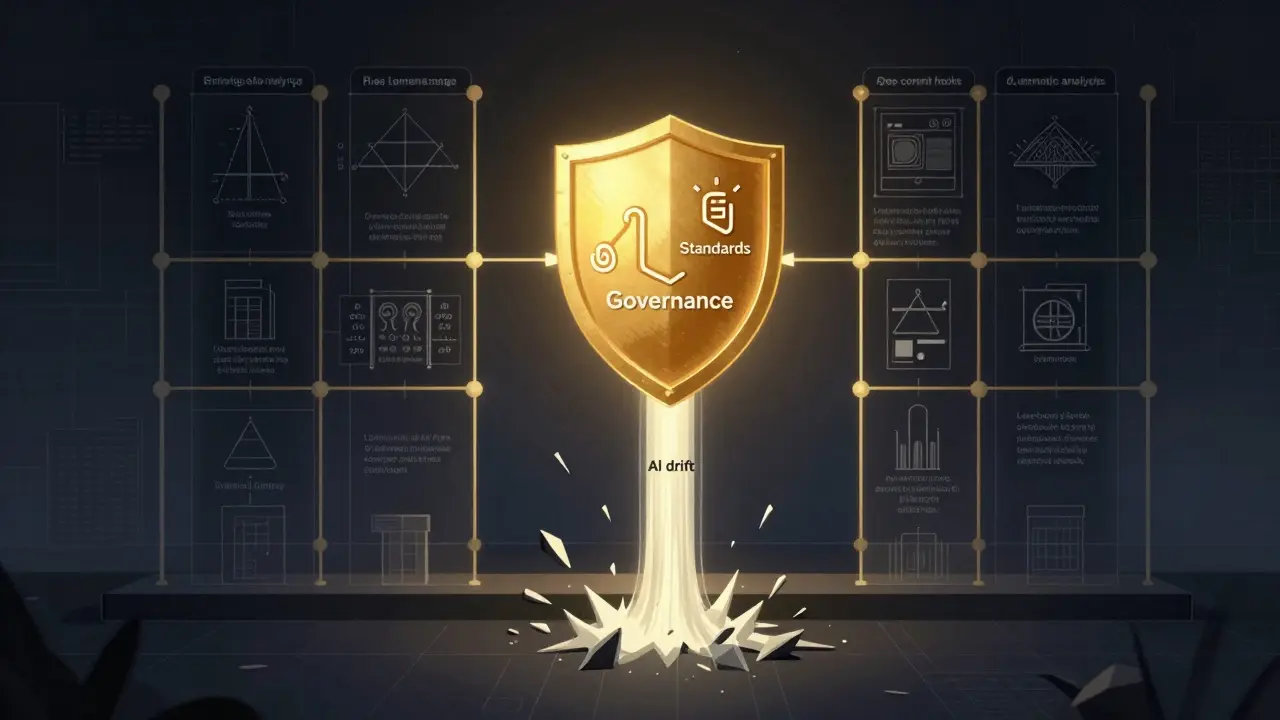
You might think you can just apply your existing ESLint rules or PEP 8 guidelines and call it a day. It doesn’t work that way. In traditional development, humans make conscious decisions about variable names, function structure, and error handling. In vibe coding, the AI makes those decisions based on probabilistic patterns from its training data. If you don’t constrain the AI’s output, you get "AI drift"-code that technically works but violates your team’s architectural principles.
The core problem is intent mismatch. A developer writes a prompt saying, "Create a user registration endpoint." The AI generates code that uses a specific library version, implements a particular validation pattern, and handles errors in a unique way. Without standards, the next developer prompting for a login endpoint might get code that uses a different library and a conflicting error strategy. Over time, this creates technical debt that no human would intentionally create, but which accumulates rapidly through automated generation.
Consider the difference between low-code platforms and vibe coding. Platforms like OutSystems enforce consistency through their interface-you can’t click outside the allowed boundaries. Vibe coding gives you the entire source code universe. That means you need external constraints, not internal ones. Your coding standards become the guardrails that keep the AI from veering off into unmaintainable territory.
The Core Components of Vibe-Coding Standards
Effective standards for AI-generated code go beyond formatting. They need to address the unique characteristics of machine-produced output. Here are the essential components every team should implement:
- Prompt Engineering Guidelines: Standardize how prompts are structured. Require context injection (e.g., "Use our existing AuthContext module") rather than open-ended requests. Define mandatory parameters like target framework version, required testing coverage, and error handling patterns.
- Model Version Pinning: Just as you pin dependency versions, pin your AI model versions. Code generated by GPT-4o differs subtly from Claude 3.5 Sonnet. Mixing models in one repository creates inconsistent code styles and potential compatibility issues. Document which model generates which types of components.
- Output Determinism Requirements: Set temperature parameters to zero for production code generation. Creative exploration belongs in design sprints, not in critical path logic. Deterministic outputs ensure that running the same prompt twice produces identical results, enabling reliable CI/CD pipelines.
- Human Review Checklists: Define what must be verified before merging. This includes checking for hallucinated dependencies, verifying security headers, confirming proper type definitions, and ensuring comments explain the "why" not just the "what."
- Semantic Documentation Mandates: Require AI-generated code to include standardized documentation blocks. These should specify the original prompt, the model used, any post-generation modifications, and known limitations. This creates an audit trail crucial for debugging and maintenance.
Implementing Automated Governance Layers
Manual enforcement of standards doesn’t scale with AI-assisted development speeds. You need automated systems that catch violations before they reach your main branch. The good news is that the tooling ecosystem has matured significantly since vibe coding emerged.
Start with pre-commit hooks that analyze AI-generated code against your standards. Tools like VibeKit provide safety layers by running AI coding agents in isolated Docker sandboxes with automatic secret redaction. This prevents accidental exposure of credentials in generated code-a common issue when AI models try to "helpfully" include example API keys.
Integrate semantic analysis tools into your workflow. Extensions like Augment index your repository and allow natural language queries to trace logic flows and identify inconsistencies. When a developer prompts for a new feature, the tool can cross-reference existing patterns and flag deviations. For instance, if your team always uses Result types for error handling but the AI generates throw/catch blocks, the system catches it immediately.
Orchestration platforms play a crucial role here. Vibe Kanban, a Rust-based platform for managing AI coding agents, centralizes configurations and allows developers to review agent work systematically. Instead of scattered chat logs, you have a structured pipeline where each AI-generated change goes through defined stages: generation, static analysis, human review, and integration testing.
Standardizing Through Workflow Orchestration
The Model Context Protocol (MCP) represents a breakthrough in standardizing how AI agents interact with development environments. By connecting to GitHub repositories, databases, and deployment platforms through standardized interfaces, MCP ensures consistent integration patterns across projects.
Frameworks built on MCP, such as GoCodeo’s implementation, enable chained workflows that automatically orchestrate tasks from code generation to deployment. This matters for standards because it removes manual steps where inconsistencies creep in. When the workflow is standardized, the output tends to be standardized too.
Consider a typical vibe coding workflow enhanced with MCP: 1. Developer creates a specification document using standardized templates. 2. AI agent reads the spec and generates code following pinned model settings. 3. Pre-commit hooks run linting, security scanning, and style checks. 4. Semantic analysis tools verify consistency with existing codebase patterns. 5. Human reviewer approves changes using a checklist focused on business logic correctness. 6. Automated tests validate functionality before merge. 7. Deployment occurs through standardized CI/CD pipelines.
Each step enforces standards without slowing down the creative process. The key is making compliance automatic rather than aspirational.
Security and Compliance Considerations
AI-generated code introduces unique security challenges. Models trained on public repositories may inadvertently reproduce vulnerable patterns or include deprecated libraries. Your coding standards must explicitly address these risks.
Implement mandatory dependency scanning for all AI-generated code. Tools like Snyk or Dependabot should run automatically, blocking merges that introduce known vulnerabilities. Additionally, require AI agents to use only approved package registries and versions defined in your organization’s whitelist.
Secret management requires special attention. Never allow AI agents direct access to production secrets. Use environment variables injected at runtime, and configure tools like VibeKit to redact any detected secrets in generated code. Include examples of secure secret handling in your prompt templates so the AI learns correct patterns.
Compliance frameworks like GDPR or HIPAA add another layer. Ensure your standards mandate that AI-generated code includes necessary data anonymization, consent tracking, and audit logging. Document these requirements clearly in your prompt guidelines so the AI incorporates them from the start rather than retrofitting later.

Measuring Success and Iterating
Standards aren’t set in stone. As AI capabilities evolve and your team gains experience, your standards should adapt. Track metrics that matter: defect rates in AI-generated code versus human-written code, time spent on code reviews, frequency of standard violations caught by automation, and developer satisfaction scores.
Conduct regular retrospectives focused specifically on vibe coding practices. Ask questions like: Are our prompts producing consistent results? Are we spending too much time fixing minor style issues? Is the AI struggling with certain types of logic? Use these insights to refine your standards continuously.
Share success stories and lessons learned across teams. When one group discovers a prompt pattern that reliably produces clean, maintainable code, document it and distribute it. Build a living knowledge base of effective prompts, common pitfalls, and best practices specific to your technology stack.
| Approach | Enforcement Mechanism | Maintenance Effort | Effectiveness |
|---|---|---|---|
| Manual Code Reviews | Human inspection before merge | High | Low (inconsistent) |
| Pre-commit Hooks | Automated linting and scanning | Medium | High (catches syntax/style) |
| Semantic Analysis Tools | Pattern matching against codebase | Medium | Very High (ensures consistency) |
| Workflow Orchestration | Structured pipelines with checkpoints | Low (once configured) | Very High (end-to-end control) |
Building a Culture of Responsible AI Development
Technology alone won’t solve the maintainability challenge. You need cultural shifts within your engineering organization. Train developers to view AI as a collaborator requiring guidance, not a magic box that produces perfect code. Emphasize that writing clear, constrained prompts is a skill as important as writing clean code.
Encourage experimentation within safe boundaries. Allow teams to test new prompt patterns or model versions in sandbox environments before rolling out changes broadly. Celebrate improvements in code quality and maintainability metrics to reinforce positive behaviors.
Most importantly, maintain transparency. Document everything-prompts, model versions, review outcomes, and post-deployment issues. This transparency builds trust among team members who didn’t generate the code but now need to maintain it. It also provides valuable data for refining your standards over time.
The goal isn’t to eliminate the speed advantages of vibe coding. It’s to harness that speed responsibly. With thoughtful standards, robust tooling, and a culture of accountability, your team can enjoy rapid development cycles without sacrificing the code quality needed for long-term success. The future of software development is collaborative-human creativity guided by AI efficiency, constrained by thoughtful standards.
What is vibe coding?
Vibe coding is an AI-assisted software development methodology where developers use natural language prompts to guide AI agents in generating functional code. Instead of manually writing every line, developers describe intent, review outputs, and iterate through conversational refinement until the code meets requirements. This approach emerged as large language models became capable of producing working applications from high-level specifications.
Why do vibe-coded repositories need specific coding standards?
Traditional coding standards assume human authors making conscious design choices. AI-generated code follows probabilistic patterns that may not align with team conventions. Without specific standards, repositories accumulate inconsistent styles, hidden vulnerabilities, and untraceable logic. Standards ensure maintainability by constraining AI output to match organizational architecture principles and security requirements.
How does vibe coding differ from low-code platforms?
Low-code platforms like Mendix or OutSystems provide visual interfaces with built-in governance, enforcing consistency through restricted options. Vibe coding generates portable, raw source code without inherent constraints. While low-code limits flexibility for safety, vibe coding offers full freedom but requires external standardization mechanisms to prevent chaos and ensure long-term maintainability.
What tools help enforce standards in vibe coding workflows?
Key tools include VibeKit for sandboxed execution with secret redaction, Vibe Kanban for centralized agent management and review, Augment for semantic code analysis, and MCP-based frameworks for standardized integrations. Pre-commit hooks, dependency scanners, and automated testing pipelines also play crucial roles in catching violations before they reach production.
Should I pin my AI model versions for code generation?
Yes, absolutely. Different AI models produce subtly different code styles, library preferences, and error handling patterns. Mixing models in one repository creates inconsistency and complicates maintenance. Pinning model versions ensures deterministic outputs and predictable behavior, similar to how you pin software dependency versions for reproducibility.
How do I handle security risks in AI-generated code?
Implement mandatory dependency scanning to block known vulnerabilities, restrict AI agents to approved package registries, and never grant direct access to production secrets. Use tools like VibeKit to automatically redact detected secrets in generated code. Include secure coding patterns in prompt templates so the AI learns correct practices from the start rather than requiring fixes later.
What metrics should I track to measure standard effectiveness?
Track defect rates comparing AI-generated versus human-written code, time spent on code reviews, frequency of standard violations caught by automation, and developer satisfaction scores. Regular retrospectives focused on vibe coding practices help identify areas for improvement and validate whether current standards support both velocity and quality goals.
Can I use existing linters for AI-generated code?
Existing linters help catch syntax and style issues, but they’re insufficient alone. AI-generated code often passes basic linting while violating deeper architectural principles or introducing subtle security flaws. Combine linters with semantic analysis tools that understand your codebase’s patterns and specialized scanners designed for AI-specific risks like hallucinated dependencies or inconsistent error handling strategies.
How often should I update my vibe coding standards?
Review and update standards quarterly or whenever significant changes occur in your technology stack, AI model capabilities, or team composition. Conduct retrospectives after major releases to assess what worked and what didn’t. Share learnings across teams and incorporate feedback from developers maintaining AI-generated code to ensure standards remain practical and effective.
Is vibe coding suitable for mission-critical systems?
Yes, but with rigorous standards and human oversight. Mission-critical systems require deterministic behavior, thorough testing, and clear audit trails-all achievable with proper governance. Implement stricter prompt constraints, mandatory multi-layer reviews, comprehensive testing suites, and detailed documentation. The key is treating AI as a powerful assistant that still requires careful supervision and validation in high-stakes contexts.