Remember when bigger was always better? In 2020, if you weren't training a model with hundreds of billions of parameters, you were basically invisible. Fast forward to November 2026, and that rulebook has been torn up. We aren't just making models larger; we're making them smarter, faster, and far more practical. The race for raw scale has slowed, replaced by a fierce competition for efficiency, reasoning depth, and real-world utility. If you are trying to figure out where the puck is going in Natural Language Processing (NLP), you need to look beyond parameter counts. You need to look at how Large Language Models (LLMs) are evolving from chatbots into autonomous agents that can think, plan, and act.
This shift isn't just academic theory. It’s happening in your codebase, your customer support tickets, and your legal contracts right now. The next generation of models-think GPT-5, Gemini 3, and Claude 4-isn't just guessing the next word. They are decomposing problems, checking their own facts, and handling data types we used to keep separate. Let's break down the specific NLP research trends that are defining this new era.
The Rise of Agentic AI: From Chatting to Doing
For years, LLMs were passive. You asked a question, it gave an answer. Done. But the biggest trend shaping 2026 is Agentic AI. This moves beyond conversation into execution. An agent doesn't just tell you how to fix a bug; it reads your code, identifies the error, writes the patch, runs the tests, and submits the pull request.
This requires a fundamental change in how models process information. They need memory, planning capabilities, and tool use. Researchers have focused heavily on enabling models to maintain state over long tasks. Instead of treating every interaction as a blank slate, agentic systems build a context window of actions and outcomes. This allows them to recover from errors mid-task rather than failing entirely. For developers, this means shifting from prompt engineering to workflow orchestration. You aren't just prompting a model; you're designing a loop where the model acts, observes the result, and adjusts its strategy.
Multimodality Becomes Standard, Not Special
If your model only reads text in 2026, it's obsolete. The separation between vision, audio, and language models has collapsed. Multimodal Large Language Models (LMMs) now natively process images, video, and audio alongside text within a single architecture.
Why does this matter? Because human communication isn't just text. A screenshot of a UI bug contains visual cues a text description misses. A recorded meeting has tone and emphasis that transcripts flatten. New architectures like Gemini 3 and GPT-5 integrate these inputs directly. You don't need a separate OCR tool or speech-to-text engine. The model sees the chart, hears the sarcasm, and reads the caption simultaneously. This reduces latency and error propagation. When you ask an LLM to analyze a complex diagram, it understands the spatial relationships and the labels without needing a pipeline of three different tools stitching outputs together.
Reasoning Over Recall: Chain-of-Thought Evolution
Early LLMs were brilliant parrots. They could mimic reasoning but often failed at multi-step logic. They would hallucinate facts because they predicted plausible-sounding words, not true statements. The solution? Chain-of-Thought (CoT) Reasoning. This technique forces the model to generate intermediate steps before providing a final answer.
In 2026, CoT has evolved from a prompting trick to a core architectural feature. Models like o1-style reasoners spend compute time "thinking" silently before responding. This internal monologue allows them to backtrack, verify assumptions, and handle complex mathematical or logical problems with much higher accuracy. It’s not just about getting the right answer; it’s about transparency. When a model shows its work, you can debug its logic. This is critical for high-stakes fields like law and medicine, where a wrong guess is unacceptable.
Efficiency via Mixture-of-Experts (MoE)
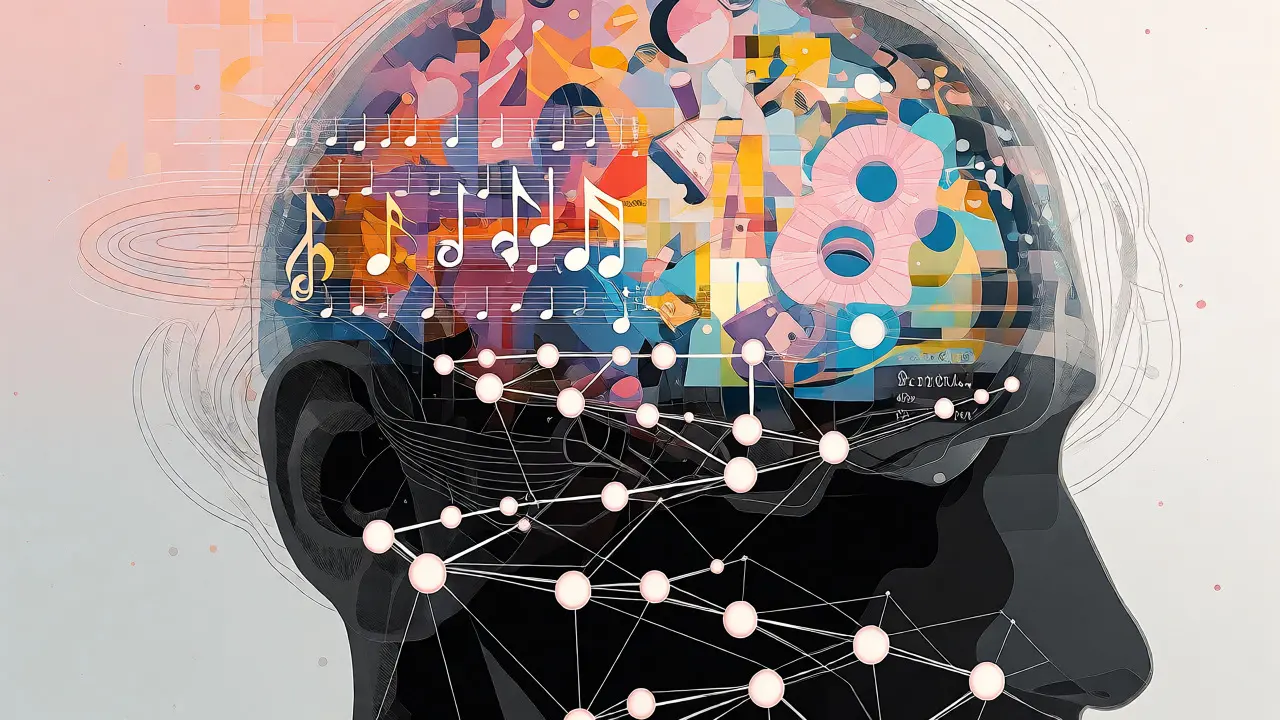
We hit a wall with dense transformers. Training them became prohibitively expensive, and inference costs skyrocketed. Enter Mixture-of-Experts (MoE) architectures. Instead of activating all parameters for every token, MoE models route each input to a subset of specialized "expert" networks.
Think of it like a hospital. You don't call the cardiologist for a broken bone. MoE models learn which expert handles which type of query. Mistral Large 2 and DeepSeek V3 leverage this to deliver massive performance gains with a fraction of the computational cost. This democratizes access. High-performance models can now run on smaller hardware clusters, making private deployment feasible for mid-sized companies. The trade-off is complexity in routing, but the savings in energy and money are too significant to ignore.
RAG and the Fight Against Hallucination
No matter how smart a model gets, it still makes things up if left unchecked. That’s why Retrieval-Augmented Generation (RAG) remains the most critical enterprise technology in the stack.
RAG grounds the model in reality. Before generating an answer, the system retrieves relevant documents from your database, feeds them into the context window, and asks the model to synthesize the information. In 2026, RAG has gotten smarter. It’s not just keyword matching anymore. Semantic search combined with hybrid retrieval ensures the model finds the exact nuance needed. Furthermore, new techniques allow the model to critique its own retrieved sources, flagging contradictions before answering. This turns the LLM from a creative writer into a reliable analyst.
Context Windows: The New RAM
Remember when 4,000 tokens felt like a lot? Now, models routinely handle 128,000 to 200,000+ tokens. This expansion changes everything. You can feed an entire code repository, a full legal contract, or a month of Slack messages into the context window.
But more context isn't free. Attention mechanisms scale quadratically, meaning doubling the length can quadruple the cost. Researchers are developing sparse attention patterns and linear attention variants to mitigate this. The goal is to make long-context processing efficient enough to replace traditional fine-tuning for many tasks. Why retrain a model on your company docs when you can just paste them in? This "in-context learning" capability is reducing the barrier to entry for custom AI solutions.

Open Weights vs. Closed APIs: The Gap Closes
Two years ago, closed models like GPT-4 crushed open-source alternatives. Today, the gap is negligible. Models like Llama 4 and Qwen 3 offer performance rivaling proprietary giants.
This shift matters for control. Enterprises want data sovereignty. They don't want sensitive IP leaving their servers. Open-weight models allow for local deployment, fine-tuning on proprietary data without sharing it with a vendor, and customization of safety filters. The ecosystem around open models has matured, with robust tools for quantization, serving, and evaluation. For many businesses, the choice is no longer "open vs. closed" but "managed convenience vs. total control."
Key Technical Trends Comparison
| Trend | Core Benefit | Primary Challenge | Best Use Case |
|---|---|---|---|
| Agentic AI | Autonomous task execution | Error accumulation in loops | Coding assistants, IT ops |
| Multimodality | Holistic data understanding | High training complexity | Document analysis, media QA |
| MoE Architectures | Cost-efficiency at scale | Routing overhead | High-volume inference |
| RAG Systems | Factual grounding | Retrieval quality dependency | Enterprise knowledge bases |
| Long Context | Reduced fine-tuning needs | Quadratic scaling costs | Code review, legal discovery |
What This Means for Developers and Businesses
You don't need to train a new foundation model. The research community is doing that heavy lifting. Your job is integration. Focus on building robust evaluation frameworks. How do you know your RAG system is actually retrieving the right chunks? How do you measure if your agent is stuck in a loop?
Start small. Implement chain-of-thought prompting in your existing workflows. Test a multimodal model on your image-heavy datasets. Experiment with open-weight models on local hardware to gauge cost savings. The winners in 2026 won't be those with the biggest models, but those who best leverage these architectural advances to solve specific, painful business problems.
What is the main difference between LLMs in 2024 and 2026?
The primary difference is the shift from raw scale to efficiency and autonomy. 2024 models focused on parameter count and general chat ability. 2026 models prioritize agentic capabilities, multimodal processing, and reasoning depth through techniques like Chain-of-Thought and Mixture-of-Experts architectures.
Do I still need to fine-tune my model if I use RAG?
Often, no. With context windows expanding to 200k+ tokens, many organizations find that Retrieval-Augmented Generation (RAG) provides sufficient domain specificity without the cost and maintenance of fine-tuning. Fine-tuning is reserved for style adaptation or highly specialized jargon that retrieval cannot easily capture.
Are open-source models competitive with closed ones?
Yes, the performance gap has narrowed significantly. Models like Llama 4 and Qwen 3 match or exceed proprietary models in many benchmarks. The advantage of open weights lies in data privacy, customization, and avoiding vendor lock-in, making them ideal for regulated industries.
What is Mixture-of-Experts (MoE)?
MoE is an architecture where the model consists of multiple specialized sub-networks (experts). For each input, only a few experts are activated. This allows the model to have a large total parameter count for capacity while keeping inference costs low, as not all parameters are used for every token.
How does multimodality improve LLM performance?
Multimodality allows models to understand context from images, audio, and video alongside text. This leads to better comprehension of complex scenarios, such as analyzing a technical diagram or understanding tone in a voice memo, resulting in more accurate and holistic responses.