Most engineering leaders are stuck in a paradox. They see developers shipping prototypes in hours instead of weeks using Vibe Coding is an AI-assisted software development methodology where engineers use natural language prompts to direct code generation rather than writing syntax manually. It emerged in the mid-2020s as a way to leverage large language models for rapid iteration., yet their teams remain anxious about quality control, version chaos, and skill gaps. The technology works; the organization doesn't. This gap isn't a technical failure-it's a change management problem. If you want to scale vibe coding from a few power users to a standard practice, you need to rethink how you train people, what tools you deploy, and how you reward performance.
Key Takeaways
- Training must shift focus from syntax memorization to prompt engineering, architectural oversight, and rigorous testing of AI output.
- Tools require specific configurations like modular file structures, dedicated planning vs. execution models, and strict version control protocols.
- Incentives should reward iteration speed and quality assurance over lines of code written or initial perfection.
- Organizational success depends on treating AI as a conversation partner, not a magic genie, which requires cultural shifts toward experimentation.
The Mental Shift: From Author to Director
To manage this change, you first have to understand what actually changes. In traditional development, a programmer is an author. They type characters into an editor, compile, and debug. In vibe coding, the developer becomes a director. You don't write the scene; you tell the actor (the AI) what emotion to convey and check if they nailed it. This role reversal is the core friction point. Many senior engineers feel uncomfortable because their primary source of identity-typing complex algorithms-is being replaced by typing clear requirements.
This shift requires a new mental model: the "Two-Pass Method." Instead of expecting the first generated code to be production-ready, teams treat the first output as a prototype. This prototype surfaces design questions that wouldn't have been obvious until later. For example, asking an AI to build a login page might reveal edge cases in user session handling that a manual coder would only discover during integration testing. The goal isn't to accept the first draft; it's to use the draft to refine the specification. This iterative loop reduces cognitive load because the developer spends less time remembering syntax rules and more time thinking about business logic and architecture.
Training: Building the New Skill Set
You can't just hand developers a new API key and expect them to succeed. Effective training for vibe coding focuses on three distinct areas: prompting precision, context management, and verification habits.
- Prompt Engineering & Planning: Developers must learn to create detailed project plans before interacting with the AI. This involves breaking projects into small, manageable user stories with clear acceptance criteria. Training should include exercises on writing "context-rich" prompts. A vague prompt like "build a dashboard" yields generic results. A precise prompt specifying data sources, UI components, and error states yields usable code. Teams should maintain personal prompt libraries to document what works.
- Model Selection & Context: Not all AI models are created equal for every task. Training needs to distinguish between "planning models" (like GPT-o3-mini) which excel at reasoning and creating Product Requirements Documents, and "execution models" (like Claude 3.7) which are better suited for actual code implementation. Additionally, developers must understand token limits. When an AI starts looping or giving confused answers, it’s often because the context window is full. Training should cover when to start a new session versus when to summarize previous work.
- Verification & Testing: This is the most critical safety net. AI code can look perfect but fail subtly. Training must instill a discipline of "test before you trust." Developers should be taught to run unit tests immediately after generation, review diff changes carefully, and update README files after every significant change to keep the project state documented.
Tools: Infrastructure for Chaos Control
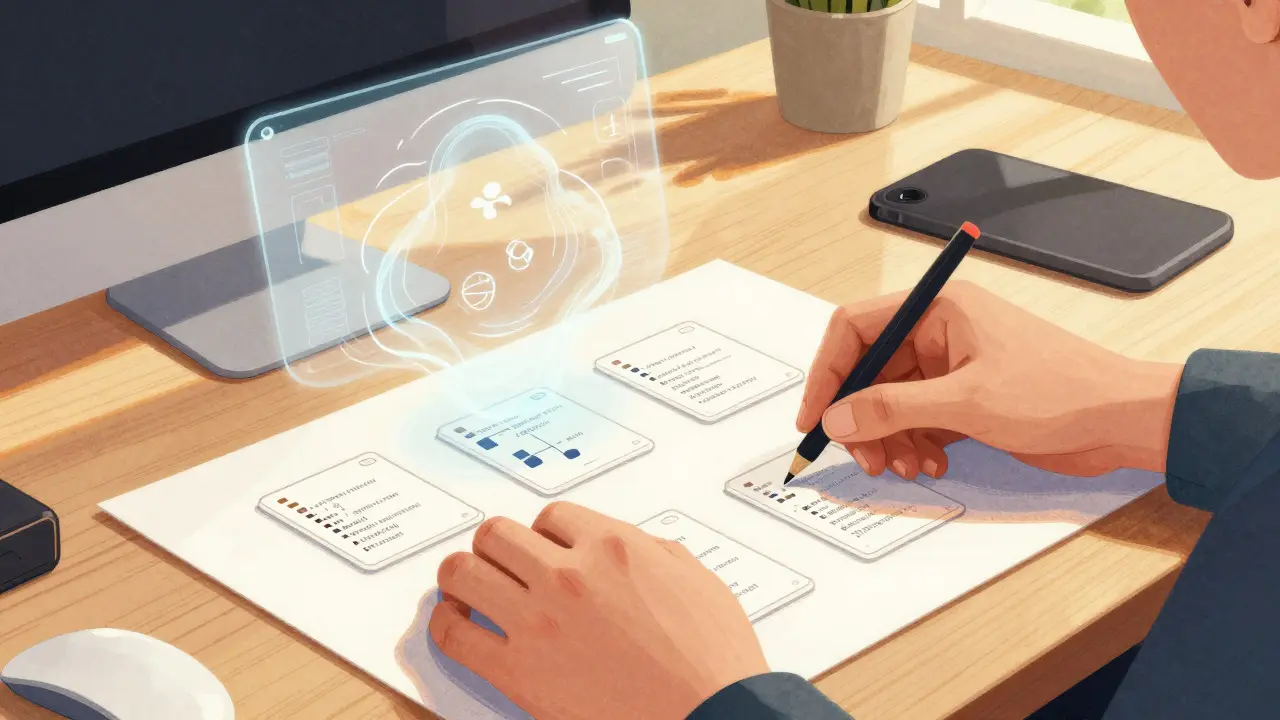
The right tooling environment prevents vibe coding from becoming a mess. You need infrastructure that supports rapid iteration while maintaining order. Here is what a robust vibe coding stack looks like:
| Tool Category | Specific Recommendation | Why It Matters |
|---|---|---|
| AI Development Platform | Refact.ai or similar specialized IDEs | Offers features like 'Think' buttons for advanced reasoning and Agent functionality for autonomous feedback loops. |
| Version Control | Git / GitHub | Creates save points. Allows reversion when AI introduces errors. Descriptive commit messages track AI-driven changes. |
| Code Organization | Modular File Structures | Prevents context window overflow. Keeps AI focused on specific components rather than entire monolithic scripts. |
| Documentation | Auto-updating READMEs | Ensures the human team always knows the current state of the project, preventing drift between intent and implementation. |
A crucial part of the tooling strategy is enforcing modularity. If you ask an AI to modify a single, massive file, it will likely break unrelated functions because its attention is split across too many variables. By forcing developers to keep components in separate files, you give the AI a smaller, clearer scope. This makes the output more predictable and easier to debug. Furthermore, integrating these workflows with existing CI/CD pipelines ensures that AI-generated code still passes through standard automated tests before merging, providing a non-negotiable quality gate.
Incentives: Rewiring the Reward System
If your performance reviews still measure productivity by "lines of code written" or "story points completed," vibe coding will fail. These metrics punish the very behaviors vibe coding encourages. When a developer uses AI to generate 500 lines of code in five minutes, they shouldn't get extra credit for volume; they should be evaluated on whether those 500 lines were correct, well-tested, and aligned with the architecture.
Instead, consider these incentive structures:
- Velocity of Iteration: Reward teams that can cycle through prototype-to-feedback loops quickly. The goal is fast learning, not slow perfection.
- Quality Assurance Effort: Recognize developers who catch subtle AI bugs. Finding a hidden race condition in generated code is valuable work, even if it wasn't visible in the initial prompt.
- Knowledge Sharing: Incentivize the creation of shared prompt libraries and best-practice documentation. If one developer finds a way to make the AI handle complex SQL queries reliably, sharing that pattern benefits the whole org.
There is also a psychological incentive to tap into: reduced burnout. By offloading repetitive boilerplate coding to AI, developers can spend more time on high-level problem solving. Highlighting this benefit in internal communications helps frame the change as an upgrade to their daily experience, not a threat to their job security.

Overcoming Organizational Resistance
Even with good training and tools, culture eats strategy for breakfast. The biggest hurdle is the fear of the unknown. Senior engineers may worry that relying on AI means losing their craft. To counter this, leadership must frame vibe coding as an evolution of engineering, not a replacement. The engineer is still the expert; they just have a very fast, very literal junior assistant.
Start small. Don't mandate vibe coding for your entire legacy codebase overnight. Pick a greenfield project or a low-risk internal tool. Let a small group of champions experiment, document their wins, and present the results. When other teams see that the prototype phase took two days instead of two weeks, resistance drops significantly. This "show, don't tell" approach builds credibility faster than any corporate memo could.
Frequently Asked Questions
Is vibe coding suitable for mission-critical enterprise systems?
Yes, but with strict guardrails. It works best when combined with rigorous unit testing, code reviews, and modular architecture. Avoid using it for complex, tightly coupled legacy systems without first refactoring them into smaller, independent modules.
What is the biggest risk of adopting vibe coding without formal training?
The biggest risk is "silent failure." Developers may accept AI output that looks correct but contains subtle logical errors or security vulnerabilities. Without training in verification and testing, these bugs slip into production, causing higher maintenance costs later.
How do I measure the ROI of vibe coding adoption?
Track the time-to-prototype metric. Compare the duration from requirement definition to working demo before and after adoption. Also monitor bug rates in AI-generated modules versus traditionally coded modules to ensure quality hasn't dropped.
Do we need to replace our existing IDEs?
Not necessarily. Many developers successfully use vibe coding within VS Code or JetBrains IDEs using plugins. However, specialized platforms like Refact.ai offer integrated features for context management and multi-model switching that can streamline the workflow further.
How does vibe coding affect junior developer roles?
It shifts the focus from basic syntax implementation to system understanding and testing. Juniors still need to learn fundamentals, but their value proposition moves toward verifying AI output and managing complex integrations, requiring stronger analytical skills.